ISHN logo
search
cart
facebook twitter linkedin youtube
  • Sign In
  • Create Account
  • Sign Out
  • My Account
ISHN logo
  • NEWS
    • Today's News
    • Global Safety News
    • Government Regulations
  • PRODUCTS
    • Product Innovations
    • Featured Products
  • TOPICS
    • Environmental Health and Safety
    • Facility Safety
    • Workplace Health
    • Occupational Safety
    • PPE
    • More Topics
  • CONSTRUCTION
  • TECHNOLOGY
  • COLUMNS
    • Best Practices
    • Dave Johnson: What’s going on
    • Editorial Comments
    • Leading Safety
  • MULTIMEDIA
    • ISHN Podcast
    • Videos
    • Cold Stress Education Quiz
    • Webinars
    • White Papers
  • MORE
    • Buyer's Guide
    • Newsletters
    • Convention Companion
    • Polls
    • Events
    • ISHN Store
    • Sponsor Insights
  • EMAGAZINE
    • eMagazine
    • Archived Issues
    • Contact
    • Advertise
  • JOIN TODAY!
Psychology in the Workplace

When Minds Turn Off To Safety...

By E. Scott Geller
April 27, 2000
Have you ever suffered from something called "premature cognitive commitment"? I'd like to explore this concept, taken from Ellen J. Langer's book, "Mindfulness," as a follow-up to last month's article on how to increase mindful behavior to prevent injuries.

I've come to really appreciate the term because it captures the various ingredients of mindless activity:

First, it's premature-occurring before adequate diagnosis, analysis and consideration.

Second, it's cognitive-a mental process that influences our perceptions, attitudes and behaviors.

Finally, it's a commitment-a relatively permanent opinion or mindset that filters or biases the information we receive, and shapes how we act.

In other words, we commit ourselves to an initial impression without the benefit of critical thinking, and that opinion determines how we process and respond to subsequent information.

Interfering with safety

Here are three ways that premature cognitive commitment can hurt our safety efforts:

First, it can interfere with constructive learning. For example, I've found it difficult to teach behavior-based safety principles and methods to people who have a preconceived notion that attitude or culture change must come first, or that targeting safety-related behavior blames employees for a management problem.

Second, a biased mindset is especially detrimental to constructive learning and sound decision making when it is used to form global stereotypes for broad concepts such as intelligence, love, caring, respectability, excitement, fatigue, family, and aging.

Consider, for example, how a narrow meaning of "intelligence" (such as a score on a college entrance exam) can limit opportunity or self-image. Or how a detailed safety policy can thwart the customization and ownership of a generic safety mission.

This leads to the third effect-when we adopt narrow and premature definitions and concepts we limit choice and personal control. For example, people who attribute the cause of an injury purely to the victim's carelessness or to a particular environmental hazard reduce the range of preventive solutions. When we become committed to a single-minded explanation (think of the urge to find quick-fixes for safety problems), we are not open to information that runs counter to it.

Increasing mindfulness

So how can we shift from the mindlessness of premature cognitive commitment to increased mindfulness in ourselves and others? Last month I explained how a behavior-based observation and feedback process can help us become more mindful of environmental hazards and at-risk behaviors. An open and aboveboard system for auditing work tasks increases mindfulness for both the person doing the observing and the person or persons being observed. This method relates to one of Dr. Langer's key recommendations for making people more mindful-get them to pay more attention to how they are trying to accomplish something (such as working safely), as opposed to focusing only on the outcome of that process (the safety record).

There are many examples of how we take a process for granted and instead direct our focus to the outcome. Dr. Langer reminds us that starting in kindergarten the focus of schooling is on the final result. Students in my university classes seem obsessed with their grades and seemingly lose sight of the important purpose of learning critical thinking and problem-solving skills.

Likewise, travel is often seen as only a means to an end. The journey can be viewed as unimportant, just as long as the destination is reached.

Safety professionals readily see the fallacy in this logic. How you complete a journey can determine whether you reach the destination in one piece. Again, the focus is on how you do it. Orient your people to the process-the steps needed to ensure safety every day. Emphasize their involvement in deriving corrective action plans from ongoing reports of environmental/behavioral audits, near misses, first-aid cases, property-damage and injury incidents.

When employees see how these successive steps or "small wins" lead to an outcome such as a reduced injury rate, their sense of mindful control is enhanced.

So keep tracking outcomes, of course, but facilitate and reinforce discussions of the ongoing processes needed to prevent injuries.

Conversations about safety processes keep people mindful of what they must continue doing in order to keep themselves and others safe.

Note: Dr. Ellen J. Langer's book, "Mindfulness," was published in 1989 by Perseus Books, Reading, Mass.

By E. Scott Geller, Ph.D., senior partner, Safety Performance Solutions, and professor of psychology at Virginia Tech. For information on related books, training manuals, videotapes, audiotapes, and customized consulting call SPS at (540) 951-7233 SAFE), and visit www.safetyperformance.com.

What is premature cognitive commitment?

  • Mindless thinking
  • Prejudice
  • Mindset
  • Paradigm
  • One-sidedness
  • Bigotry
  • Discrimination
  • Pigheadedness
  • Just plain bias

and how it hurts safety...

  • Interferes with constructive learning
  • Leads to single-minded explanations
  • Reduces sense of personal control
  • Blocks teamwork and interdependence


Links

  • www.safetyperformance.com

Share This Story

Looking for a reprint of this article?
From high-res PDFs to custom plaques, order your copy today!

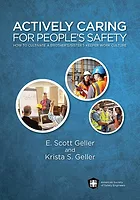
E. Scott Geller, Ph.D., is Alumni Distinguished Professor, Center for Applied Behavior Systems, Virginia Tech, and senior partner with Safety Performance Solutions, Blacksburg, VA. For more information visit www.safetyperformance.com. "Actively Caring for People's Safety: How to cultivate a brother’s/sister’s keeper work culture," co-authored by Scott’s daughter Krista, was recently published by ASSE. Scott’s 15-minute TEDX talk on You Tube can be accessed at: https://www.youtube.com/watch?v=7sxpKhIbr0E


Recommended Content

JOIN TODAY
to unlock your recommendations.

Already have an account? Sign In

  • forklift safety

    Exploring the latest technologies in forklift safety

    With more staff and more stock in warehousing now more...
    Workplace Training Strategies
    By: Josh Cramer
  • welding

    All about welder’s flash or arc eye

    A flash burn is a painful inflammation of the cornea,...
    Environmental Health and Safety
  • dangerous jobs

    The 10 most dangerous jobs in the U.S.

    On-the-job deaths have been rising — hitting the highest...
    Occupational Safety
    By: Benita Mehta
Manage My Account
  • eMagazine Subscriptions
  • ISHN Newsletter & Other Newsletter Alerts
  • Online Registration
  • Manage My Preferences
  • Subscription Customer Service

More Videos

Sponsored Content

Sponsored Content is a special paid section where industry companies provide high quality, objective, non-commercial content around topics of interest to the ISHN audience. All Sponsored Content is supplied by the advertising company and any opinions expressed in this article are those of the author and not necessarily reflect the views of ISHN or its parent company, BNP Media. Interested in participating in our Sponsored Content section? Contact your local rep!

close
  • man wearing the the Sundström SR200 Full Face Mask Respirator
    Sponsored byOHD

    5 Fit Testing Mistakes That Could Cost You

  • This image shows Magid AcuSpex polarized blue mirrored safety glasses.
    Sponsored byMagid Glove and Safety

    Construction PPE Guide: What Crews Need for Each Task

  • lone worker in confined space
    Sponsored byAlphasense Ltd.

    GET THE LEAD OUT of your Safety Oxygen Sensors!

Popular Stories

SpaceX 7 launch

OSHA Investigating Fatal Fall at SpaceX Starbase

Worker Impairment

How to Tell When a Co-Worker is Impaired? A Safety Pro’s Challenge

psychology in the workplace

Most Workplaces Measure Psychological Safety, Ignoring Psychosocial Risks

top 10 most dangerous jobs

Poll

Seasonal Readiness

With the federal heat stress prevention rule on the horizon, which area of your safety program needs the most attention?
View Results Poll Archive

Products

Surviving an OSHA Audit A Management Guide, 2nd Edition

Surviving an OSHA Audit A Management Guide, 2nd Edition

See More Products

ISHN Podcasts

Related Articles

  • ASSE

    Hot off the ASSE press: Actively Caring for People’s Safety

    See More
  • Actively Caring for People’s Safety

    4 STEPS to cultivating a brother’s/sister’s keeper culture

    See More
  • actively caring for people, behavior-based safety

    Actively caring for people’s safety

    See More

Related Products

See More Products
  • Top Ten Pitfalls in OSHA Recordkeeping and How to Avoid Them

See More Products
×

Become a Leader in Safety Culture

Build your knowledge with ISHN, covering key safety, health and industrial hygiene news, products, and trends.

JOIN TODAY
  • RESOURCES
    • Advertise
    • Contact Us
    • Directories
    • Manufacturing Division
    • Store
    • Want More
  • SIGN UP TODAY
    • Create Account
    • eMagazine
    • Newsletters
    • Customer Service
    • Manage Preferences
  • SERVICES
    • Marketing Services
    • Reprints
    • Market Research
    • List Rental
    • Survey/Respondent Access
  • STAY CONNECTED
    • LinkedIn
    • Facebook
    • YouTube
    • X (Twitter)
  • PRIVACY
    • PRIVACY POLICY
    • TERMS & CONDITIONS
    • DO NOT SELL MY PERSONAL INFORMATION
    • PRIVACY REQUEST
    • ACCESSIBILITY

Copyright ©2026. All Rights Reserved BNP Media, Inc. and BNP Media II, LLC.

Design, CMS, Hosting & Web Development :: ePublishing