ISHN logo
search
cart
facebook twitter linkedin youtube
  • Sign In
  • Create Account
  • Sign Out
  • My Account
ISHN logo
  • NEWS
    • Today's News
    • Global Safety News
    • Government Regulations
  • PRODUCTS
    • Product Innovations
    • Featured Products
  • TOPICS
    • Environmental Health and Safety
    • Facility Safety
    • Workplace Health
    • Occupational Safety
    • PPE
    • More Topics
  • CONSTRUCTION
  • TECHNOLOGY
  • COLUMNS
    • Best Practices
    • Dave Johnson: What’s going on
    • Editorial Comments
    • Leading Safety
  • MULTIMEDIA
    • ISHN Podcast
    • Videos
    • Cold Stress Education Quiz
    • Webinars
    • White Papers
  • MORE
    • Buyer's Guide
    • Newsletters
    • Convention Companion
    • Polls
    • Events
    • ISHN Store
    • Sponsor Insights
  • EMAGAZINE
    • eMagazine
    • Archived Issues
    • Contact
    • Advertise
  • JOIN TODAY!
Columns

PETERSEN'S PAGE: The ABCs of safety

July 1, 2005
Behavior-based proponents are correct: safety excellence cannot be achieved without proper behaviors.

But culture builders are also correct: proper behaviors cannot be obtained without the right culture.

And the real hook? The right culture cannot be achieved without accountability.

This is not an either/or process. All three — accountability, behavior and culture (the ABCs of safety) — must be built in the proper sequence in order to achieve excellence in safety. Accountability builds Culture, which gets Behaviors resulting in Excellence.

Management accountability — a system of role definition, correct measures of performance and adequate rewards contingent on that performance — forces managers to take proactive actions each day. These actions build a culture that states, “Safety is so important that all managers must do something about it every day.” When employees believe this, their behaviors will follow — behaviors such as working safely and becoming involved to facilitate the process.

Elements of a safety program, such as safety policies, manuals, meetings, committees, inspections, investigation of incidents or recordkeeping analysis of incidents, are tools of the trade in most companies. Different organizations use these same tools, but some have more success than others. Success depends on how companies implement the ABC formula.

Two scenarios

Imagine two different safety scenarios, where two organizations faced the same situation. An accident occurred. Both organizations investigated as part of their program.

The first organization had a clear policy to follow up on all incidents, and the investigation was launched. The investigation reached the supervisor, who had discovered that a worker did not adhere to the safety policy and narrowly escaped serious injury to himself and others. The employee was told of his unsafe behavior, and the safety infraction was noted. The employee promised not to engage in the unsafe practice again, and the necessary safety records were updated. Management acknowledged this supervisor for fostering workplace safety.

In the second organization’s investigation, the supervisor considered the circumstances of the accident, namely that it occurred when production pressures were greatest. The supervisor discovered that the worker was ill while under severe pressure to meet production deadlines. The supervisor also acknowledged mechanical problems had slowed production that week, increasing frustration among workers and management. Company officials also acknowledged that maintenance must be done immediately, and that the company must reinforce its safety commitment by allowing the time to perform necessary maintenance between each job.

The second organization’s investigation also revealed that recent company cutbacks had all employees concerned about job security — drawing attention away from safety practices and documentation. Workers petitioned upper management for the necessary actions and changes. Managers planned a meeting with all employees to discuss the current financial and organizational issues. They asked workers to maintain safety while working together to improve production since those things would help the corporation’s viability.

Culture defines the difference

Why did one company blame the employee, fill out the incident investigation forms and get back to work, while the other company discovered it must deal with fault at all levels of the organization?

The answer is “culture.” A company’s culture is at the heart of how safety system elements or tools, such as incident investigations, are used. The culture is also expressed in the way company values are demonstrated. What happens when the pressure is on to get a job out the door and workers seemingly must choose between doing the job safely or doing it quickly?

The culture clearly announces every day to every worker whether safety is a key value and where it fits into the priorities. It dictates how an employee will act and how they will be treated. As a result, it also dictates behavior (hard work, goofing off or working safely). We know, to a large degree, an organization’s culture will determine the extent of casualties, trauma disorders, stress claims and compensation paid. It dictates whether elements of a safety system will work or flop.

Safety programs succeed within cultures where managers, supervisors and workers are accountable for using various safety tools to provide structure and discover where problems exist. Achieving alignment or agreement on how safety tools will be used must be done to create a true safety culture. This is participative, positive and flexible; it has upper management support, supervisors’ accountability and middle managers actively involved.

Share This Story

Looking for a reprint of this article?
From high-res PDFs to custom plaques, order your copy today!

Recommended Content

JOIN TODAY
to unlock your recommendations.

Already have an account? Sign In

  • forklift safety

    Exploring the latest technologies in forklift safety

    With more staff and more stock in warehousing now more...
    Workplace Training Strategies
    By: Josh Cramer
  • welding

    All about welder’s flash or arc eye

    A flash burn is a painful inflammation of the cornea,...
    Environmental Health and Safety
  • dangerous jobs

    The 10 most dangerous jobs in the U.S.

    On-the-job deaths have been rising — hitting the highest...
    Government Safety Regulations
    By: Benita Mehta
Manage My Account
  • eMagazine Subscriptions
  • ISHN Newsletter & Other Newsletter Alerts
  • Online Registration
  • Manage My Preferences
  • Subscription Customer Service

More Videos

Sponsored Content

Sponsored Content is a special paid section where industry companies provide high quality, objective, non-commercial content around topics of interest to the ISHN audience. All Sponsored Content is supplied by the advertising company and any opinions expressed in this article are those of the author and not necessarily reflect the views of ISHN or its parent company, BNP Media. Interested in participating in our Sponsored Content section? Contact your local rep!

close
  • man wearing the the Sundström SR200 Full Face Mask Respirator
    Sponsored byOHD

    5 Fit Testing Mistakes That Could Cost You

  • This image shows Magid AcuSpex polarized blue mirrored safety glasses.
    Sponsored byMagid Glove and Safety

    Construction PPE Guide: What Crews Need for Each Task

  • lone worker in confined space
    Sponsored byAlphasense Ltd.

    GET THE LEAD OUT of your Safety Oxygen Sensors!

Popular Stories

SpaceX 7 launch

OSHA Investigating Fatal Fall at SpaceX Starbase

Automated loading dock equipment

After March 2026 Rivian Death, Safety Managers Reassess Loading Dock Systems Under OSHA's Warehouse Emphasis Program

psychology in the workplace

Most Workplaces Measure Psychological Safety, Ignoring Psychosocial Risks

top 10 most dangerous jobs

Poll

Seasonal Readiness

With the federal heat stress prevention rule on the horizon, which area of your safety program needs the most attention?
View Results Poll Archive

Products

Surviving an OSHA Audit A Management Guide, 2nd Edition

Surviving an OSHA Audit A Management Guide, 2nd Edition

See More Products

ISHN Podcasts

Related Articles

  • PETERSEN'S PAGE: The fog of safety

    See More
  • PETERSEN'S PAGE: The measure of a man

    See More
  • PETERSEN'S PAGE: The power of perceptions

    See More

Related Products

See More Products
  • fearless world.jpg

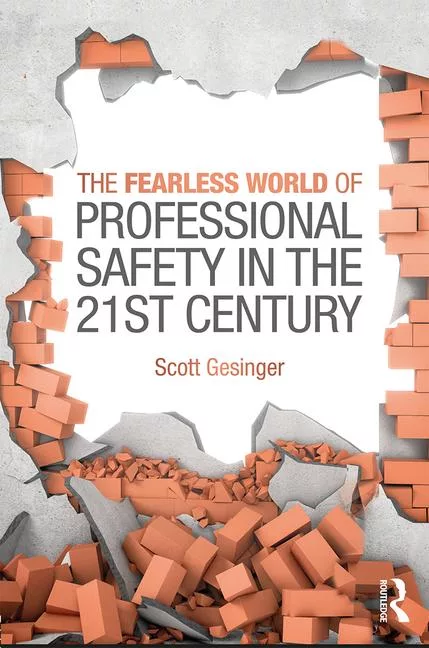
    The Fearless World of Professional Safety in the 21st Century

See More Products

Related Directories

  • American Society of Safety Professionals (ASSP)

    The American Society of Safety Professionals (ASSP) is a global association of occupational safety and health professionals who are dedicated to workplace safety. We provide education, safety standards, advocacy and a professional community that supports our diverse members and the profession.
  • Alliance of Women’s Safety Apparel Manufacturers (AWSAM)

    The Alliance of Women's Safety Apparel Manufacturers is a collection of specialty manufacturers and distributors committed to providing properly designed and fitted PPE for women. Our foundational pillars are Awareness, Access and Advocacy. Our non-profit organization has 12 Founding Members and aligns the needs of women in the workforce and the companies they work for with specialty manufacturers dedicated to providing appropriate PPE for women. The Founding Members of the organization have made great strides in removing barriers to access that have existed for many years and kept women from being equally protected. Together, we create a platform that increases awareness of products made for women, encourages equal access to appropriately fitting PPE, and advocates for the safety of women in the workforce. In the spirit of co-opetition, we collaborate to envision what is next for women in industry as we work side by side to accomplish our mission, increase our impact, and share the journey with everyone seeking to elevate diversity and equality in their workplace.
  • Board of Certified Safety Professionals (BCSP)

    Since 1969, BCSP has been setting and certifying the technical competency criteria for safety, health, and environmental practitioners; ensuring safety through certification. In 2019, BCSP developed examCORE a comprehensive educational program for safety certification.
×

Become a Leader in Safety Culture

Build your knowledge with ISHN, covering key safety, health and industrial hygiene news, products, and trends.

JOIN TODAY
  • RESOURCES
    • Advertise
    • Contact Us
    • Directories
    • Manufacturing Division
    • Store
    • Want More
  • SIGN UP TODAY
    • Create Account
    • eMagazine
    • Newsletters
    • Customer Service
    • Manage Preferences
  • SERVICES
    • Marketing Services
    • Reprints
    • Market Research
    • List Rental
    • Survey/Respondent Access
  • STAY CONNECTED
    • LinkedIn
    • Facebook
    • YouTube
    • X (Twitter)
  • PRIVACY
    • PRIVACY POLICY
    • TERMS & CONDITIONS
    • DO NOT SELL MY PERSONAL INFORMATION
    • PRIVACY REQUEST
    • ACCESSIBILITY

Copyright ©2026. All Rights Reserved BNP Media, Inc. and BNP Media II, LLC.

Design, CMS, Hosting & Web Development :: ePublishing