ISHN logo
search
cart
facebook twitter linkedin youtube
  • Sign In
  • Create Account
  • Sign Out
  • My Account
ISHN logo
  • NEWS
    • Today's News
    • Global Safety News
    • Government Regulations
  • PRODUCTS
    • Product Innovations
    • Featured Products
  • TOPICS
    • Environmental Health and Safety
    • Facility Safety
    • Workplace Health
    • Occupational Safety
    • PPE
    • More Topics
  • CONSTRUCTION
  • TECHNOLOGY
  • COLUMNS
    • Best Practices
    • Dave Johnson: What’s going on
    • Editorial Comments
    • Leading Safety
  • MULTIMEDIA
    • ISHN Podcast
    • Videos
    • Cold Stress Education Quiz
    • Webinars
    • White Papers
  • MORE
    • Buyer's Guide
    • Newsletters
    • Convention Companion
    • Polls
    • Events
    • ISHN Store
    • Sponsor Insights
  • EMAGAZINE
    • eMagazine
    • Archived Issues
    • Contact
    • Advertise
  • JOIN TODAY!
Today's Safety NewsWorkplace Training Strategies

A railroad company investigates the human side of safety

December 20, 2000
“When you’ve fixed everything you can fix with procedures, training and standards, and injuries still occur, then where else do you look?” That’s Peter Bamford speaking. Bamford was director of corporate safety for Canadian National (CN) Rail when a double fatality in March, 1999, at one of the company’s subsidiaries led to an extensive program aimed at the human side of safety.

CN Rail, which operates almost 18,000 route miles in Canada and the U.S. and has 21,600 employees, is committed to maintaining its physical plant and facilities. It has installed 350 wayside inspection systems, for instance. CN Rail also spends upwards of $50 million dollars each year on employee training, much of it safety related. Each shift is required to begin with a job briefing, for example. These kinds of safety investments contributed to CN Rail’s ranking as the safest Class 1 railroad.

But the fatalities (and a high injury frequency rate) at the mechanical department of the former Grand Trunk Western Railroad, a U.S. subsidiary of Canadian National, showed that the commitment to safety was not having the desired effect in all corners of the organization.

A new focus

A human factors development program for the mechanical department’s 300 employees was launched after an investigation of the fatalities considered possible faulty procedures, job factors, and human factors. Employees in the department’s five shops inspect and repair railcars and locomotives while in the yard. Bamford steered clear of calling this new initiative a “behavior-based” program due negative connotations, he says.

Implementing the program took a lot of work and a lot of talking, he recalls. “Communication is the starting point,” he says. “People have to know what goes into the human side of safety (see sidebar) before they can understand it.”

Removing safety from labor relations was another key prerequisite. “Safety is not negotiable. It’s not a bargaining chip in the process of labor relations. It’s everybody’s responsibility, and everybody has different responsibilities within it,” says Bamford.

With these ground rules set, a two-day train-the-trainer session for union and safety reps followed. Training was then extended to about 180 of the employees of the mechanical department (the remainder were either on vacation, extended medical leave or off shift). Five units of training were spread over a period of ten weeks.

First impressions

To understand how workers reacted, you need to appreciate their culture. “It hasn’t changed much since the first round wheel met the flat rail 165 years ago,” remarks Bamford. “You can’t tell them which way’s up or down because they know it all.”

At first these rugged individualists were unimpressed. “They though it was kind of basic,” says John Geary, a district safety coordinator. But disdain soon turned to approval. “Once they got into it, they ranted and raved, ‘This makes sense. It’s so simple and easy to understand, but it makes sense’,” recalls Geary.

Results came quickly. Ten minutes after completing the first unit of training, an employee was driving on an interstate when his cell phone rang. He started to answer it, hesitated, then decided not to. He later told Bamford that he knew if he answered the call, he wouldn’t be able to keep his mind and eyes on his driving.

Employees throughout the department began talking about safety during job briefings and while working underneath railcars: “Are you in the line of fire?” “Watch yourself now, you’re rushing.” “Let’s not get complacent. Think about what you’re doing.”

“If people are talking about safety — good or bad — you’ve won,” says Bamford. If people are talking about safety in a good way, you’ve really won.”

The pay-off

Looks like CN Rail and its employees are winners. During the first six months after initial training (the last two quarters of 1999) not one person who had been trained was involved in any reportable incident, minor injury or first aid. Injuries were confined to employees who had not received the training. In the first quarter of 2000, only two of the 180 employees trained had been injured, in both cases minor, non-reportable injuries.

“Working on human factors does work,” says Bamford. Working on both job factors (the physical plant and safe procedures) and human factors together delivers immediate returns.

The human factors development program “isn’t meant to replace anything we’re already doing, like correcting safety concerns, or replacing procedures or training,” says Geary. “This is an extra tool that employees can use for their own safety awareness. It makes employees more aware of what they’re doing, and more conscientious about getting out there and understanding what they need to do to protect themselves.”

Ideas & techniques that get results

Focus on a core group of critical behaviors that transcends specific industry type. These behaviors involve:

  • Eyes not on task;

  • Mind not on task;

  • Moving into or being in the line-of-fire; and

  • Losing your balance, traction or grip.

    These core behaviors are unintentional — mistakes or errors that no one ever sets out to make in the first place.

Recognize that before an error occurs, there is almost always at least one state (human factor) that precedes the error. These four states include:

  • Rushing;

  • Frustration;

  • Fatigue; and

  • Complacency.

    One or more of these four states can actually cause you to make an error you did not intend to make.

    Train employees to think about this “state-to-error pattern.” This is much more than simply passing information along. Give employees the opportunity to think about their own experiences on the job, off the job or driving. They need to ask themselves if they have ever experienced a serious injury without one or more of these four states involved. They need to be motivated to decide for themselves.

    Give employees specific techniques that they can use to minimize the risk of making a critical error. These techniques involve:

  • Focusing on the four states (and any amount of hazardous energy present);

  • Analyzing small errors to prevent agonizing over big ones;

  • Watching the “state-to-error pattern” in other people to fight complacency and increase personal awareness; and

  • Working to develop a consistent mental habit of thinking about and looking for line of fire and factors that could cause a loss of balance, traction or grip.

Share This Story

Looking for a reprint of this article?
From high-res PDFs to custom plaques, order your copy today!

Recommended Content

JOIN TODAY
to unlock your recommendations.

Already have an account? Sign In

  • forklift safety

    Exploring the latest technologies in forklift safety

    With more staff and more stock in warehousing now more...
    Facility Safety
    By: Josh Cramer
  • welding

    All about welder’s flash or arc eye

    A flash burn is a painful inflammation of the cornea,...
    Environmental Health and Safety
  • dangerous jobs

    The 10 most dangerous jobs in the U.S.

    On-the-job deaths have been rising — hitting the highest...
    Occupational Safety
    By: Benita Mehta
Manage My Account
  • eMagazine Subscriptions
  • ISHN Newsletter & Other Newsletter Alerts
  • Online Registration
  • Manage My Preferences
  • Subscription Customer Service

More Videos

Sponsored Content

Sponsored Content is a special paid section where industry companies provide high quality, objective, non-commercial content around topics of interest to the ISHN audience. All Sponsored Content is supplied by the advertising company and any opinions expressed in this article are those of the author and not necessarily reflect the views of ISHN or its parent company, BNP Media. Interested in participating in our Sponsored Content section? Contact your local rep!

close
  • man wearing the the Sundström SR200 Full Face Mask Respirator
    Sponsored byOHD

    5 Fit Testing Mistakes That Could Cost You

  • This image shows Magid AcuSpex polarized blue mirrored safety glasses.
    Sponsored byMagid Glove and Safety

    Construction PPE Guide: What Crews Need for Each Task

  • lone worker in confined space
    Sponsored byAlphasense Ltd.

    GET THE LEAD OUT of your Safety Oxygen Sensors!

Popular Stories

SpaceX 7 launch

OSHA Investigating Fatal Fall at SpaceX Starbase

Worker Impairment

How to Tell When a Co-Worker is Impaired? A Safety Pro’s Challenge

Automated loading dock equipment

After March 2026 Rivian Death, Safety Managers Reassess Loading Dock Systems Under OSHA's Warehouse Emphasis Program

top 10 most dangerous jobs

Poll

Seasonal Readiness

With the federal heat stress prevention rule on the horizon, which area of your safety program needs the most attention?
View Results Poll Archive

Products

Surviving an OSHA Audit A Management Guide, 2nd Edition

Surviving an OSHA Audit A Management Guide, 2nd Edition

See More Products

ISHN Podcasts

Related Articles

  • A railroad company investigates the human side of safety

    See More
  • The Human Side of Safety

    The Human Side of Safety

    See More
  • The human side of injury prevention

    See More

Related Products

See More Products
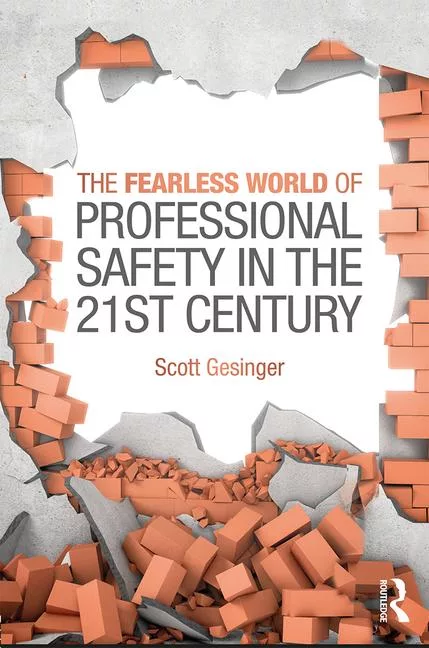
  • fearless world.jpg

    The Fearless World of Professional Safety in the 21st Century

See More Products

Related Directories

  • American Society of Safety Professionals (ASSP)

    The American Society of Safety Professionals (ASSP) is a global association of occupational safety and health professionals who are dedicated to workplace safety. We provide education, safety standards, advocacy and a professional community that supports our diverse members and the profession.
  • Alliance of Women’s Safety Apparel Manufacturers (AWSAM)

    The Alliance of Women's Safety Apparel Manufacturers is a collection of specialty manufacturers and distributors committed to providing properly designed and fitted PPE for women. Our foundational pillars are Awareness, Access and Advocacy. Our non-profit organization has 12 Founding Members and aligns the needs of women in the workforce and the companies they work for with specialty manufacturers dedicated to providing appropriate PPE for women. The Founding Members of the organization have made great strides in removing barriers to access that have existed for many years and kept women from being equally protected. Together, we create a platform that increases awareness of products made for women, encourages equal access to appropriately fitting PPE, and advocates for the safety of women in the workforce. In the spirit of co-opetition, we collaborate to envision what is next for women in industry as we work side by side to accomplish our mission, increase our impact, and share the journey with everyone seeking to elevate diversity and equality in their workplace.
  • Board of Certified Safety Professionals (BCSP)

    Since 1969, BCSP has been setting and certifying the technical competency criteria for safety, health, and environmental practitioners; ensuring safety through certification. In 2019, BCSP developed examCORE a comprehensive educational program for safety certification.
×

Become a Leader in Safety Culture

Build your knowledge with ISHN, covering key safety, health and industrial hygiene news, products, and trends.

JOIN TODAY
  • RESOURCES
    • Advertise
    • Contact Us
    • Directories
    • Manufacturing Division
    • Store
    • Want More
  • SIGN UP TODAY
    • Create Account
    • eMagazine
    • Newsletters
    • Customer Service
    • Manage Preferences
  • SERVICES
    • Marketing Services
    • Reprints
    • Market Research
    • List Rental
    • Survey/Respondent Access
  • STAY CONNECTED
    • LinkedIn
    • Facebook
    • YouTube
    • X (Twitter)
  • PRIVACY
    • PRIVACY POLICY
    • TERMS & CONDITIONS
    • DO NOT SELL MY PERSONAL INFORMATION
    • PRIVACY REQUEST
    • ACCESSIBILITY

Copyright ©2026. All Rights Reserved BNP Media, Inc. and BNP Media II, LLC.

Design, CMS, Hosting & Web Development :: ePublishing