ISHN logo
search
cart
facebook twitter linkedin youtube
  • Sign In
  • Create Account
  • Sign Out
  • My Account
ISHN logo
  • NEWS
    • Today's News
    • Global Safety News
    • Government Regulations
  • PRODUCTS
    • Product Innovations
    • Featured Products
  • TOPICS
    • Environmental Health and Safety
    • Facility Safety
    • Workplace Health
    • Occupational Safety
    • PPE
    • More Topics
  • CONSTRUCTION
  • TECHNOLOGY
  • COLUMNS
    • Best Practices
    • Dave Johnson: What’s going on
    • Editorial Comments
    • Leading Safety
  • MULTIMEDIA
    • ISHN Podcast
    • Videos
    • Cold Stress Education Quiz
    • Webinars
    • White Papers
  • MORE
    • Buyer's Guide
    • Newsletters
    • Convention Companion
    • Polls
    • Events
    • ISHN Store
    • Sponsor Insights
  • EMAGAZINE
    • eMagazine
    • Archived Issues
    • Contact
    • Advertise
  • JOIN TODAY!

Take time to update your PPE eyewear program
By John Navroth
June 4, 2008
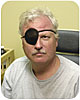
Most eye injuries occur off the job.


Most safety professionals acknowledge difficulties in getting people to use personal protective equipment, including eye protection. Yet, according to OSHA, “thousands” of people are blinded each year from work-related eye injuries.

In addition to the suffering caused to victims and their families, the monetary cost of these injuries to employers is more than $300 million annually, spread across lost work time, medical expenses, and workers’ compensation.

Meeting regulatory standards
The greatest cause of eye injuries is workers’ failure to wear protective equipment. Much of the blame for this situation rests with employers who fail to conduct job hazard analyses to identify the need for appropriate PPE, even though a formal personal protective program is required by regulatory standards. These standards mandate that you not only identify eye injury hazards, but also that you address all other hazards and their requisite control measures concurrently.

If you already have a PPE/eye protection program in place, take some time to review it. Make sure no new or additional hazards have presented themselves since you first implemented your plan. If they have, revise your procedures accordingly.

If you are just starting out, the OSHA website (http://www.osha.gov) offers excellent guidance. In addition, here are a few things to consider for a program that is, according to regulatory-speak, “effective in practice:”
  • Conduct a job hazard analysis.
  • Document the results.
  • Engineer or administrate out as many hazards as practicable.
  • Institute an eye protection policy to guard against the remaining hazards.
  • Train to the policy and have the workers sign documentation certifying that they have been advised of the policy requirements, as well as given an opportunity to ask questions.
  • Issue the appropriate eye protection.
  • Ensure eye protection fits comfortably.
  • Use disciplinary action for infractions to the requirements, and deliver it in a consistent manner.
  • Monitor your program for effectiveness at least annually and more often for processes and tasks that change frequently.
Selecting protective eyewear
Your job hazard analysis should address the kind of eyewear needed for a certain task. In an occupational setting, the following should be considered:
  • According to OSHA, hazards from flying or falling objects are the number one cause of workplace eye injuries. If you have identified these hazards, use ANSI-approved safety glasses or goggles. To protect the entire face, choose faceshields (and maybe safety glasses also, depending on the nature of the potential injury).
  • To protect against heat, choose ANSI-approved safety glasses, goggles, or faceshields.
  • If your hazard is from splashing chemicals, chemical-resistant goggles and faceshields are appropriate; safety glasses are not generally acceptable for use against chemical splash hazards.
  • If dust is a hazard, use goggles; open eyewear such as glasses and faceshields will not protect the eyes in dusty environments.
  • If the hazard involves optical radiation, special lenses must be used. Check the regulations and remind your workers that sunglasses, even ANSI-approved sunglasses, will not protect them from optical radiation from welding, torching, or lasers.
The training medium is the message
While there is value in real-time interaction with workers as they perform their tasks, one of the best ways to communicate your PPE policies is through classroom training. This allows you to get your message out in its entirety instead of in a piecemeal fashion, thus avoiding a trail of misinformation. Some of the greatest advantages of classroom training are:
  • Everyone’s attention can be focused on the topic at hand.
  • Interaction can take place between the trainer and the audience.
  • The level of understanding and proficiency can be tested either before or after (or both).
  • Misunderstanding and rumors can be dispelled and clarified.
  • There are opportunities for peer-to-peer recognition.
  • There are opportunities for individuals to show leadership.
After many years of conducting safety training, I have found that a multi-media presentation works very well to promote the use of eyewear, as well as for most other types of PPE.

Videos that include real-life testimonials by people whose lives have been affected by workplace eye injuries (or any other injuries for that matter) are quite effective in delivering a lasting message. If your audience isn’t too squeamish, “high impact” safety training videos are available that graphically depict realistic re-enactments of catastrophic injury events. These kinds of images can leave an indelible mark on even the most resistant employee.

Don’t forget to include a little show and tell during your training sessions. Bring examples of the eyewear you expect your workers to wear. Don’t be afraid to spend the extra dollar or two for those Harley-Davidson or Winchester brand safety glasses, as name recognition and style can be a secret weapon in getting your workers to comply.

Home is where the danger is
According to the American Academy of Ophthalmology, about one million eye injuries occur in the United States each year. The top ten causes of eye injuries are:
  • Household chemicals
  • Home workshop and yard debris
  • Acid splash from car batteries
  • Sports accidents
  • Overexposure to Ultraviolet (UV) light
  • Fireworks
  • Toys and games
  • Furniture corners
  • Work-related injuries
  • Vehicle airbags
Did you spot the significant element here? Work-related injuries are one away from the bottom of the list — all the others happen at home or away from work. One could argue that, when it comes to eye injuries, it’s more dangerous at home than at work.

I like to mention this fact during an eyewear campaign in order to foster a holistic safety culture. If employees know the importance of protecting their vision at home when it’s not required, you may have an easier time getting them to use eye protection for the same reasons at work, when it is required. After all, saving even one person’s vision makes all your efforts worthwhile.

Share This Story

Looking for a reprint of this article?
From high-res PDFs to custom plaques, order your copy today!

John is the Safety Officer for Snohomish County Government located in Washington State. He has over 18 years of experience in the safety profession and has performed hundreds of ergonomic consultations. John can be reached at: john.navroth@co.snohomish.wa.us.

Recommended Content

JOIN TODAY
to unlock your recommendations.

Already have an account? Sign In

  • forklift safety

    Exploring the latest technologies in forklift safety

    With more staff and more stock in warehousing now more...
    Workplace Training Strategies
    By: Josh Cramer
  • welding

    All about welder’s flash or arc eye

    A flash burn is a painful inflammation of the cornea,...
    Environmental Health and Safety
  • dangerous jobs

    The 10 most dangerous jobs in the U.S.

    On-the-job deaths have been rising — hitting the highest...
    Construction Industry Safety and Health
    By: Benita Mehta
Manage My Account
  • eMagazine Subscriptions
  • ISHN Newsletter & Other Newsletter Alerts
  • Online Registration
  • Manage My Preferences
  • Subscription Customer Service

More Videos

Sponsored Content

Sponsored Content is a special paid section where industry companies provide high quality, objective, non-commercial content around topics of interest to the ISHN audience. All Sponsored Content is supplied by the advertising company and any opinions expressed in this article are those of the author and not necessarily reflect the views of ISHN or its parent company, BNP Media. Interested in participating in our Sponsored Content section? Contact your local rep!

close
  • man wearing the the Sundström SR200 Full Face Mask Respirator
    Sponsored byOHD

    5 Fit Testing Mistakes That Could Cost You

  • This image shows Magid AcuSpex polarized blue mirrored safety glasses.
    Sponsored byMagid Glove and Safety

    Construction PPE Guide: What Crews Need for Each Task

  • lone worker in confined space
    Sponsored byAlphasense Ltd.

    GET THE LEAD OUT of your Safety Oxygen Sensors!

Popular Stories

SpaceX 7 launch

OSHA Investigating Fatal Fall at SpaceX Starbase

Worker Impairment

How to Tell When a Co-Worker is Impaired? A Safety Pro’s Challenge

Automated loading dock equipment

After March 2026 Rivian Death, Safety Managers Reassess Loading Dock Systems Under OSHA's Warehouse Emphasis Program

top 10 most dangerous jobs

Poll

Seasonal Readiness

With the federal heat stress prevention rule on the horizon, which area of your safety program needs the most attention?
View Results Poll Archive

Products

Surviving an OSHA Audit A Management Guide, 2nd Edition

Surviving an OSHA Audit A Management Guide, 2nd Edition

See More Products

ISHN Podcasts

Related Articles

  • Small business week: Take time to celebrate!

    See More
  • Food industry gets more time to update nutrition info

    See More
  • How to update your managers on GHS

    See More

Related Directories

  • EssilorLuxottica Prescription Safety Eyewear

    Our Prescription Safety Eyewear division is proud to introduce SightProtect—a next-generation safety eyewear program designed to elevate workplace eye protection. Built on three core pillars missing from many of today’s existing Prescription Safety Eyewear Programs—SightProtect delivers a seamless, electronically managed, and brand-rich experience for employers, their teams, and our eyecare provider partners. With our unmatched portfolio of trusted brands and a vertically integrated model, we make it easier than ever to protect vision on the job—without compromising on style, comfort, or performance.
×

Become a Leader in Safety Culture

Build your knowledge with ISHN, covering key safety, health and industrial hygiene news, products, and trends.

JOIN TODAY
  • RESOURCES
    • Advertise
    • Contact Us
    • Directories
    • Manufacturing Division
    • Store
    • Want More
  • SIGN UP TODAY
    • Create Account
    • eMagazine
    • Newsletters
    • Customer Service
    • Manage Preferences
  • SERVICES
    • Marketing Services
    • Reprints
    • Market Research
    • List Rental
    • Survey/Respondent Access
  • STAY CONNECTED
    • LinkedIn
    • Facebook
    • YouTube
    • X (Twitter)
  • PRIVACY
    • PRIVACY POLICY
    • TERMS & CONDITIONS
    • DO NOT SELL MY PERSONAL INFORMATION
    • PRIVACY REQUEST
    • ACCESSIBILITY

Copyright ©2026. All Rights Reserved BNP Media, Inc. and BNP Media II, LLC.

Design, CMS, Hosting & Web Development :: ePublishing