ISHN logo
search
cart
facebook twitter linkedin youtube
  • Sign In
  • Create Account
  • Sign Out
  • My Account
ISHN logo
  • NEWS
    • Today's News
    • Global Safety News
    • Government Regulations
  • PRODUCTS
    • Product Innovations
    • Featured Products
  • TOPICS
    • Environmental Health and Safety
    • Facility Safety
    • Workplace Health
    • Occupational Safety
    • PPE
    • More Topics
  • CONSTRUCTION
  • TECHNOLOGY
  • COLUMNS
    • Best Practices
    • Dave Johnson: What’s going on
    • Editorial Comments
    • Leading Safety
  • MULTIMEDIA
    • ISHN Podcast
    • Videos
    • Cold Stress Education Quiz
    • Webinars
    • White Papers
  • MORE
    • Buyer's Guide
    • Newsletters
    • Convention Companion
    • Polls
    • Events
    • ISHN Store
    • Sponsor Insights
  • EMAGAZINE
    • eMagazine
    • Archived Issues
    • Contact
    • Advertise
  • JOIN TODAY!
Columns

PSYCHOLOGY OF SAFETY: The "Last Lecture"

By E. Scott Geller Ph.D.
February 5, 2009


“Brick walls give us a chance to show how badly we want something.” — Randy Pausch

On September 18, 2007, Dr. Randy Pausch, an esteemed professor of computer science, human computer interaction, and design at Carnegie Mellon University, gave a “last lecture” in front of an audience of 400. Unlike other contributors to the university last-lecture series, Randy knew this would really be his last lecture, since he had been diagnosed with terminal pancreatic cancer. His lecture, entitled “Really Achieving Your Childhood Dreams,” was both instructive and inspirational.

You can experience Randy’s entire lecture by logging on to www.thelastlecture.com and/or by reading Randy’s book, “The Last Lecture” published in 2008 by Hyperion Books, N.Y. I read Randy’s book and viewed his lecture, and was moved by both. And I found human-dynamic principles of his lecture to be innovative, compelling and related to promoting safety.

1 — The elephant in the room

Randy began his lecture by introducing the elephant in the room — an unspoken topic or fact that influences people’s thoughts and perceptions. In this case, the elephant was the fact Randy was dying of pancreatic cancer and this was a primary reason many attended his last lecture. He affirmed he was not in denial of his impending death and declared, “We cannot change the cards we are dealt, just how we play the hand.”

A participant at my ASSE talk last June wrote on the evaluation sheet: “This narcissistic presentation was designed for book promotion. You pretended to be passionate but it’s just about Scott Geller.”

This evaluation reflects an elephant in the room that could be on the minds of others, and such a perception could interfere with my sincere intention to teach.

I might get more participants on board by revealing this elephant and clarifying, “I am here today to teach and share principles. What matters most to me is not whether you buy my book, but whether you ‘buy into’ my knowledge.”

2 — Suspiciousness of intent

Barriers to understanding and relationshipbuilding develop when people are suspicious of one’s intentions.

My recommendation: Put the cards on the table. State your sincere intention to help, but if relevant, acknowledge that personal achievement and/or financial gain could be a beneficial side effect.

3 — The caring of corrective feedback

Randy told the story of his frustrating experiences when learning the fundamentals of football at age 11. Once, when Randy failed to meet the coach’s standard, he was required to do push-ups for punishment. An assistant coach consoled Randy with, “When you’re screwing up and nobody says anything to you anymore that means they’ve given up on you.”

In terms of safety, the lessons here are: Repeated corrective feedback is essential for improvement; and asking a person to stop a certain at-risk behavior and/or perform a particular safe behavior is an act of caring. When people do not speak up on behalf of another person’s safety, they send an “I give up” or “I don’t care” message.

4 — The head fake

Dr. Pausch testified to the important life lessons he learned while being trained on the fundamentals of football, including “teamwork, perseverance, sportsmanship, the value of hard work, an ability to deal with adversity.” He called this indirect learning a “head fake,” whereby people learn things “they don’t realize they’re learning until well into the process.”

Effective behavior-based coaching employs the head-fake principle throughout the observation- and-feedback process. The coach does not make judgments or give directions, but merely collects relevant and objective injuryprevention information, and shares the results in a mutual learning experience. Both parties develop self-accountability to perform safetyrelated actions.

5 — Have some fun

Professor Randy Pausch lost his battle to pancreatic cancer on July 25th, 2008, at the age of 47. But his positive legacy lives on. Randy’s book and last lecture will be instructive and inspirational for generations to come. Randy’s last lecture emphasizes a most important life principle — Have fun! Indeed, Randy showed youthful energy and creative humor throughout his profound and spirited lecture. In Randy’s words, “I’m dying and I’m having fun.”

Share This Story

Looking for a reprint of this article?
From high-res PDFs to custom plaques, order your copy today!

By E. Scott Geller, Ph.D., Senior Partner, Safety Performance Solutions, Distinguished Professor, Virginia Tech

Recommended Content

JOIN TODAY
to unlock your recommendations.

Already have an account? Sign In

  • forklift safety

    Exploring the latest technologies in forklift safety

    With more staff and more stock in warehousing now more...
    Workplace Training Strategies
    By: Josh Cramer
  • welding

    All about welder’s flash or arc eye

    A flash burn is a painful inflammation of the cornea,...
    Environmental Health and Safety
  • dangerous jobs

    The 10 most dangerous jobs in the U.S.

    On-the-job deaths have been rising — hitting the highest...
    Government Safety Regulations
    By: Benita Mehta
Manage My Account
  • eMagazine Subscriptions
  • ISHN Newsletter & Other Newsletter Alerts
  • Online Registration
  • Manage My Preferences
  • Subscription Customer Service

More Videos

Sponsored Content

Sponsored Content is a special paid section where industry companies provide high quality, objective, non-commercial content around topics of interest to the ISHN audience. All Sponsored Content is supplied by the advertising company and any opinions expressed in this article are those of the author and not necessarily reflect the views of ISHN or its parent company, BNP Media. Interested in participating in our Sponsored Content section? Contact your local rep!

close
  • man wearing the the Sundström SR200 Full Face Mask Respirator
    Sponsored byOHD

    5 Fit Testing Mistakes That Could Cost You

  • This image shows Magid AcuSpex polarized blue mirrored safety glasses.
    Sponsored byMagid Glove and Safety

    Construction PPE Guide: What Crews Need for Each Task

  • lone worker in confined space
    Sponsored byAlphasense Ltd.

    GET THE LEAD OUT of your Safety Oxygen Sensors!

Popular Stories

SpaceX 7 launch

OSHA Investigating Fatal Fall at SpaceX Starbase

Worker Impairment

How to Tell When a Co-Worker is Impaired? A Safety Pro’s Challenge

Automated loading dock equipment

After March 2026 Rivian Death, Safety Managers Reassess Loading Dock Systems Under OSHA's Warehouse Emphasis Program

top 10 most dangerous jobs

Poll

Seasonal Readiness

With the federal heat stress prevention rule on the horizon, which area of your safety program needs the most attention?
View Results Poll Archive

Products

Surviving an OSHA Audit A Management Guide, 2nd Edition

Surviving an OSHA Audit A Management Guide, 2nd Edition

See More Products

ISHN Podcasts

Related Articles

  • PSYCHOLOGY OF SAFETY: The power of our intentions

    See More
  • PSYCHOLOGY OF SAFETY: The actively-caring disposition

    See More
  • PSYCHOLOGY OF SAFETY: The psychology of recovery

    See More

Related Products

See More Products
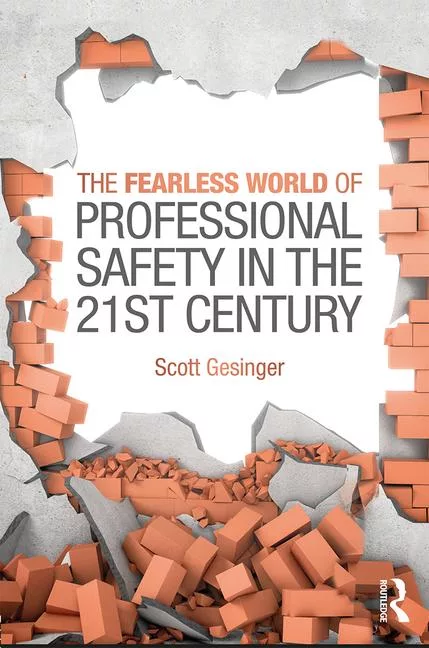
  • fearless world.jpg

    The Fearless World of Professional Safety in the 21st Century

See More Products

Related Directories

  • American Society of Safety Professionals (ASSP)

    The American Society of Safety Professionals (ASSP) is a global association of occupational safety and health professionals who are dedicated to workplace safety. We provide education, safety standards, advocacy and a professional community that supports our diverse members and the profession.
  • MSA - The Safety Co.

    WE KNOW WHAT'S AT STAKE. Unpredictable work environments are often part of the job. That's why it's critically important to have the right safety equipment at the moment it matters most. MSA's complete lines of safety solutions help protect those workers at the heart of your operation.
  • The Safety Knife Co. LLC

    The Safety Knife Company has developed a quality range of safety knives for all industries. These knives have no exposed blades and only cut cardboard deep, protecting employees against lacerations as well as product.
×

Become a Leader in Safety Culture

Build your knowledge with ISHN, covering key safety, health and industrial hygiene news, products, and trends.

JOIN TODAY
  • RESOURCES
    • Advertise
    • Contact Us
    • Directories
    • Manufacturing Division
    • Store
    • Want More
  • SIGN UP TODAY
    • Create Account
    • eMagazine
    • Newsletters
    • Customer Service
    • Manage Preferences
  • SERVICES
    • Marketing Services
    • Reprints
    • Market Research
    • List Rental
    • Survey/Respondent Access
  • STAY CONNECTED
    • LinkedIn
    • Facebook
    • YouTube
    • X (Twitter)
  • PRIVACY
    • PRIVACY POLICY
    • TERMS & CONDITIONS
    • DO NOT SELL MY PERSONAL INFORMATION
    • PRIVACY REQUEST
    • ACCESSIBILITY

Copyright ©2026. All Rights Reserved BNP Media, Inc. and BNP Media II, LLC.

Design, CMS, Hosting & Web Development :: ePublishing