ISHN logo
search
cart
facebook twitter linkedin youtube
  • Sign In
  • Create Account
  • Sign Out
  • My Account
ISHN logo
  • NEWS
    • Today's News
    • Global Safety News
    • Government Regulations
  • PRODUCTS
    • Product Innovations
    • Featured Products
  • TOPICS
    • Environmental Health and Safety
    • Facility Safety
    • Workplace Health
    • Occupational Safety
    • PPE
    • More Topics
  • CONSTRUCTION
  • TECHNOLOGY
  • COLUMNS
    • Best Practices
    • Dave Johnson: What’s going on
    • Editorial Comments
    • Leading Safety
  • MULTIMEDIA
    • ISHN Podcast
    • Videos
    • Cold Stress Education Quiz
    • Webinars
    • White Papers
  • MORE
    • Buyer's Guide
    • Newsletters
    • Convention Companion
    • Polls
    • Events
    • ISHN Store
    • Sponsor Insights
  • EMAGAZINE
    • eMagazine
    • Archived Issues
    • Contact
    • Advertise
  • JOIN TODAY!
Today's Safety News

ASSE supports making VPP law (5/24)

May 24, 2011


The American Society of Safety Engineers (ASSE) says it supports the ‘Voluntary Protection Program Act’ (S. 807, HB 1511), which would place the U.S. Occupational Safety and Health Administration’s (OSHA) Voluntary Protection Program (VPP) into law.

In letters sent to the Senate and House sponsors of the bill, ASSE officials noted, “VPP is unique in encouraging employers not simply to meet regulatory standards but to take active responsibility for safety and to seek results beyond the minimum.” ASSE also supports provisions requiring a monitoring system with specific performance goals for VPP and prohibiting payment from an employer to participate.

According to OSHA, VPP recognizes employers and workers in private industry and federal agencies who have implemented effective safety and health management systems and maintain injury and illness rates below national Bureau of Labor Statistics averages for their respective industries. In VPP, management, labor, and OSHA work cooperatively to prevent fatalities, injuries, and illnesses through a system focused on: hazard prevention and control; worksite analysis; training; and, management commitment and worker involvement. To participate, employers must submit an application to OSHA and undergo onsite evaluations by a team of safety and health professionals. VPP participants are re-evaluated every three to five years to remain in the program. VPP participants are exempt from OSHA programmed inspections while they maintain their VPP status.

In a letter to Senators Michael B. Enzi and Mary Landrieu and Representatives Thomas E. Petri and Gene Green, ASSE President Darryl C. Hill, Ph.D., CSP, noted that VPP has succeeded in encouraging both employer and employee commitment to safe and healthy workplaces.

“Our members typically are the individuals responsible for establishing VPP for employers. From that front line experience, they know that VPP is effective in helping employers achieve and remain committed to achieving safe and healthy workplaces,” Hill wrote. “As VPP is implemented in an organization, they consistently witness the dynamic adoption of the risk-based approach to managing safety and health risks that VPP encourages. They also witness significant organizational improvements in communications and cooperation between management and workers over safety and health. VPP is unique in encouraging employers not simply to meet regulatory standards but to take active responsibility for safety and to seek results beyond the minimum.”

ASSE notes that the average VPP worksite has a ‘Days Away Restricted or Transferred (DART)’ case rate that is 52 percent below the national industry averages. According to the Bureau of Labor Statistics, VPP sites have ‘Total Case Incident Rates (TCIR)’ 54 percent below industry averages. The National Safety Council has reported that, in 2007, VPP sites saved private industry $300 million and federal agencies $59 million.

In supporting language in the bill barring any Administration from requiring payment from an employer to qualify for or participate in VPP, ASSE said requiring payment from VPP employers will only result in fewer employers engaging with OSHA and, so, fewer employers implementing injury and illness protection programs, less cooperation between employers and employees in achieving safety and health, and, ultimately, an OSHA that will be more hard pressed to meet its mission of helping to protect workers.

Share This Story

Looking for a reprint of this article?
From high-res PDFs to custom plaques, order your copy today!

Recommended Content

JOIN TODAY
to unlock your recommendations.

Already have an account? Sign In

  • forklift safety

    Exploring the latest technologies in forklift safety

    With more staff and more stock in warehousing now more...
    Facility Safety
    By: Josh Cramer
  • welding

    All about welder’s flash or arc eye

    A flash burn is a painful inflammation of the cornea,...
    Environmental Health and Safety
  • dangerous jobs

    The 10 most dangerous jobs in the U.S.

    On-the-job deaths have been rising — hitting the highest...
    Construction Industry Safety and Health
    By: Benita Mehta
Manage My Account
  • eMagazine Subscriptions
  • ISHN Newsletter & Other Newsletter Alerts
  • Online Registration
  • Manage My Preferences
  • Subscription Customer Service

More Videos

Sponsored Content

Sponsored Content is a special paid section where industry companies provide high quality, objective, non-commercial content around topics of interest to the ISHN audience. All Sponsored Content is supplied by the advertising company and any opinions expressed in this article are those of the author and not necessarily reflect the views of ISHN or its parent company, BNP Media. Interested in participating in our Sponsored Content section? Contact your local rep!

close
  • man wearing the the Sundström SR200 Full Face Mask Respirator
    Sponsored byOHD

    5 Fit Testing Mistakes That Could Cost You

  • This image shows Magid AcuSpex polarized blue mirrored safety glasses.
    Sponsored byMagid Glove and Safety

    Construction PPE Guide: What Crews Need for Each Task

  • lone worker in confined space
    Sponsored byAlphasense Ltd.

    GET THE LEAD OUT of your Safety Oxygen Sensors!

Popular Stories

SpaceX 7 launch

OSHA Investigating Fatal Fall at SpaceX Starbase

Worker Impairment

How to Tell When a Co-Worker is Impaired? A Safety Pro’s Challenge

psychology in the workplace

Most Workplaces Measure Psychological Safety, Ignoring Psychosocial Risks

top 10 most dangerous jobs

Poll

Seasonal Readiness

With the federal heat stress prevention rule on the horizon, which area of your safety program needs the most attention?
View Results Poll Archive

Products

Surviving an OSHA Audit A Management Guide, 2nd Edition

Surviving an OSHA Audit A Management Guide, 2nd Edition

See More Products

ISHN Podcasts

Related Articles

  • EPA Administrator Jackson returns to Gulf Region to oversee ongoing response to the BP oil spill (5/24)

    See More
  • Protection for hands - At A+A 2011, manufacturers will present solutions for the most diverse purposes (5/24)

    See More
  • OSHA releases new pandemic flu guidance (5/24)

    See More

Related Products

See More Products
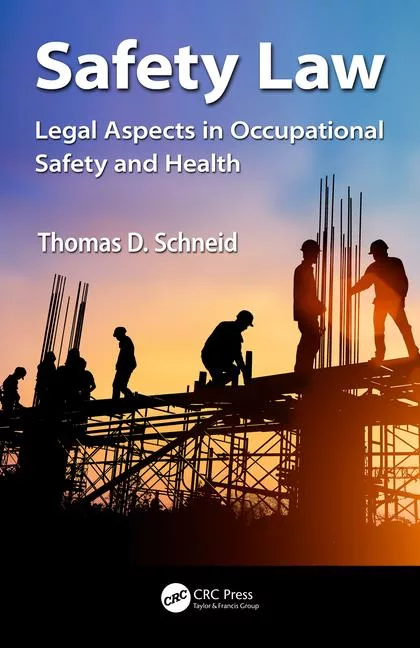
  • safety law.jpg

    Safety Law: Legal Aspects in Occupational Safety and Health

See More Products
×

Become a Leader in Safety Culture

Build your knowledge with ISHN, covering key safety, health and industrial hygiene news, products, and trends.

JOIN TODAY
  • RESOURCES
    • Advertise
    • Contact Us
    • Directories
    • Manufacturing Division
    • Store
    • Want More
  • SIGN UP TODAY
    • Create Account
    • eMagazine
    • Newsletters
    • Customer Service
    • Manage Preferences
  • SERVICES
    • Marketing Services
    • Reprints
    • Market Research
    • List Rental
    • Survey/Respondent Access
  • STAY CONNECTED
    • LinkedIn
    • Facebook
    • YouTube
    • X (Twitter)
  • PRIVACY
    • PRIVACY POLICY
    • TERMS & CONDITIONS
    • DO NOT SELL MY PERSONAL INFORMATION
    • PRIVACY REQUEST
    • ACCESSIBILITY

Copyright ©2026. All Rights Reserved BNP Media, Inc. and BNP Media II, LLC.

Design, CMS, Hosting & Web Development :: ePublishing