ISHN logo
search
cart
facebook twitter linkedin youtube
  • Sign In
  • Create Account
  • Sign Out
  • My Account
ISHN logo
  • NEWS
    • Today's News
    • Global Safety News
    • Government Regulations
  • PRODUCTS
    • Product Innovations
    • Featured Products
  • TOPICS
    • Environmental Health and Safety
    • Facility Safety
    • Workplace Health
    • Occupational Safety
    • PPE
    • More Topics
  • CONSTRUCTION
  • TECHNOLOGY
  • COLUMNS
    • Best Practices
    • Dave Johnson: What’s going on
    • Editorial Comments
    • Leading Safety
  • MULTIMEDIA
    • ISHN Podcast
    • Videos
    • Cold Stress Education Quiz
    • Webinars
    • White Papers
  • MORE
    • Buyer's Guide
    • Newsletters
    • Convention Companion
    • Polls
    • Events
    • ISHN Store
    • Sponsor Insights
  • EMAGAZINE
    • eMagazine
    • Archived Issues
    • Contact
    • Advertise
  • JOIN TODAY!
Today's Safety NewsEnvironmental Health and Safety

Welding and manganese: potential neurologic effects
April 7, 2014

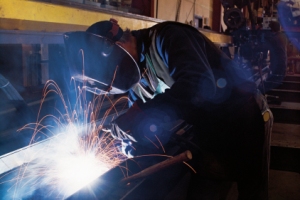
weldingWelding fumes are composed of metals and most fumes contain a small percentage of manganese. There is a concern by workers, employers, and health professionals about potential neurological effects associated with exposure to manganese in welding fumes. NIOSH has been conducting research and reviewing the published scientific literature to assess this problem.

Manganese is an essential nutrient. A healthy person with normal liver and kidney function can excrete excess dietary manganese. Inhaled manganese is of greater concern because it bypasses the body’s normal defense mechanisms. This can lead to manganese accumulation and adverse health effects including damage to the lungs, liver, kidney and central nervous system. Male workers exposed to manganese also have a higher risk of fertility problems. Prolonged exposure to high manganese concentrations (>1 mg/m3) in air may lead to a Parkinsonian syndrome known as “manganism.” Chronic exposure to the manganese-containing pesticide, maneb, is also reported to cause Parkinson-like symptoms. Parkinson-like symptoms may include tremors, slowness of movement, muscle rigidity, and poor balance.

Recent studies indicate neurological and neurobehavioral deficits may occur when workers are exposed to low levels of manganese (<0.2 mg/m3) in welding fumes. These effects include changes in mood and short-term memory, altered reaction time, and reduced hand-eye coordination. Affected workers frequently show abnormal accumulations of manganese in a region of the brain known as the globus pallidus. The globus pallidus plays an important role in movement regulation.

The National Institute for Occupational Safety and Health (NIOSH) is currently reviewing its Recommended Exposure Limit (REL) for manganese as a result of these studies. Evaluation of the available scientific literature of manganese exposure during welding is complicated by several factors. These factors include inconsistent conclusions, limited data on the biological processes that might result in given health outcomes, and the complex mixtures of welding fumes. A comprehensive review of the available scientific literature is in development and will be made available for public review. Pending the issuance of a final document, existing NIOSH resources listed below are offered to provide assistance in assessing and controlling work-related exposures to welding fumes.

Occupational Exposure to Manganese

Exposure to manganese dust occurs primarily in mining, ore-crushing, and metallurgical operations for iron, steel, ferrous and nonferrous alloys. Manufacturing of dry-cell batteries, anti-knock gasoline additives, pesticides (e.g. maneb), pigments, dyes, inks and incendiary devices can also lead to occupational manganese exposure. Manganese fumes are produced during metallurgical operations and several types of welding operations. The exposure can vary considerably depending on the amount of manganese in the welding wire, rods, flux and base metal. Confined spacewelding can significantly increase exposure to manganese fumes. For information about assessment of occupational exposure to manganese visit the NIOSH manganese topic page.

Neurological and Neurobehavioral Effects

Numerous studies indicate that welders may be at increased risk of neurological and neurobehavioral health effects when exposed to metals such as lead, iron and manganese. Carbon monoxide, heat and stress can also contribute to neurological impairments in welders. Some studies indicate that welders exposed to low levels of manganese (<0.2 mg/m3 ) perform more poorly on tests of brain function and motor skills. These effects include changes in mood and short-term memory, altered reaction time, and reduced hand-eye coordination. It is not known if these findings have clinical significance.

Occupational Exposure Limits for Manganese

Agency

Occupational Exposure Limit

NIOSH REL

1 mg/m3 (TWA) and 3 mg/m3 (STEL)

NIOSH IDLH

500 mg/m3

OSHA PEL

5 mg/m3 (ceiling)

ACGIH TLV

0.2 mg/m3(TWA)

IDLH: immediately dangerous to life and health concentration
PEL: permissible exposure limit
REL: recommended exposure limit
STEL: short-term exposure limit
TLV: threshold limit value
TWA: time-weighted average

Source: NIOSH

KEYWORDS: ACGIH hazardous fumes

Share This Story

Looking for a reprint of this article?
From high-res PDFs to custom plaques, order your copy today!

Recommended Content

JOIN TODAY
to unlock your recommendations.

Already have an account? Sign In

  • forklift safety

    Exploring the latest technologies in forklift safety

    With more staff and more stock in warehousing now more...
    Facility Safety
    By: Josh Cramer
  • welding

    All about welder’s flash or arc eye

    A flash burn is a painful inflammation of the cornea,...
    Environmental Health and Safety
  • dangerous jobs

    The 10 most dangerous jobs in the U.S.

    On-the-job deaths have been rising — hitting the highest...
    Government Safety Regulations
    By: Benita Mehta
Manage My Account
  • eMagazine Subscriptions
  • ISHN Newsletter & Other Newsletter Alerts
  • Online Registration
  • Manage My Preferences
  • Subscription Customer Service

More Videos

Sponsored Content

Sponsored Content is a special paid section where industry companies provide high quality, objective, non-commercial content around topics of interest to the ISHN audience. All Sponsored Content is supplied by the advertising company and any opinions expressed in this article are those of the author and not necessarily reflect the views of ISHN or its parent company, BNP Media. Interested in participating in our Sponsored Content section? Contact your local rep!

close
  • man wearing the the Sundström SR200 Full Face Mask Respirator
    Sponsored byOHD

    5 Fit Testing Mistakes That Could Cost You

  • This image shows Magid AcuSpex polarized blue mirrored safety glasses.
    Sponsored byMagid Glove and Safety

    Construction PPE Guide: What Crews Need for Each Task

  • lone worker in confined space
    Sponsored byAlphasense Ltd.

    GET THE LEAD OUT of your Safety Oxygen Sensors!

Popular Stories

SpaceX 7 launch

OSHA Investigating Fatal Fall at SpaceX Starbase

dust explosion

Tennessee OSHA Issues Record $3.1M Fine After Deadly Explosion at Munitions Plant

Worker Impairment

How to Tell When a Co-Worker is Impaired? A Safety Pro’s Challenge

top 10 most dangerous jobs

Poll

Seasonal Readiness

With the federal heat stress prevention rule on the horizon, which area of your safety program needs the most attention?
View Results Poll Archive

Products

Surviving an OSHA Audit A Management Guide, 2nd Edition

Surviving an OSHA Audit A Management Guide, 2nd Edition

See More Products

ISHN Podcasts

Related Articles

  • Welding and manganese: potential health effects

    See More
  • Concern about neurological effects of manganese exposure in welding fumes

    See More
  • Low levels of manganese in welding fumes linked to neurological problems

    See More

Related Products

See More Products
  • ANSI/AIHA/ASSE Z9.3-2007 Spray Finishing Operations: Safety Code for Design, Construction and Ventilation

  • 2016_WM.jpg

    ANSI/ASSE Z9.11-2016 Laboratory Decommissioning

See More Products

Related Directories

  • ESAB Welding & Cutting

    At ESAB, we exist to shape the future of welding and cutting. We connect fabricators with the widest range of products and PPE under our industry-leading brand portfolio with the latest technologies to solve virtually any industry challenge — then we back it up with our knowledge, experience and passion to help them be more productive than ever before. To learn more, visit esab.com or call 1-800-ESAB-123.
×

Become a Leader in Safety Culture

Build your knowledge with ISHN, covering key safety, health and industrial hygiene news, products, and trends.

JOIN TODAY
  • RESOURCES
    • Advertise
    • Contact Us
    • Directories
    • Manufacturing Division
    • Store
    • Want More
  • SIGN UP TODAY
    • Create Account
    • eMagazine
    • Newsletters
    • Customer Service
    • Manage Preferences
  • SERVICES
    • Marketing Services
    • Reprints
    • Market Research
    • List Rental
    • Survey/Respondent Access
  • STAY CONNECTED
    • LinkedIn
    • Facebook
    • YouTube
    • X (Twitter)
  • PRIVACY
    • PRIVACY POLICY
    • TERMS & CONDITIONS
    • DO NOT SELL MY PERSONAL INFORMATION
    • PRIVACY REQUEST
    • ACCESSIBILITY

Copyright ©2026. All Rights Reserved BNP Media, Inc. and BNP Media II, LLC.

Design, CMS, Hosting & Web Development :: ePublishing