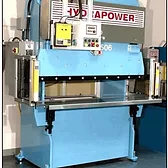
Press Brakes are currently a hot topic in the “Machine Safeguarding” arena. OSHA regulations consider press brakes to be a 1910.212 machine, saying to the employer; “one or more methods of machine guarding shall be provided to protect the operator and other employees in the machine area from hazards such as those created by point of operation, in-going nip points, rotating parts, flying chips, and sparks” … 1910.212 requirements are good place to start, but they leave out the details of exactly how to go about safeguarding any particular machine.
The American Society of Safety Engineers (ASSE) has crafted a plan for reshaping OSHA that would focus the agency on risk management and productive policies and fill legislative and regulatory gaps that limit its ability to better protect workers.
Sometimes, when you’re reading about the tragedies in the Weekly Toll, there are a few that you think, “Well, that’s too bad, but what are you going to do….?”
Like this one in this week’s Weekly Toll:
In the effort to protect and promote the health and safety of employees, perhaps no issue is potentially more complex and challenging than that of employee “presenteeism.” Generally defined as a loss of personal productivity resulting from health-related issues, presenteeism can run the gamut, from simple exhaustion on Monday morning following a busy weekend to constant pain and discomfort stemming from a chronic medical condition.
With many states legalizing marijuana, the cannabis industry has seen a boom in business. However, as with any industry, employers and workers who grow cannabis need to be equipped with the proper protective equipment while doing their job. In its May 2017 issue, The Synergist magazine explores the topic of personal protective equipment (PPE) for workers in this emerging industry.
A once-cozy relationship between unions and OSHA under the Obama administration has cooled –at least for now. Continuing its promise to roll back OSHA rules influenced by the Obama administration, the Trump administration has leveraged OSHA to withdraw one of its so-called pro-union rules.
An auto insulation manufacturer in suburban Toledo faces $569,463 in proposed penalties after an OSHA investigation following a report that a machine amputated a 46-year-old worker's right hand, wrist and part of his forearm.
One of the main challenges of running an agency like OSHA is ensuring that a mid-20th century law adequately assures worker safety and health under 21st century working conditions. The economy and structure of work is very different than it was in 1970 when the Occupational Safety and Health Act was passed: for example, there far fewer unionized workplaces and far more “temporary” workers.
In the first three months of 2017, five miners died in accidents that occurred when they were working alone on mine property. To raise awareness of the potential dangers in doing so, the U.S. Department of Labor’s Mine Safety and Health Administration (MSHA) has launched an initiative to focus on the hazards miners may encounter when they work in areas away from others.
A contract worker was seriously injured when a trolley struck and crushed him inside the Wal-Mart Distribution Center in Brundidge, Ala. OSHA cited Wal-Mart and the worker’s employer, Swisslog Logistics Inc., for serious and willful violations for exposing workers to caught-between, struck-by and crushing hazards and for failing to implement lockout/tagout procedures.