A 2010 priority: Use proper head, eye & face PPE
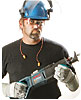
In spite of one of the worst economic climates in nearly 60 years and the resulting cost cutting, the dedication to proper, quality personal protective equipment (PPE) in the workplace was never abandoned. In fact, recent studies cite that in 2009, 73 percent of companies devoted more resources to risk management activities, including compliance and safety.
As the industry looks to the year ahead, it is important to revisit the standards, challenges and trends in PPE.
Eye protection
As with any safety guidance, recommended eye, head and face protective equipment for your worksite is based on the results of an assessment of potential hazards, as well as comprehensive knowledge of all applicable standards, laws and regulations.
Historically, it was hard to get employees to comply with wearing proper protective eyewear because it was, quite frankly, ugly. Over the years, manufacturers figured out that if they made protective glasses more aesthetically pleasing, sales and, even more importantly, use, would increase. As a result, modern eyewear is lightweight, adjustable and cost effective. In fact, eyewear is so inexpensive, manufacturers rarely offer free lens replacement because buying new pairs is more cost effective.
Recommendations for protective eyewear on the worksite are governed by OSHA and are required to meet the American National Standards Institute (ANSI) standard Z87.1-2003 when manufactured. The standard largely addresses the eyewear’s ability to withstand impact; however, lens clarity can be among the most important factors in protective eyewear. Look for manufacturers that use virgin resin in order to ensure maximum clarity — unclear lenses can cause employees to experience headaches or slight disorientation that adds hazards to the worksite.
Some 75% of all lenses sold are clear or clear with an anti-fog treatment. Consider amber or lightblue colored lenses to help reduce glare. Additionally, indoor/outdoor lenses can help employees assimilate when moving between different work environments in artificial or natural light. Shaded and mirrored lenses (sunglasses) come in a large variety of tints and are appropriate in outdoor situations where both impact and glare protection are required. In the case of welding eyewear, glass shades are infrared and vary from lighter 3.0 to darker 5.0 shades or higher depending on whether the employee is welding or will be in the vicinity of welding activity.
One of the fastest growing varieties of protective called a “reader”— meaning it has a magnifying glass on the bottom of the lens (similar to a bifocal lens). The growth in this segment is due to the aging demographic of the workforce and the resulting eyesight changes that come with aging. OTG or Over-the-Glass eyewear is intended to fit over the top of prescription eyewear.
Head protection
If the work environment requires it, the standard head protection is a hard hat. They are produced under standards specified by ANSI Z89.1-2009. There are essentially two types, based on the potential impact protection required. Type I protects against injury from above and Type II protects against injury from the side. Standards for head protection also consider the risk of interaction with electric elements (Class E, G or C), including those that are completely dielectric or without metal parts.
The biggest concern in head gear, however, is maintenance. Over the years, it has become something of a tradition for employees to attach stickers or other decals to their hard hats from job sites. These decorations make the hard hat extremely difficult to inspect for cracks or other abnormalities (as required by the regulations) on the outside, though some visual inspection can happen inside the hat. While most work sites stop short of prohibiting decals, a compromise could be found in imprinted logos now sold on more than 50 percent of all hard hats nationwide. These make the head gear easy to customize, but still able to be safely and comprehensively inspected for defects.
Three non-mandatory tests outlined in the recently updated ANSI/ISEA Z89.1-2009 exist to identify head protection that meet minimum requirements for reverse donning (hard hats can be worn backwards or with a swing ratchet suspension), lower temperature (appropriate for -30ºC or -22ºF), and high-visibility hard hats (those with bright colors or reflective materials and used primarily by road construction crews). Smaller, lighter “bump caps” are also available for industries such as food service, though there is no requirement to do so.
Face protection
Face shields come in four primary materials: polycarbonate, propionate, acetate and PETG. Each has strengths in areas such as heat or scratch resistance, impact protection or superior optics. In many cases, these strengths are weighed against cost in purchasing decisions. Traditionally, PETG is a disposable product that meets ANSI standard Z87.1 for face protection, but it does not address ANSI Z87.1+, a newer, tougher standard for high-impact protection. Polycarbonate is good for impact and heat resistance and optics but can be susceptible to scratching. Acetate is resistant to scratching but not as effective for impact protection. Propionate is generally recognized as a mid-level choice, offering good protection and value.
ANSI Z87.1+, which we hope will be adopted by OSHA as well, also mandates that face shields and head gear be tested together for effectiveness before use. This is good news for safety professionals and employees alike because it offers more comprehensive protection, knowing the headgear and faceshield are designed to work as a unit.
Welding helmets are designed to provide protection for the eyes and face from optical radiation and weld spatter. Manufacturing safety standards are outlined by ANSI Z87.1. Today, there are two types of helmets. A passive helmet has a standard polycarbonate or hardened glass filter lens with shades ranging from 4 (the lightest) to 14 (the darkest) and remains stable throughout the welding process. Auto-darkening helmets can be purchased in a single shade or variable shade range with various features such as delay, sensitivity, and grind modes. More than 60 percent of the industry uses auto-darkening welding helmets today.
Whether for the eyes, head or face, PPE has undergone significant improvements over the past several years. As the industry looks to a robust 2010, it is important that every safety officer maintain risk management activities that properly protect this industry’s most valuable resource — its people.
Looking for a reprint of this article?
From high-res PDFs to custom plaques, order your copy today!


