After March 2026 Rivian Death, Safety Managers Reassess Loading Dock Systems Under OSHA's Warehouse Emphasis Program
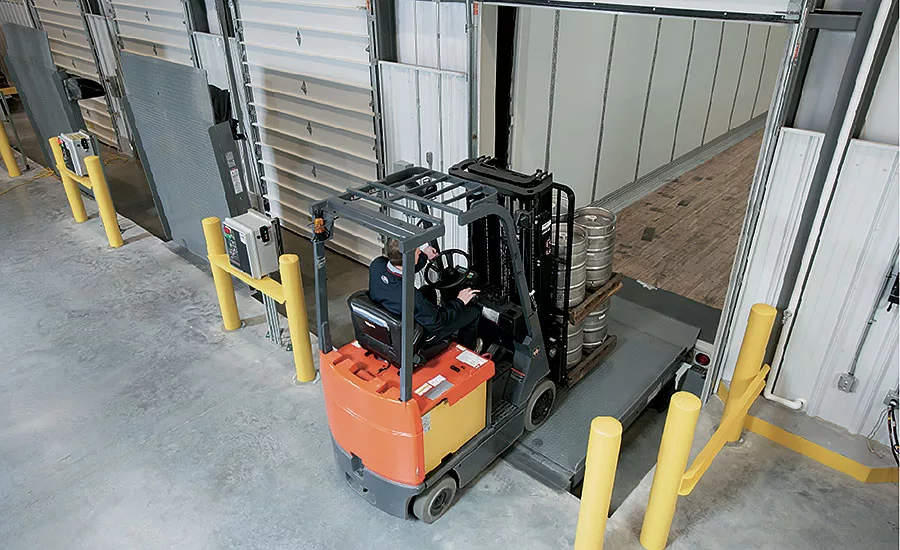
Credit: LongHa2006 / Getty Images Plus
On March 5, 2026, a fatality at a Rivian warehouse in Normal, Illinois, claimed the life of 61-year-old Kevin Lancaster when he was pinned between a trailer and the loading dock. The incident followed a fatality in August 2025 when a worker was killed by a falling overhead door at a Lyon LLC warehouse in Watseka, Illinois. These back-to-back tragedies sent shockwaves through the industrial safety community.
The response was immediate and measurable. Search interest for "warehouse safety" peaked in the week of March 8-14, signaling that safety managers across the country were reassessing not just protocols but the physical infrastructure of high-traffic door installations at their facilities in real time. The timing couldn't be more critical, as both incidents occurred during OSHA's active National Emphasis Program (NEP) targeting warehousing operations.
Understanding the Regulatory Pressure of OSHA's Warehouse NEP
The regulatory authority’s directive runs through to mid-2026 and specifically targets warehouses and distribution centers. For these workplaces, the focus is on:
- Material handling and storage
- Powered industrial vehicles
- Means of egress
- Walking and working surfaces
- Fire protection
- Heat and ergonomic hazards
This places loading docks squarely in the crosshairs of federal inspectors.
The statistics justify this focus. OSHA notes that 25% of all warehouse accidents occur near the loading dock. The regulator adds, “For every loading dock injury, there are approximately 600 near-misses, highlighting the immense hazard density in these areas.” When overhead door systems fail in this environment, workers face catastrophic consequences. The combination of heavy equipment, constant traffic and mechanical systems under stress creates a perfect storm for injuries.
Connecting Door Failures to Broader Safety Gaps
Industry experts increasingly point to a fundamental problem in how facilities procure door systems. Many operations prioritize the initial purchase price over total cost of ownership, creating conditions in which cheaper systems fail prematurely in the demanding environments of high-traffic door installations.
What Are the Best High-Performance Door Models for a Warehouse?
Selecting appropriate door systems requires evaluating several critical performance metrics beyond up-front cost.
Cycle life represents the number of open-close operations a door can handle before requiring major component replacement. High-traffic facilities may cycle doors hundreds of times daily, so it is essential to consider how much servicing will be necessary.
Operational speed matters for both productivity and safety. Faster door cycles reduce the time workers and equipment spend in transition zones where accidents occur. Modern high-speed doors complete full cycles in seconds rather than minutes, minimizing exposure to hazards.
Integrated safety systems separate premium doors from budget alternatives. Cornell Iron, a leading rolling door manufacturer with almost a century of industry experience, explains why minimum compliance is not enough. In the case of residential properties, a lower photo eye on a home’s garage door can stop the door’s downward movement to prevent anyone from getting trapped.
However, the manufacturer cautions, “In a fast-paced, high-use environment, there are times when a lower photo eye may not be enough. If an operator with a full load on a forklift, stops for some reason, parking with the forks in the door's path. A photo eye may not see the forks and would allow the overhead door to close, potentially damaging the load and the forklift, not to mention the potential harm to the operator.”
Which Door Material Is Best for a High-Traffic Entrance?
Steel remains the standard for industrial loading dock applications due to its durability under constant use and impact resistance when struck by forklifts or pallets. Insulated steel doors provide thermal efficiency for climate-controlled warehouses while maintaining structural integrity. Aluminum offers weight advantages for applications requiring frequent manual operation, though it sacrifices some impact resistance compared to steel construction.
Understanding High-Traffic Door Failures and Compliance
Understanding common failure modes and compliance risks helps safety professionals identify vulnerable systems before incidents occur. Counterbalance springs fatigue under repeated cycling, particularly when doors operate beyond their rated capacity. A failed spring creates an uncontrolled descent.
Track misalignment from forklift impacts compromises the guided movement that keeps doors operating safely. Even minor deflections accumulate stress on rollers and hinges, accelerating wear patterns that lead to catastrophic failures. Regular alignment checks prevent these cascading problems.
Auto-reverse systems represent a critical last line of defense, but only when properly maintained. Industry professionals point to the high costs of not doing so.
According to Justin Alquist, owner of Alpha Overhead Doors, “Compliance standards demand that a door must reverse its direction within two seconds of hitting an obstruction or breaking an infrared beam. Over time, vibration shakes these sensors out of alignment or dirt cakes the lenses, rendering them useless. High priority maintenance isn’t about fixing what’s broken; it’s about making sure the steel stays exactly where it belongs — safely overhead.”
Proactive Selection vs. the High Cost of Failure
The financial argument for investing in appropriate door systems becomes compelling when facilities calculate true operational costs. Offline loading docks cost an average of around $1,700 per hour in lost productivity, and that’s before accounting for potential OSHA citations or litigation following injuries.
Total cost of ownership analysis shifts the conversation from purchase price to life cycle value. A door system costing twice as much initially but lasting three times longer while requiring half the maintenance delivers superior value. More importantly, properly specified systems protect the irreplaceable asset of worker safety.
Cornell Iron underlines the importance of selecting high-performance doors for high-traffic areas. It says, “A rolling door or grille placed in the wrong application…spells trouble for safety measures in a facility, along with possible liability issues. While a standard roll-up door or grille may work nicely in an area that isn’t used very often daily or weekly, it’s a completely different ball game in a busy space such as a manufacturing company or parking garage, where the closure will cycle many times per day and have high peak cycle times.
Case Studies of High-Traffic Door Installations
Examining real-world implementations demonstrates how proper door selection solves specific operational challenges.
A FedEx Ground facility addressed frequent dock injuries by upgrading to high-cycle systems, including custom-fabricated bottom-draft pads and dock bumpers. The Facilities Maintenance Manager reported no injuries since installation.
A customer with a unique loading dock configuration around a double doorway faced safety risks regarding workers falling from one half of the opening. For them, the answer lay in installing a double smart gate that opens vertically to get out of the way of incoming pallets without taking up horizontal floor space.
At the General Motors Lockport Component facility in New York, the existing safety barrier systems were insufficient for forklift and pedestrian activity at the loading docks. An OSHA-approved all-steel barrier system was installed to prevent loading dock falls for both forklift operators and pedestrians.
An Actionable Audit Checklist for Door System Selection
Safety managers conducting facility assessments should evaluate existing high-traffic door systems against established performance criteria:
Compare cycle frequency against rated capacity: Facilities operating doors near or beyond manufacturer specifications face accelerated failure timelines.
Test auto-reverse functionality and response time: Systems that fail to trigger within 2 seconds of encountering resistance create compliance violations and pose injury risks.
Document maintenance patterns in service logs: Recurring issues with tracks, springs or cables indicate underlying specification problems rather than isolated component failures.
Evaluate total cost of ownership metrics: Calculations should incorporate installation costs, expected service life, maintenance frequency and downtime expenses.
Assess safety system integration: Premium installations include photoelectric sensors, pressure-sensitive edges and redundant safety mechanisms as standard features.
Review impact resistance relative to traffic patterns: Facilities with heavy forklift traffic require reinforced construction and damage-tolerant designs.
Strengthening Loading Docks for a New Era of Safety
The convergence of OSHA's enforcement emphasis and high-profile incidents creates both pressure and opportunity for warehouse operations. Regulatory scrutiny will intensify as the NEP continues, but the industry has proven solutions to create safer loading dock environments.
Proactive assessment of high-performance warehouse doors positions facilities ahead of compliance requirements rather than reacting to citations. Intelligent investment in properly specified high-traffic door installations delivers measurable returns through reduced downtime, lower maintenance costs and prevention of life-altering injuries. The tools and knowledge exist within the industrial safety community to transform loading docks from high-risk zones into models of operational excellence.
Looking for a reprint of this article?
From high-res PDFs to custom plaques, order your copy today!