ISHN logo
search
cart
facebook twitter linkedin youtube
  • Sign In
  • Create Account
  • Sign Out
  • My Account
ISHN logo
  • NEWS
    • Today's News
    • Global Safety News
    • Government Regulations
  • PRODUCTS
    • Product Innovations
    • Featured Products
  • TOPICS
    • Environmental Health and Safety
    • Facility Safety
    • Workplace Health
    • Occupational Safety
    • PPE
    • More Topics
  • CONSTRUCTION
  • TECHNOLOGY
  • COLUMNS
    • Best Practices
    • Dave Johnson: What’s going on
    • Editorial Comments
    • Leading Safety
  • MULTIMEDIA
    • ISHN Podcast
    • Videos
    • Cold Stress Education Quiz
    • Webinars
    • White Papers
  • MORE
    • Buyer's Guide
    • Newsletters
    • Convention Companion
    • Polls
    • Events
    • ISHN Store
    • Sponsor Insights
  • EMAGAZINE
    • eMagazine
    • Archived Issues
    • Contact
    • Advertise
  • JOIN TODAY!

Arc flash safety

By Hugh Hoagland
July 1, 2007


Most of industry as well as government agencies now are required to comply with OSHA regulations, but some parts of the CFR (Code of Federal Regulations) apply only to specific industries. Standards like 1910.269 have specific arc flash requirements, but it only applies to electric utilities in certain work situations.

For instance, when a utility hires an electrician to work on an office that is not in a substation or other facility blocked from public access, the electrician would fall under general OSHA standards and not the utility specific standard. This method of inclusion and exclusion opens room for interpretation, and when standards do not agree on requirements many companies are left with little guidance on which requirement to follow.

The “apparel standard”
In 1994, OSHA promulgated 29 CFR 1910.269 covering utilities with what became known as the “apparel standard.” This standard required utilities to wear clothing that would not “increase the extent of the injury” in electric arc exposures. It required the use of cover-up barriers, rubber gloves and hot sticks for utility line workers but didn’t really impact electricians. The OSHA language in the hazard assessment standard requiring companies to prevent or protect from “arc flash” had little effect since there were no standard guidelines on how to do that.

In 2000, a new consensus standard was published. Consensus standards do not have the force of law directly, but indirectly OSHA can enforce them. NFPA 70E, Standard for Electrical Safety in the Workplace was designed for industrial electricians’ safety. It has had worldwide impact through its acceptance by U.S. multinationals and will continue to have an effect due to the recent agreement between NFPA and CSA (Canadian Standards Association). CSA is adapting NFPA 70E 2004 and updating it to be similar to NFPA 70E 2009. The Canadian standard will be Z462 and is slated for publication in 2008.

Implementing NFPA 70E 2004 is a good strategy for Canada, and many companies committed to electrical safety are implementing now. NFPA 70E, however, excluded many operations, specifically utilities, communications, railways and mining. Though some operations in those companies are covered by NFPA 70E, such as building maintenance electricians, many are excluded. This gap in coverage and the vagueness of the OSHA utility standard left the need for more clarification for utility-type work. This is now being filled by the NESC 2007 version.

NESC arc flash section
The NESC, National Electrical Safety Code has included a work rules section in this public safety document for several editions. It now has an arc flash section that will change the way utilities look at arc flash protection, but this doesn’t only cover utilities. It covers all contractors who work on transmission, generation and distribution of electricity in a utility-type application. The NESC begins for utilities what OSHA began and NFPA 70E continued for electricians of all sorts. It now requires PPE to protect from the hazard.

NESC 2007 includes “the electric supply conductors and equipment … (including) electric supply stations, that are accessible only to qualified personnel.”

NFPA 70E is more prescriptive than the NESC. It gives tables describing the PPE, while the NESC only requires workers to wear clothing with an “arc rating” equal to the predicted hazard. The NESC has the following important provisions:

• Clothing requirements effective as of January 1, 2009;

• Arc flash assessment calculations required;

• If “exposure greater than 2 cal/cm2” “employer shall require employees to wear clothing … that has an effective arc rating not less than the anticipated level of arc energy”;

• Secondary portions of systems require 4 cal/cm2 PPE, “engineering controls” due to high energies, no arc calculations are required on secondary systems unlike NFPA 70E.

Greater protection
The NESC will lead utilities to much more protection than the current OSHA standard, and recent OSHA proposed language indicates OSHA is planning to implement the NESC 2007 language into law in the future. Calculating arc flash energies for utility work will be critical but it leaves utilities some leeway in certain areas.

The NESC is not prescriptive on clothing design or hood requirements, leaving the market free to design protective systems that are more comfortable and wearable than the NFPA 70E market is currently offered. Though NFPA 70E seems prescriptive this is a bit of a misunderstanding. The tables, which describe Hazard/Risk Categories of PPE, are prescriptive, but companies that do calculations are left with much more freedom than those using the tables. Companies are looking at more comfortable systems and systems that are easier to don and doff in the event of an arc.

No matter what your exposure, these standards will cause you to think about your hazards in new ways. When standards bring out new requirements, companies develop new ways to protect and comply with the standard. Engineering changes and PPE changes will be driving the arc market for quite some time.

Share This Story

Looking for a reprint of this article?
From high-res PDFs to custom plaques, order your copy today!

Hugh Hoagland is among the world’s foremost experts on arc testing and electrical safety. He is a senior partner and co-founder of e-Hazard, a leading electrical safety training and consulting firm, and the founder of ArcWear, which does 90% of the world’s arc flash testing of protective apparel.

His career change began with safety testing at LG&E Energy; later, he worked as R & D Director for NASCO, a manufacturer of protective outerwear solutions. He has helped develop most of the arc-resistant rainwear used in the world today, as well as creating the first face shield to protect against electric arcs.

Hugh worked for Cintas developing their strategy for meeting the needs of OSHA 1910.269 and NFPA 70E standards. He has helped development of legislation and standards in both the US and Europe. He sits on several industry committees and is a featured speaker at safety conferences and events.

e-Hazard was established in 2004. Its services include electrical safety training, arc flash hazard assessment, written electrical safety program development and review, and auditing.

Recommended Content

JOIN TODAY
to unlock your recommendations.

Already have an account? Sign In

  • forklift safety

    Exploring the latest technologies in forklift safety

    With more staff and more stock in warehousing now more...
    Workplace Training Strategies
    By: Josh Cramer
  • welding

    All about welder’s flash or arc eye

    A flash burn is a painful inflammation of the cornea,...
    Environmental Health and Safety
  • dangerous jobs

    The 10 most dangerous jobs in the U.S.

    On-the-job deaths have been rising — hitting the highest...
    Government Safety Regulations
    By: Benita Mehta
Manage My Account
  • eMagazine Subscriptions
  • ISHN Newsletter & Other Newsletter Alerts
  • Online Registration
  • Manage My Preferences
  • Subscription Customer Service

More Videos

Sponsored Content

Sponsored Content is a special paid section where industry companies provide high quality, objective, non-commercial content around topics of interest to the ISHN audience. All Sponsored Content is supplied by the advertising company and any opinions expressed in this article are those of the author and not necessarily reflect the views of ISHN or its parent company, BNP Media. Interested in participating in our Sponsored Content section? Contact your local rep!

close
  • man wearing the the Sundström SR200 Full Face Mask Respirator
    Sponsored byOHD

    5 Fit Testing Mistakes That Could Cost You

  • This image shows Magid AcuSpex polarized blue mirrored safety glasses.
    Sponsored byMagid Glove and Safety

    Construction PPE Guide: What Crews Need for Each Task

  • lone worker in confined space
    Sponsored byAlphasense Ltd.

    GET THE LEAD OUT of your Safety Oxygen Sensors!

Popular Stories

SpaceX 7 launch

OSHA Investigating Fatal Fall at SpaceX Starbase

Automated loading dock equipment

After March 2026 Rivian Death, Safety Managers Reassess Loading Dock Systems Under OSHA's Warehouse Emphasis Program

psychology in the workplace

Most Workplaces Measure Psychological Safety, Ignoring Psychosocial Risks

top 10 most dangerous jobs

Poll

Seasonal Readiness

With the federal heat stress prevention rule on the horizon, which area of your safety program needs the most attention?
View Results Poll Archive

Products

Surviving an OSHA Audit A Management Guide, 2nd Edition

Surviving an OSHA Audit A Management Guide, 2nd Edition

See More Products

ISHN Podcasts

Related Articles

  • New arc flash safety online training from AVO

    See More
  • Five common arc flash safety program mistakes

    See More
  • Seeing is believing with arc flash safety

    See More

Related Products

See More Products
  • 9780367861148.jpg

    LEAD Safety A Practical Handbook for Frontline Supervisors and Safety Practitioners

  • download (1).jpg

    Safety Rebels Real-World Transformations in Health and Safety

  • safety law.jpg

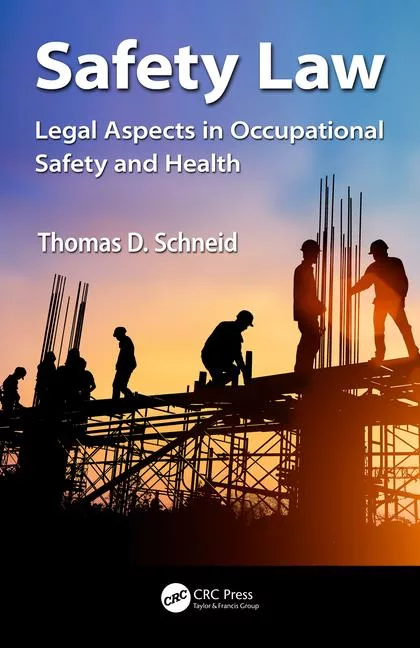
    Safety Law: Legal Aspects in Occupational Safety and Health

See More Products

Related Directories

  • e-Hazard

    E-Hazard is dedicated to building an electrical safety culture with you. Our electrical engineering services and training will prepare your team for any electrical safety needs or concerns. E-Hazard can help with electrical training, arc flash studies, electrical audits, electrical safety programs, LOTO, infrared scanning, NFPA 70B, consulting and much more.
×

Become a Leader in Safety Culture

Build your knowledge with ISHN, covering key safety, health and industrial hygiene news, products, and trends.

JOIN TODAY
  • RESOURCES
    • Advertise
    • Contact Us
    • Directories
    • Manufacturing Division
    • Store
    • Want More
  • SIGN UP TODAY
    • Create Account
    • eMagazine
    • Newsletters
    • Customer Service
    • Manage Preferences
  • SERVICES
    • Marketing Services
    • Reprints
    • Market Research
    • List Rental
    • Survey/Respondent Access
  • STAY CONNECTED
    • LinkedIn
    • Facebook
    • YouTube
    • X (Twitter)
  • PRIVACY
    • PRIVACY POLICY
    • TERMS & CONDITIONS
    • DO NOT SELL MY PERSONAL INFORMATION
    • PRIVACY REQUEST
    • ACCESSIBILITY

Copyright ©2026. All Rights Reserved BNP Media, Inc. and BNP Media II, LLC.

Design, CMS, Hosting & Web Development :: ePublishing