ISHN logo
search
cart
facebook twitter linkedin youtube
  • Sign In
  • Create Account
  • Sign Out
  • My Account
ISHN logo
  • NEWS
    • Today's News
    • Global Safety News
    • Government Regulations
  • PRODUCTS
    • Product Innovations
    • Featured Products
  • TOPICS
    • Environmental Health and Safety
    • Facility Safety
    • Workplace Health
    • Occupational Safety
    • PPE
    • More Topics
  • CONSTRUCTION
  • TECHNOLOGY
  • COLUMNS
    • Best Practices
    • Dave Johnson: What’s going on
    • Editorial Comments
    • Leading Safety
  • MULTIMEDIA
    • ISHN Podcast
    • Videos
    • Cold Stress Education Quiz
    • Webinars
    • White Papers
  • MORE
    • Buyer's Guide
    • Newsletters
    • Convention Companion
    • Polls
    • Events
    • ISHN Store
    • Sponsor Insights
  • EMAGAZINE
    • eMagazine
    • Archived Issues
    • Contact
    • Advertise
  • JOIN TODAY!

TRAINING STRATEGIES: Stop begging employees for observations

By Barry Nelson
January 11, 2009


Our cumulative experience with thousands of locations has resulted in 50 million safety observations and 20,000 studies of industrial incidents and injuries. These have produced overwhelming evidence that behavior-based safety (BBS) principles are effective at reducing incidents and creating a better safety culture.

This article goes a step further than ordinary discussions of behavior-based safety by suggesting two ways organizations can enhance their existing BBS processes: 1) develop an objective way to measure the quality of an observation, and 2) tie your observations to your incidents. By engaging as many people as possible, ensuring committed leadership and using intelligent methods of safety observation, organizations can create a culture of discovery leading to continuous improvement.

If your leaders don’t trust your data…

Imagine two scenarios; one where the BBS observer has just finished conducting his observation and another where his manager is in the process of reviewing these observations.

Observer: “I’m tired of collecting observations that no one does anything with. Why do I need to write this stuff down? It just wastes time in my already busy day.”

Manager: “I don’t know if I can trust these observations. Is it really possible that this group has not found a single at-risk behavior in over six weeks? What are we doing with all these observations anyway?”

This cycle of frustration repeats itself thousands of times daily in well-intentioned organizations. Over time, this leads to decreasing participation and observation quality with the result that you—the safety professional—must go back to begging employees to observe and pleading with managers to act.

Fig 1: Sample of an electronic “scorecard” for observers.

Develop a scorecard to evaluate safety observations

One way to stop this cycle is to develop a scorecard for the “quality” of your observations and to benchmark what a normal pattern of safe and at-risk behaviors should look like. This simple tool will have an enormous impact. First of all, it tells your leadership team what to expect and therefore, when and where to act. It also helps you, the safety professional, pinpoint specific observers or observation patterns that require further analysis.

The best examples of observation quality incorporate the following criteria:
  • The number of at-risk behaviors per observation card
  • The number of safe behaviors per observation card
  • The number of comments per observation card
  • The number of medium or higher severity observations per observation card
If you are working on improving participation, you can incorporate the average time between observations. Another BBS strategy: When an observer records an at-risk behavior, he or she assigns a severity level of low, medium, high, or life threatening to this behavior. As we know, not all observations are the same. With this added degree of sensitivity, many clients can more effectively assign resources to address the at-risk behavior before it turns into a near-miss or incident.

You can combine these observation quality metrics, plus your participation metric, to compare one group against another. For example, take a group of your best observers (your process “champions” or employees you know to conduct thorough observations) and compare them to a random group of observers. Or, compare your safety professionals against your hourly workers. What is the average number of at-risk behaviors observed by each group? Compare the number of safes, number of comments, the severity of the behaviors observed and the average time between observations. Before you know it, a pattern will emerge. More importantly, you and your management team will know which observations you can objectively believe and which ones are suspect.

Tie your observations to loss

This improvement seems obvious, yet it is infrequently implemented. The most common reasons for failing to follow through include the perceptions that:
  • “It is too difficult.” In other words, the information lives in different systems, or there is no way to roll up the data in a timely basis.
  • “The numbers do not make sense.” Observations are going up and incidents are either flat or also going up.
  • “We don’t have any incidents to track against.” Some organizations record very few incidents, so no reliable analyses can be drawn.
If you are not trending your observation intelligence against your incidents (or near-misses), then you are not getting the most out of your investment in behavior-based safety. For example, it is not uncommon for organizations to have great participation in their BBS process, but still see no impact on incident rate. However, by using observation quality metrics, they gain an in-depth look into the nature of that participation.

Observation processes need to be flexible and must be tied to the desired end-result. When incident trends are not going down, and BBS observations are increasing or stable, then something may be broken in the observation process.

Some organizations have few incidents and therefore rely on leading indicators to help assess the health of their safety culture. One common leading indicator is near-misses. By tracking observations against near-misses, BBS practitioners can add a meaningful layer of analysis to assess whether risky behaviors observed correlate to reported near-misses.
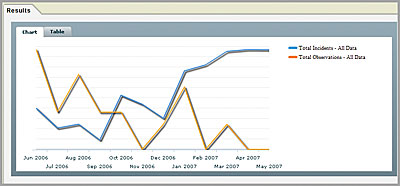
Fig 2: Technology enables you to establish the relationship between incidents and observations using one system.

Take advantage of available technology

You can address many of these challenges by using technology that tracks incidents and observations in the same place. Using such a system establishes the relationship between observations and loss information. It also provides the added benefit of continuing to help you monitor the progress of your BBS program as it evolves.

Developing a way to measure the quality of observations and tying observations to incidents pays off in two ways. First, you can more efficiently assess the health of your safety process, thereby wasting less time demonstrating and sustaining a return on your BBS initiative. Second, by looking upstream and using your observations as leading indicators, you will grow more effective at lowering incident rates. Implementing these two initiatives will deliver meaningful and measurable results in 2009.

Share This Story

Looking for a reprint of this article?
From high-res PDFs to custom plaques, order your copy today!

Barry is founder, president and CEO of DBO2 (Design, Build, Own and Operate), which was acquired in 2008 by Industrial Scientific Corp. For over eight years, he has pioneered efforts to develop industry-leading solutions that reduce human error and its consequences in the workplace. Barry has directly participated or led over 100 corporate engagements impacting thousands of employees. Many of these companies have gone on to win national awards for loss reduction or safety improvement. He speaks frequently at safety and risk management conferences on topics ranging from risk reduction to the impact of technology on business and management practices. Contact DBO2 at (650) 587-0100; Email: info@dbo2.com; Website: www.dbo2.com.

Recommended Content

JOIN TODAY
to unlock your recommendations.

Already have an account? Sign In

  • forklift safety

    Exploring the latest technologies in forklift safety

    With more staff and more stock in warehousing now more...
    Workplace Training Strategies
    By: Josh Cramer
  • welding

    All about welder’s flash or arc eye

    A flash burn is a painful inflammation of the cornea,...
    Environmental Health and Safety
  • dangerous jobs

    The 10 most dangerous jobs in the U.S.

    On-the-job deaths have been rising — hitting the highest...
    Construction Industry Safety and Health
    By: Benita Mehta
Manage My Account
  • eMagazine Subscriptions
  • ISHN Newsletter & Other Newsletter Alerts
  • Online Registration
  • Manage My Preferences
  • Subscription Customer Service

More Videos

Sponsored Content

Sponsored Content is a special paid section where industry companies provide high quality, objective, non-commercial content around topics of interest to the ISHN audience. All Sponsored Content is supplied by the advertising company and any opinions expressed in this article are those of the author and not necessarily reflect the views of ISHN or its parent company, BNP Media. Interested in participating in our Sponsored Content section? Contact your local rep!

close
  • man wearing the the Sundström SR200 Full Face Mask Respirator
    Sponsored byOHD

    5 Fit Testing Mistakes That Could Cost You

  • This image shows Magid AcuSpex polarized blue mirrored safety glasses.
    Sponsored byMagid Glove and Safety

    Construction PPE Guide: What Crews Need for Each Task

  • lone worker in confined space
    Sponsored byAlphasense Ltd.

    GET THE LEAD OUT of your Safety Oxygen Sensors!

Popular Stories

SpaceX 7 launch

OSHA Investigating Fatal Fall at SpaceX Starbase

Automated loading dock equipment

After March 2026 Rivian Death, Safety Managers Reassess Loading Dock Systems Under OSHA's Warehouse Emphasis Program

psychology in the workplace

Most Workplaces Measure Psychological Safety, Ignoring Psychosocial Risks

top 10 most dangerous jobs

Poll

Seasonal Readiness

With the federal heat stress prevention rule on the horizon, which area of your safety program needs the most attention?
View Results Poll Archive

Products

Surviving an OSHA Audit A Management Guide, 2nd Edition

Surviving an OSHA Audit A Management Guide, 2nd Edition

See More Products

ISHN Podcasts

Related Articles

  • TRAINING STRATEGIES: The battle for attention

    See More
  • Training Strategies: Keys for conducting a safety meeting on the construction site

    See More
  • TRAINING STRATEGIES: Take training to the next level

    See More
×

Become a Leader in Safety Culture

Build your knowledge with ISHN, covering key safety, health and industrial hygiene news, products, and trends.

JOIN TODAY
  • RESOURCES
    • Advertise
    • Contact Us
    • Directories
    • Manufacturing Division
    • Store
    • Want More
  • SIGN UP TODAY
    • Create Account
    • eMagazine
    • Newsletters
    • Customer Service
    • Manage Preferences
  • SERVICES
    • Marketing Services
    • Reprints
    • Market Research
    • List Rental
    • Survey/Respondent Access
  • STAY CONNECTED
    • LinkedIn
    • Facebook
    • YouTube
    • X (Twitter)
  • PRIVACY
    • PRIVACY POLICY
    • TERMS & CONDITIONS
    • DO NOT SELL MY PERSONAL INFORMATION
    • PRIVACY REQUEST
    • ACCESSIBILITY

Copyright ©2026. All Rights Reserved BNP Media, Inc. and BNP Media II, LLC.

Design, CMS, Hosting & Web Development :: ePublishing
