The Role Beliefs Play in Safety
How misconceptions about worker behavior affect risk and hazards

Photo: Prostock-Studio / iStock / Getty Images Plus
There are individuals as well as organizations who believe that accidents are the result of workers flagrantly ignoring good work practices, failing to use common sense, and/or neglecting to follow company policies and procedures. Organizations’ worksite supervision believe that workers are primarily responsible for their own safety and should engage in safe work practices for their own good. They generally articulate that workers should use good judgment and be constantly vigilant when working in hazardous environments. These same supervisors also believe that their primary goal is to meet production objectives. These and a few other commonly held beliefs tend to create impediments to effective accident and injury prevention.
Belief involving Risk and Hazards
Multiple research studies have shown that people’s behavior is driven by their underlying belief systems. This has a profound effect on hazard management, exposure assessment, and accident prevention. These beliefs are shaped by the interplay of the organizational culture, management’s actions and expectations, as well as the resulting workplace climate. This underlying view and resulting approach to work may not be fully appreciated, well understood, or effectively utilized by individuals involved in the improvement of production systems performance, as well as those involved with managing worker safety.
For a multitude of reasons, management, supervisors, and workers in construction organizations often have an unrealistic or fatalistic view toward hazards (“it is the nature of the industry”), the risk of getting injured (“if one is meant to get injured, then one will, and there is not much that can be done about it”), exposure (“it will only take a minute, and I can deal with it”), and accidents in general (“it won’t happen to me — I’m experienced”). Beliefs such as these affect the way management and the workforce approaches safety and performance on the job.
Generally, people may take risks due to necessity, convenience, carelessness, or ignorance. Workers contribute to this problem by primarily relying on experience and self-confidence when performing their work. Preventive measures may not always be respected or diligently utilized for personal reasons, such as a “macho” view of one’s abilities or what coworkers may think of one’s use of personal protective equipment (the “herd” mentality). They may not perceive the risk or fail to assess the exposure, or they may underestimate the risk due to the fact that they have worked under similar circumstances before without experiencing an adverse effect or getting injured.
There are a multitude of reasons for this. Production goal achievement is a key driver of a worker’s performance, with less attention paid to other associated targets, goals, and/or outcomes. An overriding focus on increased production usually leads to deviation from accepted safe work practices or the enforcement of them, resulting in “standards creep.” People responsible for safe performance do not have tools other than the ones traditionally available in the industry, so to deal with the emerging problems, they utilize one or two of the existing tools (interventions), which they apply more rigorously. As the famous saying goes, using the same methods but expecting different results is insanity!
Belief Associated with Risk Management
Due to the business reality and competitive nature of the construction industry many organizations are highly concerned with identifying, evaluating, and managing occupational and environmental risks. People’s beliefs influence their perceptions of risks, and further, these perceptions affect their behavior with respect to performance and safety. Broadly stated risks are generally perceived in relation to whether they are judged to be tolerable or intolerable, manageable or unmanageable, beneficial or harmful. As a result, safety may be seen as the level of risk that is judged acceptable in that particular situation or work environment.
Several research studies have identified that workers, supervisors, as well as management have different perspectives on risk and the potential negative resulting outcomes from exposure to them. As a group, they also have beliefs about accident causations and preventive measures. This reality becomes more important in industries such as construction where there is more variability, unpredictability, as well as uncertainty than in others. This situation results from the unique nature of projects. The diversity of locations, a mobile workforce, unique project constraints, different and multiple subcontractors and their differing supervision, different cultures and values among all involved. In spite of all these conditions, there are some construction firms that manage their projects in such a manner that their results are far superior to that of the industry at large.
Organizations tend to devise operating systems that encompass values and standards specific to their core beliefs about work, people, performance and outcomes. As a result, the project’s operational system as well as the work practices are influenced by the underlying beliefs of the people involved, thereby affecting the perception of risk, beliefs about accident causation, and the overall risk management system. This approach establishes the basis for whether operating risks are deemed inevitable and therefore acceptable, manageable, or deemed inescapable.
This affects management’s outlook on risk in general and influences the means utilized by them to overcome the potential harmful effects of the risks encountered during operations. This reality influences the workforces’ evaluation of their exposure to risk and their willingness to use protective systems provided, follow safety procedures, positively respond to feedback or countermeasures.
Belief Associated with Accident Causation
Research has shown that risk perception is affected by beliefs associated with individual variables as well as: social, cognitive, circumstantial, or organizational factors. Each one of these areas has got an additional large list of sub-variables which add to increased complexity to the operation. Fundamentally, this thinking (belief) impacts the way safety is addressed and the effectiveness of preventive measure utilized. In construction, all the people involved—from the workers to supervisors; to managers and on to company executives — have some understanding of risk and its existence on construction worksites. But each one of them has a different opinion as to how this causes accidents and injuries and more importantly how to deal with this eventuality.
Research has shown that risk perception is affected by beliefs associated with individual variables as well as: social, cognitive, circumstantial, or organizational factors.
Workers who need the work will generally accept a higher level of risk, work in environments that are more hazardous, and use tools that may be poorly maintained or inappropriate for the task. Risk may be taken due to carelessness, ignorance, or lack of understanding that operational systems (policies, practices, and procedures) may create situations that allow risk to enter into the work process. This may also reinforce the belief that worker’s behaviors are the primary source of risk and in the work environment.
Risk taking on the worker’s part, may result from confidence in their ability to deal with the risks involved due to past experience, confidence in their skills, underestimating the level of the risk, or even underestimating the level of exposure. This may result from a fatalistic belief regarding risk and accidents. The reasons given for accidents by workers provide a window into their attitudes and beliefs about safety, accident causation, or the confidence they have in their ability to deal with hazardous work conditions.
Accident causation beliefs establish the basis for the design of preventive measures, their implementation, and procedures of how to deal with the risk when they are encountered. Workers usually attribute accidents to operational factors. This may cover such things as time pressures, availability of proper tools or equipment and/or their condition, equipment, or a lack of protective measures. They may also attribute it to management factors, covering such things as little or no concern for safety, a lack of proper planning, or a focus on productivity. Or they may simply attribute the accident to bad luck.
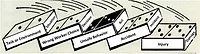
Those who are not involved (supervisors, managers, experts, etc.) may explaining the accident by attributing it to rather different (internal) causes or failures on the worker’s part. They may mention lack of attention, inexperience, lack of focus, ignorance, not using common sense, failure to follow good work practices, or even downright stupidity. This is one example of looking at the same accident but attributing it to different causes, stemming from different beliefs about accident causation This may simply involve the workers pointing to management while management points to the workers.
Conclusion
The beliefs involving the impact of risk on the worker’s safety and the perceived benefit of risk taking should be a factor that is assessed when considering or evaluating the motivation underlying the resulting behavior or action. Beliefs about control are important to accident analysis and the explanations of causation. Depending on the situation, beliefs can positively or negatively affect safety and its management. By gaining insight into such beliefs and taking those into account, accidents may be analyzed realistically, and robust preventive measure can be devised and implemented.
Numerous research studies have identified the importance that beliefs play in workplace safety and its management. Researchers have also verified that subjective judgment by people is a major component in any risk assessment. If such judgment is faulty, the risk management process and efforts will, in all likelihood, be misdirected and garner inferior or even worse no beneficial results. It has been asserted that in reality, much of accident preventive measures are driven by causal inferences rather than the actual drivers of such outcomes.
Looking for a reprint of this article?
From high-res PDFs to custom plaques, order your copy today!