ISHN logo
search
cart
facebook twitter linkedin youtube
  • Sign In
  • Create Account
  • Sign Out
  • My Account
ISHN logo
  • NEWS
    • Today's News
    • Global Safety News
    • Government Regulations
  • PRODUCTS
    • Product Innovations
    • Featured Products
  • TOPICS
    • Environmental Health and Safety
    • Facility Safety
    • Workplace Health
    • Occupational Safety
    • PPE
    • More Topics
  • CONSTRUCTION
  • TECHNOLOGY
  • COLUMNS
    • Best Practices
    • Dave Johnson: What’s going on
    • Editorial Comments
    • Leading Safety
  • MULTIMEDIA
    • ISHN Podcast
    • Videos
    • Cold Stress Education Quiz
    • Webinars
    • White Papers
  • MORE
    • Buyer's Guide
    • Newsletters
    • Convention Companion
    • Polls
    • Events
    • ISHN Store
    • Sponsor Insights
  • EMAGAZINE
    • eMagazine
    • Archived Issues
    • Contact
    • Advertise
  • JOIN TODAY!
Columns

PSYCHOLOGY OF SAFETY: "Can I ask you a question?"

November 1, 2004
There’s no substitute for knowledge.”

Years ago, I heard W. Edwards Deming say this several times throughout a four-day workshop on Total Quality Management. Now I repeat this same phrase in every university class I teach. It’s a powerful principle and it’s key to improvement, whether the focus is on safety, productivity, quality, or relationship-building.

But how do we obtain knowledge? That’s the focus of my ISHN contribution this month and next.

Knowledge comes in many forms. It’s public or personal, it’s objective or subjective, it’s understood or misunderstood, it’s useful or useless, it’s considered or ignored, and so on. My purpose is not to explore various types of knowledge, but simply to consider how we gain knowledge for improving workplace safety. Bottom line: We need to ask more questions.

Why ask?

Let’s begin with the end in mind. Why should we ask more questions about safety? Here are five benefits:

1) To “Always Seek Knowledge”

Here’s the most obvious reason for asking: “Always Seek Knowledge (ASK).” You learn about other people’s behaviors, attitudes, feelings, and perceptions by asking them directly.

Sure, you usually have a personal opinion about why someone is taking a risk, ignoring procedures, and so on. But ask for the other person’s perspective first. Even though the reaction might sound defensive, accept it as knowledge you need to completely comprehend the situation. Then, after showing genuine appreciation for the other person’s outlook, you can expect that person to consider your interpretation.

2) To show you care

Our busy lives often prevent us from taking the time to ask more than, “How are you doing?” and listen to anything more than, “I’m okay, thanks for asking.” We might take more time if we realized the powerful impact of asking.

For example, Joanne, a safety pro, was asked to give an orientation session to four new employees of the construction division of her company. She gave a brief overview of the company and reviewed standard safety rules and guidelines. Then she initiated lively discussion by asking each employee their viewpoints about safety and their job expectations. The two-hour orientation expanded to a four-hour sharing of personal experiences.

Joanne told me she learned valuable information about the interests and talents of four different individuals, and she answered thoughtful questions from her audience. The knowledge gained from this interactive asking process enabled her to customize the safety information, making the material more meaningful and relevant.

3) To raise self-esteem

Joanne’s interest in asking personal questions likely enhanced some of the new hires’ self-esteem. Whenever you ask a person advice or a personal opinion, you pump up their sense of self-worth. This is especially true when the person doing the asking is respected and credible. In this situation, for example, a person might think, “The experienced safety professional for this company is asking for my opinion. I must be important in her eyes.”

4) To obtain feedback

Only with feedback can you improve your performance. Sometimes your behavior provides natural ongoing feedback — when you see the results of painting with a brush, writing with a pen, or hitting a golf ball. In most cases, though, you don’t get enough natural feedback for optimal performance. Even artistic and written expression benefits greatly from critiques.

Much of the feedback needed for competence-building is extrinsic, often coming from an observer. For example, a behavioral coaching process can assure the safe performance of a whole work team through interpersonal observation and feedback (for more on behavioral coaching for safety, see my ISHN article for May of 1996).

Leaders who want to develop a continuous improvement mindset throughout their work culture should periodically ask for feedback about their own performance. The more interpersonal feedback requested and given throughout a workplace, the more performance improvement is possible, whether for safety, productivity, quality, or relationship building.

5) To improve personal impact

By asking for feedback you improve your competence, and you stand to make a bigger positive difference in your role as a safety and health professional. You can also enhance your impact by asking for more support. Do you ever resist asking for certain support because you assume the worst?

A friend and safety pro for a successful company is extremely passionate about learning as much as possible about the prevention of occupational injuries. I periodically inform him about upcoming professional development conferences that provide outstanding opportunities to add useful strategies to his “safety tool box.” The reaction I usually get is, “Oh, my company won’t allow me to count conference attendance as work time, and they certainly won’t cover my expenses.”

Maybe a request for support is a long shot, but why not ask anyway? Many of us hold back our requests for support because we fear rejection. We ruminate to ourselves, “Why waste time on a lost cause?” My ISHN contribution next month will address this issue, including effective ways to ask for support.

Share This Story

Looking for a reprint of this article?
From high-res PDFs to custom plaques, order your copy today!

Recommended Content

JOIN TODAY
to unlock your recommendations.

Already have an account? Sign In

  • forklift safety

    Exploring the latest technologies in forklift safety

    With more staff and more stock in warehousing now more...
    Facility Safety
    By: Josh Cramer
  • welding

    All about welder’s flash or arc eye

    A flash burn is a painful inflammation of the cornea,...
    Environmental Health and Safety
  • dangerous jobs

    The 10 most dangerous jobs in the U.S.

    On-the-job deaths have been rising — hitting the highest...
    Construction Industry Safety and Health
    By: Benita Mehta
Manage My Account
  • eMagazine Subscriptions
  • ISHN Newsletter & Other Newsletter Alerts
  • Online Registration
  • Manage My Preferences
  • Subscription Customer Service

More Videos

Sponsored Content

Sponsored Content is a special paid section where industry companies provide high quality, objective, non-commercial content around topics of interest to the ISHN audience. All Sponsored Content is supplied by the advertising company and any opinions expressed in this article are those of the author and not necessarily reflect the views of ISHN or its parent company, BNP Media. Interested in participating in our Sponsored Content section? Contact your local rep!

close
  • man wearing the the Sundström SR200 Full Face Mask Respirator
    Sponsored byOHD

    5 Fit Testing Mistakes That Could Cost You

  • This image shows Magid AcuSpex polarized blue mirrored safety glasses.
    Sponsored byMagid Glove and Safety

    Construction PPE Guide: What Crews Need for Each Task

  • lone worker in confined space
    Sponsored byAlphasense Ltd.

    GET THE LEAD OUT of your Safety Oxygen Sensors!

Popular Stories

SpaceX 7 launch

OSHA Investigating Fatal Fall at SpaceX Starbase

Automated loading dock equipment

After March 2026 Rivian Death, Safety Managers Reassess Loading Dock Systems Under OSHA's Warehouse Emphasis Program

psychology in the workplace

Most Workplaces Measure Psychological Safety, Ignoring Psychosocial Risks

top 10 most dangerous jobs

Poll

Seasonal Readiness

With the federal heat stress prevention rule on the horizon, which area of your safety program needs the most attention?
View Results Poll Archive

Products

Surviving an OSHA Audit A Management Guide, 2nd Edition

Surviving an OSHA Audit A Management Guide, 2nd Edition

See More Products

ISHN Podcasts

Related Articles

  • PSYCHOLOGY OF SAFETY: How cultures can influence safety

    See More
  • PSYCHOLOGY OF SAFETY: The psychology of recovery

    See More
  • PSYCHOLOGY OF SAFETY: The power of a "guilt trip"

    See More

Related Products

See More Products
  • fearless world.jpg

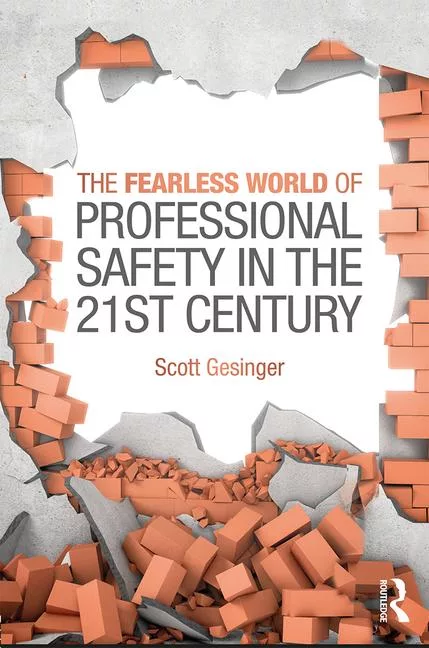
    The Fearless World of Professional Safety in the 21st Century

See More Products

Related Directories

  • American Society of Safety Professionals (ASSP)

    The American Society of Safety Professionals (ASSP) is a global association of occupational safety and health professionals who are dedicated to workplace safety. We provide education, safety standards, advocacy and a professional community that supports our diverse members and the profession.
  • Board of Certified Safety Professionals (BCSP)

    Since 1969, BCSP has been setting and certifying the technical competency criteria for safety, health, and environmental practitioners; ensuring safety through certification. In 2019, BCSP developed examCORE a comprehensive educational program for safety certification.
  • Alliance of Women’s Safety Apparel Manufacturers (AWSAM)

    The Alliance of Women's Safety Apparel Manufacturers is a collection of specialty manufacturers and distributors committed to providing properly designed and fitted PPE for women. Our foundational pillars are Awareness, Access and Advocacy. Our non-profit organization has 12 Founding Members and aligns the needs of women in the workforce and the companies they work for with specialty manufacturers dedicated to providing appropriate PPE for women. The Founding Members of the organization have made great strides in removing barriers to access that have existed for many years and kept women from being equally protected. Together, we create a platform that increases awareness of products made for women, encourages equal access to appropriately fitting PPE, and advocates for the safety of women in the workforce. In the spirit of co-opetition, we collaborate to envision what is next for women in industry as we work side by side to accomplish our mission, increase our impact, and share the journey with everyone seeking to elevate diversity and equality in their workplace.
×

Become a Leader in Safety Culture

Build your knowledge with ISHN, covering key safety, health and industrial hygiene news, products, and trends.

JOIN TODAY
  • RESOURCES
    • Advertise
    • Contact Us
    • Directories
    • Manufacturing Division
    • Store
    • Want More
  • SIGN UP TODAY
    • Create Account
    • eMagazine
    • Newsletters
    • Customer Service
    • Manage Preferences
  • SERVICES
    • Marketing Services
    • Reprints
    • Market Research
    • List Rental
    • Survey/Respondent Access
  • STAY CONNECTED
    • LinkedIn
    • Facebook
    • YouTube
    • X (Twitter)
  • PRIVACY
    • PRIVACY POLICY
    • TERMS & CONDITIONS
    • DO NOT SELL MY PERSONAL INFORMATION
    • PRIVACY REQUEST
    • ACCESSIBILITY

Copyright ©2026. All Rights Reserved BNP Media, Inc. and BNP Media II, LLC.

Design, CMS, Hosting & Web Development :: ePublishing