ISHN logo
search
cart
facebook twitter linkedin youtube
  • Sign In
  • Create Account
  • Sign Out
  • My Account
ISHN logo
  • NEWS
    • Today's News
    • Global Safety News
    • Government Regulations
  • PRODUCTS
    • Product Innovations
    • Featured Products
  • TOPICS
    • Environmental Health and Safety
    • Facility Safety
    • Workplace Health
    • Occupational Safety
    • PPE
    • More Topics
  • CONSTRUCTION
  • TECHNOLOGY
  • COLUMNS
    • Best Practices
    • Dave Johnson: What’s going on
    • Editorial Comments
    • Leading Safety
  • MULTIMEDIA
    • ISHN Podcast
    • Videos
    • Cold Stress Education Quiz
    • Webinars
    • White Papers
  • MORE
    • Buyer's Guide
    • Newsletters
    • Convention Companion
    • Polls
    • Events
    • ISHN Store
    • Sponsor Insights
  • EMAGAZINE
    • eMagazine
    • Archived Issues
    • Contact
    • Advertise
  • JOIN TODAY!

A paradigm shift in maintenance
By Matt Thiel
September 5, 2008


Gas detection instruments are like any other piece of equipment — they need maintenance to make sure they’re working properly. But more often than not, maintenance of fixed gas detection systems is overlooked, or at least done less frequently than with portable instruments.

Reduce hands-on testing
Almost a decade since the appearance of the first portable instrument “docking” system, a breakthrough technology has enabled similar cost and time savings with the automation of calibration and diagnostic testing of fixed or wall-mounted gas detectors.

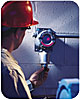
With two-way communication, this fixed “docking” system for remote calibration and automated record-keeping reduces human intervention and encourages preventive maintenance. The docking system performs function tests and calibrations on a routine schedule, or on demand remotely from a computer console, eliminating the need to send a person around to each detector.

Increase reliability
A function test consists of applying a known concentration of gas to a sensor to ensure that the response exceeds the lowest alarm set-point. If the sensor does not respond properly, the filter may be blocked by dirt or debris, or the sensor may need to be calibrated. Function tests are done to ensure that the sensors and detector are still working properly. Without performing routine function tests, how can you know if the sensors are still working?

Automating this “bump” test process increases the reliability of the system, as well as increasing safety within the facility. Safety levels will increase because instruments are being tested and proven to work, and the personal safety of technicians will also increase as a result of their not having to conduct these tests while standing on ladders, lifts, or in hazardous environments.

Function testing not only ensures that the instruments are working properly, but also conditions the sensors. Sensors such as chlorine need to see chlorine gas regularly in order to be accurate and responsive.

Keep calibrations current
Calibrations should be performed routinely. If a sensor fails, it should be replaced and the new sensor calibrated after it has been installed in the detector.

Manufacturers’ recommendations on calibration flow rate and calibration concentrations should be followed to achieve the most accurate and precise calibration. Calibration gas should be checked to make sure it has not expired and that it meets the manufacturer’s specifications.

The same worker concerns for function testing also exist for calibration. Automating this process will increase sensor accuracy, safety and reliability of the gas detection system.

Stay on schedule

Maintenance should be performed regularly on fixed gas detection systems. Many manufacturers recommend function testing on a monthly basis, and sensor calibrations should be performed at least once a quarter. The frequency of maintenance is best determined by end-user policy or local regulations.

Automating the maintenance program through an integrated control system will ensure that instruments are properly maintained and running. The “docking” station allows users to set the maintenance program to their own schedule so that function tests can be run weekly and calibrations conducted monthly. At any time a technician can use the system’s interface to remote-start a function test or calibration on any instrument in the field. This allows for exception testing or for users to conduct tests at more opportune times.

Store records in a common database
The automated system also keeps track of all of the data in a common database. This eliminates the need to manually write details into a logbook. Keeping all data in one common area and making it easy to access is a significant improvement over current practices, and is quickly becoming “best practice” in the industry.

Replenish parts automatically
Once a problem is discovered, new equipment needs to be ordered. Replenishment parts programs tied to the docking system facilitate replacement sensors to be automatically sent out when failures are predicted. This allows users to receive a new sensor before the current sensor dies, eliminating downtime and increasing safety.

The fixed docking system also monitors calibration gas usage and filter life. Once gas levels are determined to be getting low, the system will notify the user with a low cylinder warning. This allows the user to reorder calibration gas before a cylinder actually runs out.

Share This Story

Looking for a reprint of this article?
From high-res PDFs to custom plaques, order your copy today!

Matt is the fixed systems product manager for Industrial Scientific Corporation. He may be contacted at (412) 788-4353 or via e-mail at mthiel@indsci.com.

Recommended Content

JOIN TODAY
to unlock your recommendations.

Already have an account? Sign In

  • forklift safety

    Exploring the latest technologies in forklift safety

    With more staff and more stock in warehousing now more...
    Facility Safety
    By: Josh Cramer
  • welding

    All about welder’s flash or arc eye

    A flash burn is a painful inflammation of the cornea,...
    Environmental Health and Safety
  • dangerous jobs

    The 10 most dangerous jobs in the U.S.

    On-the-job deaths have been rising — hitting the highest...
    Construction Industry Safety and Health
    By: Benita Mehta
Manage My Account
  • eMagazine Subscriptions
  • ISHN Newsletter & Other Newsletter Alerts
  • Online Registration
  • Manage My Preferences
  • Subscription Customer Service

More Videos

Sponsored Content

Sponsored Content is a special paid section where industry companies provide high quality, objective, non-commercial content around topics of interest to the ISHN audience. All Sponsored Content is supplied by the advertising company and any opinions expressed in this article are those of the author and not necessarily reflect the views of ISHN or its parent company, BNP Media. Interested in participating in our Sponsored Content section? Contact your local rep!

close
  • man wearing the the Sundström SR200 Full Face Mask Respirator
    Sponsored byOHD

    5 Fit Testing Mistakes That Could Cost You

  • This image shows Magid AcuSpex polarized blue mirrored safety glasses.
    Sponsored byMagid Glove and Safety

    Construction PPE Guide: What Crews Need for Each Task

  • lone worker in confined space
    Sponsored byAlphasense Ltd.

    GET THE LEAD OUT of your Safety Oxygen Sensors!

Popular Stories

SpaceX 7 launch

OSHA Investigating Fatal Fall at SpaceX Starbase

Worker Impairment

How to Tell When a Co-Worker is Impaired? A Safety Pro’s Challenge

psychology in the workplace

Most Workplaces Measure Psychological Safety, Ignoring Psychosocial Risks

top 10 most dangerous jobs

Poll

Seasonal Readiness

With the federal heat stress prevention rule on the horizon, which area of your safety program needs the most attention?
View Results Poll Archive

Products

Surviving an OSHA Audit A Management Guide, 2nd Edition

Surviving an OSHA Audit A Management Guide, 2nd Edition

See More Products

ISHN Podcasts

Related Articles

  • New in Maintenance-Free Gas Detection

    See More
  • Study near-misses to improve safety processes

    A Shift in Thinking: Study near-misses to improve safety processes

    See More
  • Plane flying sunset.jpg

    Implementing a Safety Management System (SMS) in aircraft maintenance operations

    See More
×

Become a Leader in Safety Culture

Build your knowledge with ISHN, covering key safety, health and industrial hygiene news, products, and trends.

JOIN TODAY
  • RESOURCES
    • Advertise
    • Contact Us
    • Directories
    • Manufacturing Division
    • Store
    • Want More
  • SIGN UP TODAY
    • Create Account
    • eMagazine
    • Newsletters
    • Customer Service
    • Manage Preferences
  • SERVICES
    • Marketing Services
    • Reprints
    • Market Research
    • List Rental
    • Survey/Respondent Access
  • STAY CONNECTED
    • LinkedIn
    • Facebook
    • YouTube
    • X (Twitter)
  • PRIVACY
    • PRIVACY POLICY
    • TERMS & CONDITIONS
    • DO NOT SELL MY PERSONAL INFORMATION
    • PRIVACY REQUEST
    • ACCESSIBILITY

Copyright ©2026. All Rights Reserved BNP Media, Inc. and BNP Media II, LLC.

Design, CMS, Hosting & Web Development :: ePublishing