How to Tell When a Co-Worker is Impaired? A Safety Pro’s Challenge
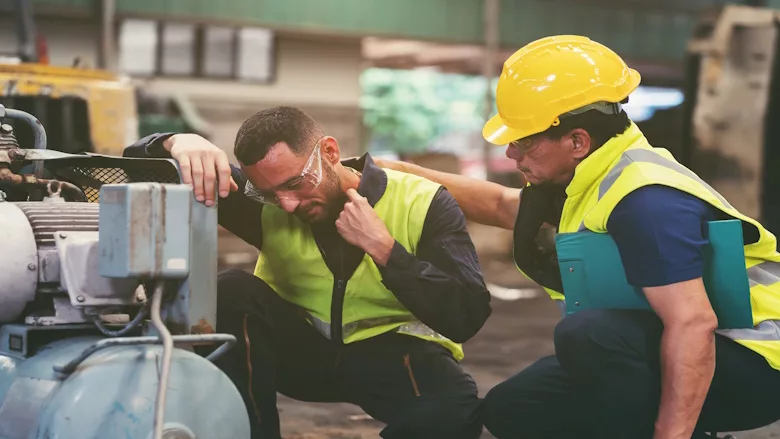
Mike works in a large consumer goods warehouse, driving a forklift. For the past week or two he hasn’t been himself. Coworkers have noticed the change. Never the most outgoing guy, he’s even quieter than usual and keeps to himself more. He seems to be slower operating the forklift, almost distracted, and this warehouse moves at a fast pace to keep up with booming online sales. Everyone’s hustling and no one has said anything to Mike. In fact, they are somewhat spooked by his behavior. He’s not an easy guy to know; not a lot of friends. Something is different with Mike, but no one wants to pry.
The warehouse safety officer likes to check in with her team, takes pride knowing each one; she’s been watching Mike and has noticed the change. At a break one day she gets him alone and says, “Mike, it seems you haven’t been yourself. I’ve noticed a change. The team has, too, and they’re concerned. You seem off. Do you want to talk about anything going on? I’m just here to help, Mike, you know that.”
Mike doesn’t want to talk. “Thanks, but I’m OK. Nothing’s going on.”
What’s the next move?
Jo, the safety manager, wonders. Is he depressed? Is he on some new med? Maybe he’s not getting enough sleep. Or there’s trouble on the homefront. Jo keeps these questions to herself; she knows she steps over the line if she asks Mike about specific medical information: “Did your doctor give you an anti-depressant” A sleep med?”
The cause, whatever it is, doesn’t matter. The next move is to observe and if needed, document. Dealing with possible impairment is about the facts, not speculation. Jo will keep an eye on how Mike is driving the forklift. Surveillance cameras everywhere in the warehouse will help. If he often swerves, comes too close to coworkers, crosses the walkway zone, nearly hits a pole or shelving, has trouble lifting loads and such, she’ll note the time, location and behavior. And there could well be video of his driving, and video of any incident if it occurs.
Mike’s driving is erratic in the following weeks. Jo now has another private conversation with Mike, telling him his actions are endangering himself and others. “Mike, I need to keep you and everyone safe.”
What’s important is to document objective observations that anyone would agree indicate something is wrong. Also important: Jo has received workplace impairment recognition training. Recording the documentation she avoids any labeling: “Mike has seemed depressed for weeks before the incident.” Or blame: “Mike should know better to drive that close to workers.”
Next, reasonable suspicion procedures come into play — clear guidelines for when and how to act on suspected impairment. Policies will vary company to company. Often this is when HR enters the picture.
After her second conversation with Mike, Jo fills out a reasonable suspicion of impairment form.
Suspicions of impairment are tricky grounds for safety and health professionals to navigate. Conversations like Jo has had with Mike are personal, reflecting Jo’s style of diplomacy. Every professional will have their own way of approaching suspected impairment.
The larger the workforce and worksite, the more shifts around the clock, make it unlikely pros will be on a first name basis with everyone. It’s unlikely they will be eyewitnesses to an incident or near hit that involves suspected impairment. It’s more likely they’ll receive a report of suspected impairment from a supervisor closer to the action and the frontline. Or they’ll review surveillance video and notice what could be impaired behavior, behavior that is endangering the individual in question and coworkers.
Roles will vary just as there are different protocols in each workplace for handling reasonable suspicion of impairment. The one obvious responsibility is to ensure unsafe behavior is addressed and any risks are mitigated quickly.
If a pro has a role in a suspected impairment case, it could be giving input on documented observations or the nature of any incident and providing any safety history, past incidents, discipline warnings and so on involving the individual. Pros stick to the facts, make sure any hazard is abated, avoid labeling and blaming, and don’t over-step their bounds offering conjecture or asking about personal medical information.
What if the scenario is 180 degrees from Mike’s?
What if Ian, who doesn’t like his supervisor and won’t talk to her, opens up to Jo? “Want to talk about anything bothering you, Ian? You’re driving that forklift too fast, you know that. People get scared. I got to protect you and everyone else.” Pause. “Yeah. I’ll come right out with it. For months I’ve been on meth every day here. This warehouse is like some huge speed-obsessed machine. Gotta keep up.”
Jo doesn’t try to counsel Ian. No off-the-record commiserating. No advice. No questions about any other meds. She knows her limits. Expectations around alcohol and drug use during work hours are spelled out in the substance-free workplace policy. Jo sticks to the policy. Mitigates any risks. Decisions regarding how to handle an impaired worker are above Jo’s pay grade.
Here’s where safety pros can be influencers – if a good safety culture is backed by leadership. Jo enjoys good relations with management, and she can help ensure an impairment case is handled fairly, no blame game. Her job is to manage risk and the well-being of her workforce. She’ll do as much as she can to meet those goals. It’s a challenge that calls for both hard skills — risk reduction — and soft skills — using a Total Worker Health® focus that goes beyond physical safety to address increasing mental health, alcohol and substance abuse disorders.
And she will tell you no two cases involving a reasonable suspicion of impairment are the same, circumstance are always different, and she adjusts her approach to each situation.
Looking for a reprint of this article?
From high-res PDFs to custom plaques, order your copy today!