ISHN logo
search
cart
facebook twitter linkedin youtube
  • Sign In
  • Create Account
  • Sign Out
  • My Account
ISHN logo
  • NEWS
    • Today's News
    • Global Safety News
    • Government Regulations
  • PRODUCTS
    • Product Innovations
    • Featured Products
  • TOPICS
    • Environmental Health and Safety
    • Facility Safety
    • Workplace Health
    • Occupational Safety
    • PPE
    • More Topics
  • CONSTRUCTION
  • TECHNOLOGY
  • COLUMNS
    • Best Practices
    • Dave Johnson: What’s going on
    • Editorial Comments
    • Leading Safety
  • MULTIMEDIA
    • ISHN Podcast
    • Videos
    • Cold Stress Education Quiz
    • Webinars
    • White Papers
  • MORE
    • Buyer's Guide
    • Newsletters
    • Convention Companion
    • Polls
    • Events
    • ISHN Store
    • Sponsor Insights
  • EMAGAZINE
    • eMagazine
    • Archived Issues
    • Contact
    • Advertise
  • JOIN TODAY!

Audit your walkways

By Mike Fraley
October 12, 2009


Slip-and-fall accidents, whether in the workplace or in the home, concern everyone. Billions of dollars are spent annually and thousands of lives are changed due to a simple slip, trip or fall. According to the National Floor Safety Institute (NFSI), the nation’s $494 billion grocery store industry spends $450 million annually just to defend slip-and-fall claims.

Walkway auditing prevention
The key to any safety prevention effort is the need for a company to be proactive rather than reactive. This is especially true when it comes to slip-and-fall prevention. Walkway auditing could significantly reduce a company’s slip-and-fall incidents. Although walkway audits are not new, this concept of the audit addresses floors in a facility and any slip, trip or fall hazards within that facility.

Walkway audits are best performed by a trained and certified walkway auditor. The audit process allows the auditor the opportunity to identify potential slip-and-fall hazards within a facility by testing the facility’s floors for slip resistance and assigning risk categories to various locations within the facility. The auditor will then compile all the data into a detailed report, including a building diagram with clearly marked areas of risk.

Each report will contain the static coefficient of friction (SCOF) readings for each area tested. There are three different types of risk categories: low traction, medium traction and high traction. Areas receiving low or medium traction readings should be considered a possible hazard and should be followed by some type of remediation.

Audit as investment
When used properly, the walkway audit will prove to be a valuable floor safety tool for several reasons, including:

1. It shows your company’s proactive approach to safety as well as its due diligence. This will go a long way in your company’s defense if or when a slip-and-fall accident occurs.

2. The audit will help identify areas within your facility that could be potential slip, trip or fall hazards and allows your company the opportunity to resolve the problem before a costly incident occurs.

3. Using a certified third-party walkway auditing firm shows, in the event of an accident, that the information within the report is unbiased and accurate.

The key with any safety tool or plan is to use it. To show that your company is serious about the overall safety of its employees, as well as its customers, invest in a walkway audit program. Such an investment could prove to benefit your bottom line — the money saved from increased workers’ compensation premiums, expensive and lengthy litigation and retraining employees who are disabled as a result of slip-and-fall accidents will more than pay for a walkway audit program.

Slip the audit into your program
Walkway auditing is just one key component that makes up a workable floor safety program that can be easily implemented within your company’s safety efforts.

It’s important to look at floor safety and slip-andfall prevention as a separate entity; often floor safety concerns are addressed within a company’s overall safety program but not treated as a separate issue. As a company, you will find it beneficial to set up a floor safety program that is specifically designed to your company’s needs. Along with walkway auditing, a few other components will work hand in hand with your slip-and-fall prevention efforts.

The program should focus on the importance of proper maintenance procedures — often the slip resistance of a floor is directly affected by how clean the floor itself is. Other problems, such as build-up of contaminates, will also lower the slip resistance of the floor.

Next, employee training is paramount. Included in your floor safety program should be written procedures on identifying, reporting and avoiding any slip, trip or fall hazard, as well as cleanup procedures when spills occur.

Take a look at employee footwear. Your employees should be required to wear slip-resistant shoes. Slipresistant shoes come in a variety of colors and styles and are very comfortable and economically priced.

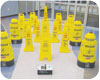
Last but not least, think about signage and floor matting. Proper signage is a must in alerting your employees as well as your customers to a potential hazard. Having the right amount of signs for your facility is key. A good rule of thumb is to have at least one sign for each entrance, and one or two signs for spills within the facility. Matting is also crucial for entrance areas and hallways where water and contaminants are prevalent.

Accidents can happen under the best of circumstances, but they can be reduced significantly by preventive measures. Contact a certified slip-and-fall prevention specialist or walkway auditing firm to assist you in your company’s slip-and-fall prevention efforts.

Share This Story

Looking for a reprint of this article?
From high-res PDFs to custom plaques, order your copy today!

Mike is president of Consolidated Safety Group, Inc. and is currently serving on the NFSI/ANSI B-101 Standards Committee. Contact Mike at 1-888-818-9038 or mike@ floortesting.com.

Recommended Content

JOIN TODAY
to unlock your recommendations.

Already have an account? Sign In

  • forklift safety

    Exploring the latest technologies in forklift safety

    With more staff and more stock in warehousing now more...
    Workplace Training Strategies
    By: Josh Cramer
  • welding

    All about welder’s flash or arc eye

    A flash burn is a painful inflammation of the cornea,...
    Environmental Health and Safety
  • dangerous jobs

    The 10 most dangerous jobs in the U.S.

    On-the-job deaths have been rising — hitting the highest...
    Construction Industry Safety and Health
    By: Benita Mehta
Manage My Account
  • eMagazine Subscriptions
  • ISHN Newsletter & Other Newsletter Alerts
  • Online Registration
  • Manage My Preferences
  • Subscription Customer Service

More Videos

Sponsored Content

Sponsored Content is a special paid section where industry companies provide high quality, objective, non-commercial content around topics of interest to the ISHN audience. All Sponsored Content is supplied by the advertising company and any opinions expressed in this article are those of the author and not necessarily reflect the views of ISHN or its parent company, BNP Media. Interested in participating in our Sponsored Content section? Contact your local rep!

close
  • man wearing the the Sundström SR200 Full Face Mask Respirator
    Sponsored byOHD

    5 Fit Testing Mistakes That Could Cost You

  • This image shows Magid AcuSpex polarized blue mirrored safety glasses.
    Sponsored byMagid Glove and Safety

    Construction PPE Guide: What Crews Need for Each Task

  • lone worker in confined space
    Sponsored byAlphasense Ltd.

    GET THE LEAD OUT of your Safety Oxygen Sensors!

Popular Stories

SpaceX 7 launch

OSHA Investigating Fatal Fall at SpaceX Starbase

Automated loading dock equipment

After March 2026 Rivian Death, Safety Managers Reassess Loading Dock Systems Under OSHA's Warehouse Emphasis Program

psychology in the workplace

Most Workplaces Measure Psychological Safety, Ignoring Psychosocial Risks

top 10 most dangerous jobs

Poll

Seasonal Readiness

With the federal heat stress prevention rule on the horizon, which area of your safety program needs the most attention?
View Results Poll Archive

Products

Surviving an OSHA Audit A Management Guide, 2nd Edition

Surviving an OSHA Audit A Management Guide, 2nd Edition

See More Products

ISHN Podcasts

Related Articles

  • Audit your program using OSHA's checklist

    See More
  • Audit your emergency eyewash stations

    See More
  • Is your company suffering from audit fatigue?

    See More

Related Products

See More Products
  • surviving.webp

    Surviving an OSHA Audit A Management Guide, 2nd Edition

  • Top Ten Pitfalls in OSHA Recordkeeping and How to Avoid Them

See More Products

Related Directories

  • e-Hazard

    E-Hazard is dedicated to building an electrical safety culture with you. Our electrical engineering services and training will prepare your team for any electrical safety needs or concerns. E-Hazard can help with electrical training, arc flash studies, electrical audits, electrical safety programs, LOTO, infrared scanning, NFPA 70B, consulting and much more.
×

Become a Leader in Safety Culture

Build your knowledge with ISHN, covering key safety, health and industrial hygiene news, products, and trends.

JOIN TODAY
  • RESOURCES
    • Advertise
    • Contact Us
    • Directories
    • Manufacturing Division
    • Store
    • Want More
  • SIGN UP TODAY
    • Create Account
    • eMagazine
    • Newsletters
    • Customer Service
    • Manage Preferences
  • SERVICES
    • Marketing Services
    • Reprints
    • Market Research
    • List Rental
    • Survey/Respondent Access
  • STAY CONNECTED
    • LinkedIn
    • Facebook
    • YouTube
    • X (Twitter)
  • PRIVACY
    • PRIVACY POLICY
    • TERMS & CONDITIONS
    • DO NOT SELL MY PERSONAL INFORMATION
    • PRIVACY REQUEST
    • ACCESSIBILITY

Copyright ©2026. All Rights Reserved BNP Media, Inc. and BNP Media II, LLC.

Design, CMS, Hosting & Web Development :: ePublishing
