Beyond Sparks & Burns
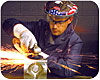
Welders must cope not only with heat, metal fumes, sparks, slag (molten metal) and infrared/ultraviolet rays created by the welding process but also with the danger of falling objects or other projectiles. Increasingly, welding applications are located in hardhat areas with overhead hazards, such as cranes, hoists or structures where others are working above welders.
In the past, welders wore a soft cap or beanie, mainly to protect against sparks, burns and other welding hazards. The problem with soft cap welding in a hardhat area is that welding helmets and beanies were never designed to protect from an impact to the head.
With today’s rising healthcare costs, insurance premiums and workers’ compensation claims, it’s important to ensure that welders working in these areas wear appropriate welding helmet/hardhat combinations. While the main goal is to protect an employee, the challenge is to select head protection equipment that won’t impede functionality or comfort.
Selection criteria
Although some welders might dream of a built-in iPod adapter, surround sound system and plasma screen, the key features to look for include:
Comfort and fit: The most important determinant of comfort in a welding helmet and hardhat combination is the hardhat design and an adjustable, well-fitting headband and suspension. The hat is the “anchor” by which the helmet is attached. If the “anchor” is not secure and comfortable on the head, its off-balance feel and tendency to slip may distract the worker. That’s when accidents can happen.
Shell design: The shape and size of the hardhat should allow the worker to fully raise and lower the welding helmet without interference from the hat.
Two basic methods of attaching a helmet to a hardhat are a loop system that goes over and around the hardhat, and a blade system that snaps into accessory slots built into some hardhats.
While many hardhats and their mounting attachments function with various brands of welding helmets and faceshields, consider purchasing both the cap and welding helmet from the same manufacturer to ensure the best match. A welder should not be tempted to grind down a spot where an imperfect match causes friction when he or she tries to raise the helmet.
Hardhat suspension design: Suspension adjustments that raise, lower and tilt the headband facilitate obtaining a comfortable, secure fit while the cap remains squarely on the head. The more suspension points in a hardhat, the better the added weight of the welding helmet will be distributed around the head, making the hardhat/welding helmet combination feel less heavy and ultimately more comfortable.
Multiple adjustments also can make it easier to position the glass holder of the welding helmet in front of the eyes. The welder should not have to stand in a hunched-over position or bend in an awkward direction to be able to see while wearing the welding helmet/hardhat combination.
Easy adjustment: Hardhats are available with a standard pin-lock headgear or a ratchet-style headgear. Welders tend to prefer the ratchet version as it is easier to secure the cap on the head, especially with the added weight of the helmet.
Some manufacturers have developed special reversible ratchets that make reversing the suspension easier. Certain brands of hardhats may be worn with the brim to the back to avoid interference with a helmet, if tested that way by the manufacturer. However, the welder must remove, reverse and reinstall the suspension in the shell. The hardhat cannot be worn backwards without this reversal or it will not fit properly and not offer sufficient head protection.
Helmet design: Some helmets are compact and not designed to be worn with hardhats. Full-size welding helmets that can be used with hardhats are larger to accommodate fitting over a hardhat. They also have more room underneath for protective eyewear and can better accommodate a respirator if required.
Materials: Most hardhats and welding helmets are manufactured from thermoplastic, fiberglass or fiberglass composite material. Plastic is lightest in weight and usually costs less, but is perfectly fine for use in a “welding combo.” However, many welders prefer fiberglass, which is stronger and has a higher heat rating so it’s less likely to pit when exposed to sparks and slag. Most large steel mills use fiberglass hardhats as do workers doing overhead welding. Composites offer even greater heat resistance.
Worker compliance: If PPE looks good, workers are more apt to wear it, helping to improve compliance. Manufacturers now offer welding helmets, faceshields and hardhats with cool, colorful graphics that wrap the product with a patriotic or other themed design. Stickers, though popular and not forbidden by OSHA or ANSI Z89.1-1997, are not recommended since they can cover up damage, and some adhesives potentially can break down the integrity of the hardhat. Manufacturers also offer imprinting services for company logos, safety slogans and other graphics for easy identification of workers on a job site.
Use and maintenance
Inspect shells daily: Once a welding helmet, a hardhat or both in combination are purchased, and prior to the first and each subsequent use, inspect the shells daily for cracks (even hairline cracks), breakage, burn-through holes, scratches, gouges or other unusual conditions.
Shells exposed to extreme heat, sunlight and chemicals can become stiff or brittle, sometimes with a visible craze pattern, a dull color and/or chalky appearance. If any of these signs appear, take the helmet or hardhat out of service, destroy and replace it immediately.
Also, immediately replace any helmet or hat that sustains an impact, since invisible damage can occur inside the cap or helmet material.
Replace suspensions: Over long periods of use, suspensions can become worn or damaged. Wearers should look closely for cracking, torn adjustment slots, fraying material, or other signs of wear, especially at the suspension lugs. Hair oils, perspiration and normal wear can cause this damage. The International Safety Equipment Association recommends replacement of suspensions at least annually under normal wear conditions.
Check filter and cover plate: During the inspection of the welding helmet, check the filter and cover plate for pitting and scratching, which can reduce vision and seriously affect protection. If damaged, replace the part(s) immediately.
Wear properly: Employees should not carry anything inside the hardhat. In the event of a blow to the head, the space must be used to help absorb the shock.
Cleaning: There are no expiration dates for hardhats or welding helmets. With proper care and maintenance, these products can last indefinitely. Clean them regularly with warm water and mild soap to remove potentially flammable and damaging substances that can accumulate and make inspection more difficult.
Do not use detergents, solvents, gasoline, kerosene, thinners or hydrocarbon-type cleansers, which will damage the helmet or hardhat in a manner that may not be visible.
Do not paint safety equipment as paint contains damaging chemicals.
Never modify or alter a welding helmet or hardhat in any way as this may reduce the equipment’s effectiveness and result in serious injury.
Bottom-line benefits
You can make safety pay by investing a little time and research into safety equipment for welders. Not only will your employees thank you, so will your insurance carriers. The overall results should be a decrease in your safety/accident costs, and an increase in productivity, with both helping to increase your company’s bottom line.
Looking for a reprint of this article?
From high-res PDFs to custom plaques, order your copy today!