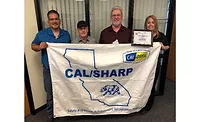
Celebrating big safety numbers
"You'll find out," says Marchant.
The employees of Jacobs Applied Technology in Orangeburg, South Carolina, are gathered for a celebration. The 300 craftspeople, office workers, and engineers have worked three million man-hours without a lost-time accident. That's over six years of blasting, painting, and installing the electrical, instrumentation and insulation components of chemical process modules without a single serious injury.
Marchant is planning a demonstration of the industry's incidence rate of 7.8 per 100 workers, according to 1994 Bureau of Labor Statistics figures. "If we just made the industry average, everyone with a badge would have had a lost-time accident during the past six years," he announces, asking the badge-wearers to stand. Seventy-eight people out of 200 attending rise. "Two of these workers would have been killed," he adds.
Safety from the top down
There were a lot of VIP's at the party. Bill Kerler, executive vice president of Jacobs Engineering Group, and Bill Gebhardt, human resources director, flew in from California. Kerler tells employees, "The corporate goal is zero accidents." Safety is the first item on the executive staff meeting agenda every Monday."Safety is a journey; keep traveling," says Gebhardt. "It's a privilege to be here tonight with a bunch of safety professionals."
And from the bottum up
Herbert Frazier has been with the plant for 17 years. He says the safety program has changed since the facility was purchased by Jacobs Engineering Group. At first, employees resisted stricter enforcement of PPE rules. But they soon saw results: a noticeable decrease in eye injuries, busted fingers, and cut hands. They realized safety was for their benefit, not a management gimmick to make their jobs more difficult.Eddie Sevinsky is a lead craftsman with 18 years of experience. With his knowledge comes responsibility. "I might catch a hazard someone with less experience would miss," he says. He corrects safety problems as soon as he sees them. If he sees an extension cord with frayed insulation, he replaces it immediately.
When welder Robbie Rast, whose hands are smaller than average, felt that he couldn't handle a grinder safely while wearing the bulky leather work gloves required, he told Marchant. Robbie now wears a cloth glove on his grip hand, and a leather glove on his free hand.
Orangeburg's management, particularly Roger Myrick, manufacturing manager, Jim Nasso, director of operations, and Jerry Brock, president, stand by Marchant's efforts. Myrick's role is to keep the focus on safety.
So before each shift, craft supervisors hold a five-minute meeting with their workers to discuss safety issues related to that day's work. They also discuss the results of monthly plant safety audits.
Nasso and Brock make sure the commitment to safety is honored financially. Jacobs has invested $1 million in safety over the past five years and Nasso says the investment has paid off in both financial and human terms. If Jacobs had met the industry average, incidents during the same period would have cost the company over $3 million, according to National Safety Council figures.
Personal commitment
Welder Hubert Mack, "Big Mack" to his friends, says finding safe ways to weld structural steel is a tough job. "You just want to hang off the side of that ladder and do it." Why doesn't he? Mack says it's not the fear of punishment motivating him. It's family. "It's important to my wife and kids," he says with conviction. "Two boys, and my baby is a girl." Mack wants to go home every night, and he knows his employer wants that too.The employee commitment is so strong that Larry Marchant doesn't have to browbeat employees into working safely. For example, when he told paint booth workers that the rules required respirator-wearers to be clean-shaven, and why, they voluntarily shaved. "Some of those men had grown children who had never seen them without beards," Marchant says. "They went home that night and shaved."
The folks in Orangeburg are not resting on their laurels. Those old three-million man-hours shirts will be out of style soon. Next time, they'll say six million.
Looking for a reprint of this article?
From high-res PDFs to custom plaques, order your copy today!





.webp?t=1721257160 "download (1).jpg")