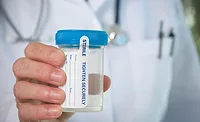
Sooner or later you can't avoid drug testing
"It's an invasion of privacy."
"What I do on my own time is none of the company's business."
"I'm being set up, because the foreman doesn't like me."
"If we test for alcohol we'll lose most of our superintendents."
"Our drivers are professionals and shouldn't be included. Let's just test the office workers."
"Alcohol isn't a drug."
"I can't take the test right now because I mistakenly took one of my dog's vitamins yesterday."
The big picture
Professional employment pretty much requires personal participation in drug testing today. Approximately 98 percent of Fortune 200 companies are testing employees - up from just 3 percent in 1983.The Department of Transportation alone has regulations covering requirements for:
- Aviation employers and employees, under Federal Aviation Administration rules, 14 CFR Parts 61, et al.;
- Commercial freight carriers and employees, under Federal Motor Carrier Safety Administration rule 49 CFR 382;
- Rail industry employers and employees, under Federal Railroad Administration rule 49 CFR Part 219;
- Mass transit industry employers and employees, under Federal Transit Authority rule 49 CFR Part 655;
- Pipeline industry employers and employees, under the Research and Special Projects Administration's rule 49 CFR Part 199;
- Commercial vessel operators and employees, under United States Coast Guard rule 46 CFR Parts 4, 5 & 16.
Whether it's a matter of company policy or legislated mandates, drug testing is here to stay. So it's to anyone's advantage to have a basic understanding of the process. Plus, a career in safety management essentially guarantees that you will be involved in drug testing in one way or another.
Is there really a problem?
Is drug use another "sensationalized" story just so consultants, labs and related businesses can make some fast money (can you say "Asbestos"?).Is what's done in the privacy of your home a constitutional right?
Is testing part of a conspiracy to determine market and potential earnings when the government goes into the business of manufacture and distribution?
To these things I say. . . huh?
When I need to develop an opinion and make a judgment on something, it's based on a review of information available. In that vein, I'll present some information to you and let you make up your own mind. And please keep in mind that the validity of anything written, read, heard or spoken depends on your biases, filters, experiences and wants. Be responsible for what you believe, why you believe in it, and how you present those beliefs.
- The United States government estimates that, monthly, nearly 10 million Americans use marijuana and 2 million Americans use cocaine.
- 75+ percent of Americans 18 years of age or older who engage in illicit drug use are employed.
- 30+ percent of alcohol abusers also use illicit drugs.
- 60+ percent of adults know someone who has reported to work "under the influence."
- Approximately 40 percent of occupational fatalities and 50 percent of injuries can be linked to alcohol use and alcoholism.
- Alcoholism is responsible for approximately 500 million lost workdays annually.
- Results from a U.S. Postal Service study revealed that employees who tested positive in a pre-employment drug test are 66 percent more likely to be absent and 77 percent more likely to be discharged within three years than those who tested negative.
- General Motors' former chairman stated that drug abuse costs GM about $1 billion annually.
An incredible amount of information is available on the current state, and costs, of drug use and the substance-impaired worker. It's available to you as a first step in committing yourself and your organization to action.
The only way to start collecting information to determine your commitment is to have an open mind. To begin then, you must recognize that the term "drugs" include not only illicit substances, but those that are commonly ingested and have an effect on performance, personality, and behavior. This includes drugs that have not yet been regulated (and probably never will be) though they are highly addictive, prescription medications.
The drugs of choice, that pose a great concern to safe performance, that are the greatest drain on productivity, efficiency and American performance include:
- Alcohol
- Amphetamines
- Anabolic steroids
- Barbiturates
- Benzodiazepines
- Caffeine
- Cocaine
- Codeine
- GHB
- Heroin
- Ketamine
- LSD
- Marijuana
- MDMA
- Methadone
- Methamphetamines
- Methaqualone
- Nicotine
- Opiates
- Oxycodone
- PCP
Test rationale & analytical methods
Be aware of the fact that, with one exception (alcohol), testing for drugs is NOT for the drug itself but its metabolite. Get specific with employees. And don't withhold any information, or speak loosely, about what, why, or how drug testing is done. Your credibility depends on it.(The arrogant stance has never been effective. Consider the differences in today's disclosures about the loss of the shuttle Columbia and how NASA handled the Challenger explosion.)
Drug testing is usually conducted under these circumstances:
Pre-employment: Pre-employment drug screening of candidates is not done to keep drug users out, it is to professionally manage the selection process and give your organization the best possible candidates from the start.
And yes, I realize that some people will abstain from drug use prior to the screening process, and that they could easily go back to drug use after the job is theirs. To which I reply, drug screening is merely a part of the process.
The most important aspect of selecting and maintaining a productive workforce rests with management. Managers must be awake, aware and active. Selection must include follow-up on what is written and read (the resume), and heard and spoken (the interview).
Taking things at face value, and face value only, prevents you and your organization from achieving your greatest potential.
Random: Random testing provides a control check that allows you to evaluate the effectiveness of your commitment, and a demonstration of your concern for the employee population as an extension of the "family unit."
Personal issues often raise problems associated with an employee "self-medicating" in hopes of addressing, masking or making the situation less stressful. When that happens there are safety, production, efficiency and attendance issues that all work hand-in-hand together. Random testing assures an employer of having non-impaired employees on the floor.
Post-incident: Post-incident testing should be automatic, to protect your organization in exonerating the employee from having been impaired, in limiting liability, and in helping to determine causes associated with the incident. If an employee is found to have been impaired, then management has some latitude in respect to discipline, continued employment, and other corrective actions aimed at preventing recurrences.
Requirements for post-incident testing must be spelled out specifically. Explain to all employees that it will be carried out as a matter of course and not on an incident-to-incident basis. Explicitly outline consequences for noncompliance. In the midst of an incident this can be easily, conveniently and readily overlooked.
For Cause (Reasonable Suspicion): This is the trickiest part of a drug testing program. Improper conduct here can open you and your organization to legal action. This is usually where the entire process can break down. The strongest and weakest link is your management team, including supervisors. Training, education, demonstrated understanding and mandatory cooperation/assistance is the only path to success.
Analytical methods
Analytical methods include:
- Urinalysis
- Breath testing
- Blood testing
- Hair testing
These methods are definitive, quantitative and defensible - so long as the collection and testing facilities adhere to specific protocols. These protocols detail requirements for personnel, positive identification of donor, the physical sample collection space, split samples, chain-of-custody, documentation, transportation, sample handling, review of positives, confirmation testing and communication of results.
Saliva tests are advertised as an option but should only be used as a tool for "fitness for duty" screening. Rather than a definitive test, these should be considered qualitative only. A "negative" result allows the employee to proceed with duties, unless other considerations or outward behaviors suggest full testing is in order. A "positive" result would require full testing.
Be careful when it comes to analytical processes. Many stumbling blocks can put a substance-impaired worker back on the floor if the process is done improperly. Key parts of the process (which can trip you up if flawed or handled improperly) include facilities, sample collection, staff training, chain-of-custody, laboratory accreditation, laboratory analysis, false positives, false negatives, confirmation testing, sample retention, medical review, confidentiality, records access, and employee assistance programs.
Looking for a reprint of this article?
From high-res PDFs to custom plaques, order your copy today!