ISHN logo
search
cart
facebook twitter linkedin youtube
  • Sign In
  • Create Account
  • Sign Out
  • My Account
ISHN logo
  • NEWS
    • Today's News
    • Global Safety News
    • Government Regulations
  • PRODUCTS
    • Product Innovations
    • Featured Products
  • TOPICS
    • Environmental Health and Safety
    • Facility Safety
    • Workplace Health
    • Occupational Safety
    • PPE
    • More Topics
  • CONSTRUCTION
  • TECHNOLOGY
  • COLUMNS
    • Best Practices
    • Dave Johnson: What’s going on
    • Editorial Comments
    • Leading Safety
  • MULTIMEDIA
    • ISHN Podcast
    • Videos
    • Cold Stress Education Quiz
    • Webinars
    • White Papers
  • MORE
    • Buyer's Guide
    • Newsletters
    • Convention Companion
    • Polls
    • Events
    • ISHN Store
    • Sponsor Insights
  • EMAGAZINE
    • eMagazine
    • Archived Issues
    • Contact
    • Advertise
  • JOIN TODAY!

The human side of accidents
May 1, 2005
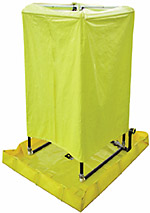
Figure 1. A portable decontamination shower, with its optional wrap-around privacy curtain, which opens for access on one side.
An industrial facility not far from our headquarters proudly displays its safety accomplishments right at the main driveway. A large sign proclaims: “1440 days without an accident!”

That’s great… many plants across the country do the same thing. It shows management’s focus on safety and reminds workers of their responsibility to safety every time they drive through the gates. But do statistics and bar charts de-humanize the idea of emergency response?

The first step in attending to the personal needs of accident victims is recognizing those needs. Accident victims have suffered a trauma, which brings the possibility of pain, nervous agitation and accompanying shock, along with possible embarrassment.

Selection of the proper equipment, reasonable placement of equipment and training will go a long way toward mitigating victim concerns. Proper procedures provide immediate first-aid assistance and reassure and comfort the victim. Training on the risks and dangers present, as well as the emergency response equipment available — including locations and use instructions — is an obvious necessity.

Figure 2. A plumbed-in combination shower and eyewash, with an optional privacy curtain.

Equipment needs

Let’s consider specific equipment needs. The requirement for quality emergency showers and eyewashes is fundamental to a quality response. Emergency equipment that doesn’t operate properly, hasn’t been adequately maintained or does not provide the required capabilities will exacerbate the victim’s anxiety.

High-quality emergency equipment, in the proper numbers and locations should be assumed. This is not a place to skimp. Features like high-visibility signage, easy-to-operate actuation, flow controls to assure smooth operation and diffused spray eyewash and shower heads are good investments. Remember, the products that you choose can have an impact on the degree of anxiety experienced by accident victims.

Imagine an injured employee needing to disrobe under an emergency shower flow and stand there for the required 15-minute use cycle. Consider that the victim is probably embarrassed that the accident even occurred. Add in the embarrassment of an exposed 15-minute shower and you get some sense of their state of mind.

A number of products on the market address the privacy needs of victims using emergency equipment. Figures 1 and 2 show drench showers (both portable and plumbed in) with privacy curtain attachments.

Many specifiers are moving toward high-end visibility and privacy by specifying Enclosed Emergency Environment (E3) products. An example of these products is shown in Figure 3 below. These emergency shower and eyewash booths offer superior visibility to accident victims, as well as privacy during use. In larger sizes, they also can provide space inside for safety personnel to assist the victim during use.
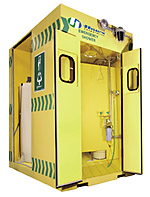
Figure 3. An Enclosed Emergency Environment (E3), with two-way privacy doors.

No torture tests, please

It’s imperative that your emergency response program encourages full cycle use. ANSI Z358.1-2004 stipulates that emergency showers and eyewashes should be used for a full 15-minute drench or irrigation cycle in all instances. Adhering to the required timeframe assures that all hazardous materials have been adequately flushed from the body, mitigating any potential further injury.

In many geographic areas, municipally supplied water can become cold enough to make a 15-minute use cycle a torture test. Likewise, there are areas and hot ambient temperature industrial processes that can heat municipal water to dangerously warm levels, again possibly resulting in a shortened use cycle. It’s imperative emergency response assets reconcile these situations with either tempering or reverse tempering to assure that the water used is within a safe and comfortable range. Per the ANSI Z358.1 standard, the range should be between 60°F and up to below 100°F for both emergency showers and eyewashes.

Next, consider your emergency response maintenance and use procedures: ANSI requires that all emergency showers and eyewashes should be physically tested every week and thoroughly inspected every year. This not only assures proper operation, but it also flushes out debris in the system.

It’s also important that your operating procedures include the specific responsibilities of everyone involved in emergency response, including employees who could be potential victims. Written procedures assure that everyone knows his or her role and also provides valuable documentation in the event of a serious accident.

Finally, there’s proper training to consider. Training employees and management regarding the locations of your emergency equipment and how to operate the various response assets completes your overall preparation and response plan.

In sum, provide proper equipment in the right locations and have people well-trained and capable of operating with confidence and compassion in an emergency to assure that you are prepared for almost any emergency.

Share This Story

Looking for a reprint of this article?
From high-res PDFs to custom plaques, order your copy today!

Recommended Content

JOIN TODAY
to unlock your recommendations.

Already have an account? Sign In

  • forklift safety

    Exploring the latest technologies in forklift safety

    With more staff and more stock in warehousing now more...
    Facility Safety
    By: Josh Cramer
  • welding

    All about welder’s flash or arc eye

    A flash burn is a painful inflammation of the cornea,...
    Environmental Health and Safety
  • dangerous jobs

    The 10 most dangerous jobs in the U.S.

    On-the-job deaths have been rising — hitting the highest...
    Government Safety Regulations
    By: Benita Mehta
Manage My Account
  • eMagazine Subscriptions
  • ISHN Newsletter & Other Newsletter Alerts
  • Online Registration
  • Manage My Preferences
  • Subscription Customer Service

More Videos

Sponsored Content

Sponsored Content is a special paid section where industry companies provide high quality, objective, non-commercial content around topics of interest to the ISHN audience. All Sponsored Content is supplied by the advertising company and any opinions expressed in this article are those of the author and not necessarily reflect the views of ISHN or its parent company, BNP Media. Interested in participating in our Sponsored Content section? Contact your local rep!

close
  • man wearing the the Sundström SR200 Full Face Mask Respirator
    Sponsored byOHD

    5 Fit Testing Mistakes That Could Cost You

  • This image shows Magid AcuSpex polarized blue mirrored safety glasses.
    Sponsored byMagid Glove and Safety

    Construction PPE Guide: What Crews Need for Each Task

  • lone worker in confined space
    Sponsored byAlphasense Ltd.

    GET THE LEAD OUT of your Safety Oxygen Sensors!

Popular Stories

SpaceX 7 launch

OSHA Investigating Fatal Fall at SpaceX Starbase

Automated loading dock equipment

After March 2026 Rivian Death, Safety Managers Reassess Loading Dock Systems Under OSHA's Warehouse Emphasis Program

psychology in the workplace

Most Workplaces Measure Psychological Safety, Ignoring Psychosocial Risks

top 10 most dangerous jobs

Poll

Seasonal Readiness

With the federal heat stress prevention rule on the horizon, which area of your safety program needs the most attention?
View Results Poll Archive

Products

Surviving an OSHA Audit A Management Guide, 2nd Edition

Surviving an OSHA Audit A Management Guide, 2nd Edition

See More Products

ISHN Podcasts

Related Articles

  • The human side of injury prevention

    See More
  • The Human Side of Safety

    The Human Side of Safety

    See More
  • A railroad company investigates the human side of safety

    See More

Related Products

See More Products
  • human resources.jpg

    Human Resources and Change Management for Safety Professionals

  • 1119906652.webp

    Alive and Well at the End of the Day: The Supervisor's Guide to Managing Safety in Operations, 2E

See More Products

Related Directories

  • Alliance of Women’s Safety Apparel Manufacturers (AWSAM)

    The Alliance of Women's Safety Apparel Manufacturers is a collection of specialty manufacturers and distributors committed to providing properly designed and fitted PPE for women. Our foundational pillars are Awareness, Access and Advocacy. Our non-profit organization has 12 Founding Members and aligns the needs of women in the workforce and the companies they work for with specialty manufacturers dedicated to providing appropriate PPE for women. The Founding Members of the organization have made great strides in removing barriers to access that have existed for many years and kept women from being equally protected. Together, we create a platform that increases awareness of products made for women, encourages equal access to appropriately fitting PPE, and advocates for the safety of women in the workforce. In the spirit of co-opetition, we collaborate to envision what is next for women in industry as we work side by side to accomplish our mission, increase our impact, and share the journey with everyone seeking to elevate diversity and equality in their workplace.
×

Become a Leader in Safety Culture

Build your knowledge with ISHN, covering key safety, health and industrial hygiene news, products, and trends.

JOIN TODAY
  • RESOURCES
    • Advertise
    • Contact Us
    • Directories
    • Manufacturing Division
    • Store
    • Want More
  • SIGN UP TODAY
    • Create Account
    • eMagazine
    • Newsletters
    • Customer Service
    • Manage Preferences
  • SERVICES
    • Marketing Services
    • Reprints
    • Market Research
    • List Rental
    • Survey/Respondent Access
  • STAY CONNECTED
    • LinkedIn
    • Facebook
    • YouTube
    • X (Twitter)
  • PRIVACY
    • PRIVACY POLICY
    • TERMS & CONDITIONS
    • DO NOT SELL MY PERSONAL INFORMATION
    • PRIVACY REQUEST
    • ACCESSIBILITY

Copyright ©2026. All Rights Reserved BNP Media, Inc. and BNP Media II, LLC.

Design, CMS, Hosting & Web Development :: ePublishing