What OSHA says about safety signs
Design & color
OSHA organizes signage into three classifications and color-codes:Danger: According to OSHA, there can be no deviation in the design of signs used to warn of danger. Danger signs are red, black and white, and all employees are to be instructed that “danger” signs mean immediate danger and that special precautions are necessary.
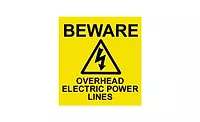
Caution: Caution signs must have a yellow background and any letters used against the yellow background should be black. Caution signs are intended to warn of potential hazards or caution against unsafe practices.
Safety: Safety instruction signs should have a white background, and the panel should be green with white letters. Any letters used against the white background must be black.
Keep in mind that it is possible for the same basic wording concerning any hazard to appear on a danger, caution or instructional sign. For instance, the same hazard could have a danger sign that says, “Danger, Keep Hands Clear,” a caution sign that warns, “Caution, Keep Hands Clear,” or a safety sign that instructs, “Be Careful, Keep Hands Out Of Machinery.” If it can cause injury, it’s best to use a danger sign.
There are two other special signs:
Slow-moving vehicle: The slow-moving vehicle emblem is a fluorescent yellow-orange triangle with a dark red reflective border. This emblem is intended as a unique identification for vehicles that move 25 mph or less on public roads.
Biological hazard: These signs signify
the actual or potential presence of infectious agents presenting a risk or potential risk of death, injury
or illness.
When & where
OSHA also has rules regarding where and when signs are required. For example:Exits: One of the major requirements is for marking fire exits and means of egress. Each exit should be clearly visible or the route to reach it should be conspicuously indicated. OSHA insists that entire paths of escape should be arranged and marked so that the way to a place of safety outside is unmistakable.
Exit signs must have the word “Exit” in plainly legible letters no less than six inches high, with the principal strokes of letters no less than three-fourths of an inch wide. OSHA does not tell you what color to use, stating only that the signs should be distinctive in color and provide contrast with decorations, interior finish or other signs. You can’t go wrong with the standard red and white.
You should have an illuminated exit light if your building is occupied at any time that requires the use of interior artificial lights.
Escape paths: Any way to reach the exit that is not easily seen should be marked with a sign. Any door, passage or stairway that is neither an exit nor an escape route, but is likely to be mistaken for one, needs to be marked with a sign that says, “Not an Exit.” Any location where the direction to an exit is not immediately known should be marked with a sign reading “Exit,” with an arrow pointing toward the exit.
Hazardous materials: OSHA has specific requirements for Hydrogen, Oxygen, Spray Finishing Using Flammable and Combustible, Explosives and Blasting Agents, Storage and Handling of LPG, and Storage and Handling of Anhydrous Ammonia. It’s helpful to have signs for any hazardous material whether there is a requirement or not.
OSHA has a requirement that all hazardous materials must be labeled; these can include gasoline, propane storage tanks, and other materials.
EPA’s Community Right to Know Act requires every facility with hazardous chemicals on site beyond specific thresholds to post an NFPA sign at the facility so emergency responders know what hazards face them. The NFPA sign is a four-color diamond shaped sign. The blue section indicates health hazards; the red, fire; the yellow, reactivity; and the white, special messages such as “Don’t Use Water”. Numbers from 0 to 4 in each colored section indicate the severity of the hazard. Do not take the task of assigning the hazard numbers lightly. These signs, as all others, must be accurate.
So remember, when you buy some signs you're doing more than punching a ticket. You're fulfilling regulatory obligations, posting company policy, providing on-the-spot reminders of hazards to your employees, protecting property and jobs, and safe-guarding residents of the community.
Looking for a reprint of this article?
From high-res PDFs to custom plaques, order your copy today!