ISHN logo
search
cart
facebook twitter linkedin youtube
  • Sign In
  • Create Account
  • Sign Out
  • My Account
ISHN logo
  • NEWS
    • Today's News
    • Global Safety News
    • Government Regulations
  • PRODUCTS
    • Product Innovations
    • Featured Products
  • TOPICS
    • Environmental Health and Safety
    • Facility Safety
    • Workplace Health
    • Occupational Safety
    • PPE
    • More Topics
  • CONSTRUCTION
  • TECHNOLOGY
  • COLUMNS
    • Best Practices
    • Dave Johnson: What’s going on
    • Editorial Comments
    • Leading Safety
  • MULTIMEDIA
    • ISHN Podcast
    • Videos
    • Cold Stress Education Quiz
    • Webinars
    • White Papers
  • MORE
    • Buyer's Guide
    • Newsletters
    • Convention Companion
    • Polls
    • Events
    • ISHN Store
    • Sponsor Insights
  • EMAGAZINE
    • eMagazine
    • Archived Issues
    • Contact
    • Advertise
  • JOIN TODAY!
Workplace Health

Hands and fingers are exposed to daily wear and tear
January 29, 2015

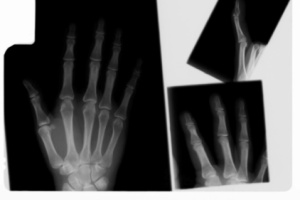
handAt one time or another, everyone has had a minor injury to a finger, hand, or wrist that caused pain or swelling. Most of the time our body movements do not cause problems, but it's not surprising that symptoms develop from every day wear and tear, overuse, or an injury.

Finger, hand, or wrist injuries most commonly occur during:

  • Sports or recreational activities.
  • Work-related tasks.
  • Work or projects around the home, especially if using machinery such as lawn mowers, snow blowers, or hand tools.
  • Accidental falls.
  • Fistfights.

The risk of finger, hand, or wrist injury is higher in contact sports, such as wrestling, football, or soccer, and in high-speed sports, such as biking, in-line skating, skiing, snowboarding, and skateboarding. Sports that require weight-bearing on the hands and arms, such as gymnastics, can increase the risk for injury. Sports that use hand equipment such as ski poles, hockey or lacrosse sticks, or racquets also increase the risk of injury.

In children, most finger, hand, or wrist injuries occur during sports or play or from accidental falls. Any injury occurring at the end of a long bone near a joint may injure the growth plate (physis) and needs to be evaluated.

Older adults are at higher risk for injuries and fractures because they lose muscle mass and bone strength (osteopenia) as they age. They also have more problems with vision and balance, which increases their risk of accidental injury.

Most minor injuries will heal on their own, and home treatment is usually all that is needed to relieve symptoms and promote healing.

An acute injury may occur from a direct blow, a penetrating injury, or a fall, or from twisting, jerking, jamming, or bending a limb abnormally. Pain may be sudden and severe. Bruising and swelling may develop soon after the injury. Acute injuries include:

  • Bruises. After a wrist or hand injury, bruising may extend to the fingers from the effects of gravity.
  • Injuries to ligaments, such as a skier's thumb injury.
  • Injuries to tendons, such as mallet finger.
  • Injuries to joints (sprains).

Overuse injuries occur when too much stress is placed on a joint or other tissue, often by "overdoing" an activity or repeating the same activity. Overuse injuries include the following:

Carpal tunnel syndrome is caused by pressure on a nerve (median nerve ) in the wrist. The symptoms include tingling, numbness, weakness, or pain of the fingers and hand.

Tendon pain is actually a symptom of tendinosis, a series of very small tears (microtears) in the tissue in or around the tendon. In addition to pain and tenderness, common symptoms of tendon injury include decreased strength and movement in the affected area.

De Quervain's disease can occur in the hand and wrist when tendons and the tendon covering (sheath) on the thumb side of the wrist swell and become inflamed.

Treatment for a finger, hand, or wrist injury may include first aid measures; medicine; "buddy-taping" for support; application of a brace, splint, or cast; physical therapy; and in some cases, surgery.

Treatment depends on:

  • The location, type, and severity of the injury.
  • How long ago the injury occurred.
  • Your age, health condition, and activities (such as work, sports, or hobbies).

Check your symptoms to decide if and when you should see a doctor.

  • Pulled muscles (strains).
  • Broken bones (fractures), such as a wrist fracture .
  • Dislocations.
  • Review health risks that may increase the seriousness of your symptoms.
  • See significance of a finger, hand, or wrist that looks twisted, bent, or out of its normal position.
  • See significance of pain or tenderness.
  • See significance of pale, white, blue, or cold fingers or hands.
  • See significance of numbness or tingling.
  • See significance of inability to move normally.
  • See significance of swelling.
  • See significance of a snap, pop or grating.
  • See significance of inability to free a trapped finger or hand.
  • See significance of signs of infection.
  • See significance of an object in your finger or hand.

If you have any of the following symptoms, evaluate those symptoms first.

  • Bleeding.
  • Puncture wound or injection of a foreign body under high pressure.
  • A finger, hand, or wrist problem not related to an injury.
  • Injury from cold exposure.
  • A burn to a finger, hand, or wrist.
  • A bite to a finger, hand, or wrist.
  • A fingernail problem or blood under a nail.

Source: WebMD www.webmd.com

KEYWORDS: Hand Protection injuries

Share This Story

Looking for a reprint of this article?
From high-res PDFs to custom plaques, order your copy today!

Recommended Content

JOIN TODAY
to unlock your recommendations.

Already have an account? Sign In

  • forklift safety

    Exploring the latest technologies in forklift safety

    With more staff and more stock in warehousing now more...
    Facility Safety
    By: Josh Cramer
  • welding

    All about welder’s flash or arc eye

    A flash burn is a painful inflammation of the cornea,...
    Environmental Health and Safety
  • dangerous jobs

    The 10 most dangerous jobs in the U.S.

    On-the-job deaths have been rising — hitting the highest...
    Occupational Safety
    By: Benita Mehta
Manage My Account
  • eMagazine Subscriptions
  • ISHN Newsletter & Other Newsletter Alerts
  • Online Registration
  • Manage My Preferences
  • Subscription Customer Service

More Videos

Sponsored Content

Sponsored Content is a special paid section where industry companies provide high quality, objective, non-commercial content around topics of interest to the ISHN audience. All Sponsored Content is supplied by the advertising company and any opinions expressed in this article are those of the author and not necessarily reflect the views of ISHN or its parent company, BNP Media. Interested in participating in our Sponsored Content section? Contact your local rep!

close
  • man wearing the the Sundström SR200 Full Face Mask Respirator
    Sponsored byOHD

    5 Fit Testing Mistakes That Could Cost You

  • This image shows Magid AcuSpex polarized blue mirrored safety glasses.
    Sponsored byMagid Glove and Safety

    Construction PPE Guide: What Crews Need for Each Task

  • lone worker in confined space
    Sponsored byAlphasense Ltd.

    GET THE LEAD OUT of your Safety Oxygen Sensors!

Popular Stories

SpaceX 7 launch

OSHA Investigating Fatal Fall at SpaceX Starbase

Automated loading dock equipment

After March 2026 Rivian Death, Safety Managers Reassess Loading Dock Systems Under OSHA's Warehouse Emphasis Program

psychology in the workplace

Most Workplaces Measure Psychological Safety, Ignoring Psychosocial Risks

top 10 most dangerous jobs

Poll

Seasonal Readiness

With the federal heat stress prevention rule on the horizon, which area of your safety program needs the most attention?
View Results Poll Archive

Products

Surviving an OSHA Audit A Management Guide, 2nd Edition

Surviving an OSHA Audit A Management Guide, 2nd Edition

See More Products

ISHN Podcasts

Related Articles

  • Hands and fingers are the most-often injured body parts

    See More
  • Workers renovating Ill. middle school are exposed to asbestos

    See More
  • Millions are exposed to loud noise levels at work

    See More

Related Products

See More Products
  • 1119906652.webp

    Alive and Well at the End of the Day: The Supervisor's Guide to Managing Safety in Operations, 2E

  • A Basic Guide to RCRA—Understanding Solid and Hazardous Waste Management, Second Edition

  • Top Ten Pitfalls in OSHA Recordkeeping and How to Avoid Them

See More Products

Related Directories

  • Mechanix Wear LLC

    Mechanix Wear offers a growing range of personal protective equipment, including gloves, sleeves, eyewear and protective apparel. We have over 100 premium work gloves boasting superior protection, innovative design and industry leading material technology for working hands. Mechanix Wear PPE products are available in more than 20,000 retail store locations and industrial distributors across more than 70 countries.
  • Hand Tools Institute

    An important objective of the Hand Tools Institute is to facilitate training on safe and proper use of hand tools.
  • DragonWear®

    At DragonWear® we don't just create apparel products. We push the frontiers of safety and performance by inventing new technical hybrid fabrics, investing in state-of-the-art-design, and embracing technological innovation. Your work is demanding enough without worrying about your clothes working against you. That's why 'The Clothes You Live In' is more than just a tagline. It's our promise.
×

Become a Leader in Safety Culture

Build your knowledge with ISHN, covering key safety, health and industrial hygiene news, products, and trends.

JOIN TODAY
  • RESOURCES
    • Advertise
    • Contact Us
    • Directories
    • Manufacturing Division
    • Store
    • Want More
  • SIGN UP TODAY
    • Create Account
    • eMagazine
    • Newsletters
    • Customer Service
    • Manage Preferences
  • SERVICES
    • Marketing Services
    • Reprints
    • Market Research
    • List Rental
    • Survey/Respondent Access
  • STAY CONNECTED
    • LinkedIn
    • Facebook
    • YouTube
    • X (Twitter)
  • PRIVACY
    • PRIVACY POLICY
    • TERMS & CONDITIONS
    • DO NOT SELL MY PERSONAL INFORMATION
    • PRIVACY REQUEST
    • ACCESSIBILITY

Copyright ©2026. All Rights Reserved BNP Media, Inc. and BNP Media II, LLC.

Design, CMS, Hosting & Web Development :: ePublishing