Something else to worry about
FAA issues new guidelines on sleep apnea in aviation
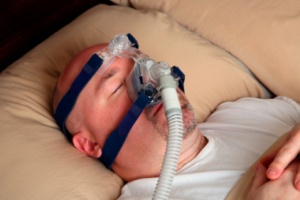 The Federal Aviation Administration (FAA) plans to issue new medical guidance March 2 that will help Aviation Medical Examiners (AMEs) deal with the issue of Obstructive Sleep Apnea (OSA) among pilots – a safety concern that’s been keeping the agency and the National Transportation Safety Board (NTSB) up at night.
What is Obstructive Sleep Apnea?
OSA affects a person’s upper airway in the area of the larynx (voice box) and the back of the throat. This area is normally held open to allow normal breathing by the surrounding muscles. When an individual is asleep, these muscles become slack, and the open area becomes smaller. In some individuals, this area becomes so small that breathing and resulting normal oxygenation of the blood is impaired. The person may actually choke. This causes some degree of arousal from normal sleep levels which the individual may or may not be aware of. These people do not get restorative sleep, and wake feeling tired.
The FAA says OSA has “significant safety implications” because it can cause excessive daytime sleepiness, personality disturbances, cardiac dysrthythmias, myocardial infarction, stroke, sudden cardiac death, and hypertension, and cognitive impairment such as decreased memory, attention, planning, problem-solving and multi-tasking.
What is the background on the FAA’s actions on OSA?
The FAA has always used the special issuance medical certification process to certificate pilots with OSA. In November 2013, the FAA proposed guidance that would have required treatment for pilots with a body mass index (BMI) of 40 or more. It would have grounded those pilots until they successfully completed treatment, if required, and they obtained a Special Issuance medical certificate from the FAA. Key aviation industry stakeholders, as well as members of Congress, expressed concern about this enhanced screening. The FAA has now revised the guidance to address those concerns.
What is the new guidance?
An AME will not use BMI alone to assess whether the pilot applicant has OSA or as a basis for deferring the medical certificates (except in cases where the OSA risk is extreme). AME’s will screen for the risk for OSA using an integrated assessment of history, symptoms, and physical/clinical findings. OSA screening will only be done by the AME at the time of the physical examination using the American Academy of Sleep Medicine (AASM) guidance provided in the AME Guide. Pilots who are at risk for OSA will be issued a medical certificate and will then, shortly thereafter, receive a letter from the FAA’s Federal Air Surgeon requesting that an OSA evaluation be completed within 90 days. The evaluation may be done by any physician (including the AME), not just a sleep medicine specialist, following AASM guidelines. If the evaluating physician determines, using the AASM guidelines, that a laboratory sleep study or home study is warranted, it should be done at that time. The pilot may continue flying during the evaluation periodand initiation of treatment, if indicated. The airman will have 90 days (or longer under special circumstances) to accomplish this, as outlined in the Federal Air Surgeon’s letter. The FAA may consider an extension in some cases. Pilots diagnosed with OSA and undergoing treatment may send documentation of effective treatment to the FAA in order to have the FAA consider them for a special issuance medical certificate.
Have there been any accidents or incidents associated with OSA?
The NTSB determined that OSA was a contributing factor in the February 13, 2008 Mesa Airlines Flight 1002 incident, in which both the captain and first officer fell asleep during the flight. They flew 26 miles past their island destination into open ocean, and did not respond to air traffic controllers for more than 18 minutes. After normal communication was resumed, all three crewmembers and 40 passengers onboard arrived safely at their destination. The captain was found to have undiagnosed severe OSA. The NTSB has investigated accidents in all modes of passenger transportation involving operators with sleep disorders and believes OSA to be a significant safety risk. The NTSB database lists 34 accidents – 32 of which were fatal – where sleep apnea was mentioned in the pilot’s medical history, although sleep apnea was not listed as “causal” or “contributory” in those accidents. The database includes an additional 294 incidents where some type of sleep disorder was mentioned in the history.
For more information on medical certification, go to: www.faa.gov/licenses_certificates/medical_certification/
Looking for a reprint of this article?
From high-res PDFs to custom plaques, order your copy today!