Wyoming to require more fracking chemical disclosure
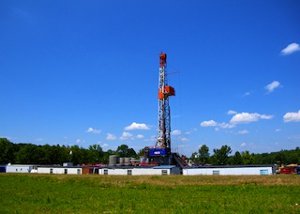 Under a settlement agreement approved last month, the Wyoming Oil & Gas Conservation Commission must adopt more rigorous policies for scrutinizing industry requests to keep the identities of fracking chemicals secret.
The Commission must require substantially greater factual support for oil and gas industry claims that the identities of fracking chemicals used in Wyoming qualify as trade secrets or confidential commercial information and are therefore exempt from state public disclosure requirements.
The result of a lawsuit
The settlement is the result of a public interest lawsuit challenging state regulators’ decisions to withhold the identities of dozens of fracking chemicals from the public, despite evidence that many fracking chemicals may cause serious health conditions and have the potential to contaminate soil and drinking water. Earthjustice represented the Powder River Basin Resource Council, Wyoming Outdoor Council, Earthworks, and the Center for Effective Government in bringing the lawsuit and negotiating the settlement with the Oil & Gas Commission and Halliburton Energy Services, Inc., which intervened in the case to represent industry interests.
“The family that looks out their kitchen window and sees a drilling rig shouldn’t be left in the dark about what chemicals are being pumped into the ground under their home,” said Katherine O’Brien, Earthjustice attorney. “The reforms required by today’s settlement will ensure that oil and gas companies don’t get a free pass from public disclosure laws in Wyoming.”
Closing a loophole
“Our state claimed credit for being the first to require public disclosure of fracking chemicals, but included a huge loophole,” said Bob LeResche, a landowner from Clearmont, Wyoming and a Powder River Basin Resource Council board member. “This settlement goes a long way in closing that loophole, and if properly administered, will make Wyoming a genuine leader in fracking transparency.”
“We believe the public has the right to know which chemicals are being injected underground during fracking,” said Bruce Pendery, the Wyoming Outdoor Counsel’s chief legal counsel. “This agreement is another good step in that direction, and we credit the Wyoming Oil and Gas Conservation Commission and Halliburton for working cooperatively with us to improve the Commission’s disclosure policies for the benefit of Wyoming citizens. Ultimately, I’m confident that full transparency will win out because it’s the right thing to do and it’s in the best interest of both industry and the public.”
“Although we are happy that this settlement improves community access to information, Wyoming residents need better protection of their health from fracking,” said Bruce Baizel, Earthworks Energy Program director. “We don’t think there should be any trade secret exemption. If a company wants to inject something through a drinking water aquifer, it needs to make public what it’s injecting, no matter what state it’s operating in. Period.”
"More states should follow suit"
“This settlement raises the bar on trade secrecy claims and makes it harder for companies to hide away chemical data important to protecting public health by simply rubber stamping it as secret,” said Sean Moulton, Director of Open Government Policy at the Center for Effective Government. “More states should follow suit and require detailed substantiation of such claims around fracking chemicals.”
“Disclosure of the chemicals used in fracking is very important to us as landowners,” added Wayne Lax, a member of the Powder River Basin Resource Council who lives near proposed oil and gas operations in Laramie County, Wyoming. “Industry and the state claim that fracking chemicals are just 95 percent water and sand and a few harmless chemicals under our kitchen sink, but we know better and should have the right to find out the truth for ourselves. I hope that under this settlement, citizens will now be able to more readily find out the name and quantity of the chemicals being used near our homes. The state’s ‘trade secrets’ loophole allowed the industry to dance around the rules. Properly prioritizing disclosure in the name of public safety should be a priority of our state’s oil and gas regulators.”
Background
In 2010, Wyoming became the first state to require oil and gas companies to disclose the identities of chemicals used for fracking. But in subsequent decisions, the Oil & Gas Commission granted numerous exemptions from the disclosure requirement based on weakly documented industry claims that the chemicals are “trade secrets,” which are protected from public disclosure under Wyoming law.
Because many fracking chemicals are linked to serious short-term and chronic health conditions – including respiratory distress, rashes, convulsions, organ damage, and cancer – and have the potential to contaminate soil and drinking water, in 2012, public interest groups represented by the nonprofit environmental law firm Earthjustice sued the Oil and Gas Commission to demand broader disclosure of fracking chemical identities as required by Wyoming law.
In response to their lawsuit, in March 2014, the Wyoming Supreme Court ruled that the exemption from public disclosure for trade secrets is narrow, the public’s right to know is paramount, and the Oil & Gas Commission bears the burden of proving that secrecy is justified.
Today’s settlement agreement resolves the groups’ lawsuit and implements the Wyoming Supreme Court’s ruling by requiring the Oil & Gas Commission to adopt a new framework for evaluating trade secrets claims. The new policies require oil and gas companies to provide detailed information demonstrating why specific chemical identities qualify for the narrow trade secrets exemption under Wyoming law. These policies will ensure that the Oil and Gas Commission receives the information necessary to identify legitimate confidentiality claims and prevent companies from evading disclosure requirements based on weak, boilerplate assertions that the chemicals they use are trade secrets.
SETTLEMENT AGREEMENT FILING: http://earthjustice.org/documents/legal-document/settlement-agreement-filing-wyoming-fracking-chemical-disclosure-case
Looking for a reprint of this article?
From high-res PDFs to custom plaques, order your copy today!


