ISHN logo
search
cart
facebook twitter linkedin youtube
  • Sign In
  • Create Account
  • Sign Out
  • My Account
ISHN logo
  • NEWS
    • Today's News
    • Global Safety News
    • Government Regulations
  • PRODUCTS
    • Product Innovations
    • Featured Products
  • TOPICS
    • Environmental Health and Safety
    • Facility Safety
    • Workplace Health
    • Occupational Safety
    • PPE
    • More Topics
  • CONSTRUCTION
  • TECHNOLOGY
  • COLUMNS
    • Best Practices
    • Dave Johnson: What’s going on
    • Editorial Comments
    • Leading Safety
  • MULTIMEDIA
    • ISHN Podcast
    • Videos
    • Cold Stress Education Quiz
    • Webinars
    • White Papers
  • MORE
    • Buyer's Guide
    • Newsletters
    • Convention Companion
    • Polls
    • Events
    • ISHN Store
    • Sponsor Insights
  • EMAGAZINE
    • eMagazine
    • Archived Issues
    • Contact
    • Advertise
  • JOIN TODAY!
Facility Safety

Test your knowledge of combustible dust control

questions
April 18, 2016

How much do you know about protecting your factory against the risks of a combustible dust explosion? Take this brief quiz provided by Camfil Air Pollution Control (www.camfilapc.com) and test your personal knowledge.

1. A dust is considered to be combustible if the Kst value (defined as the speed of pressure rise) is:

a)      >0 Kst

b)      >100 Kst

c)       >150 Kst

d)      >300 Kst

2. The organization tasked with developing and updating standards for explosion prevention and combustible dust safety is:

a)      OSHA

b)      NFPA

c)       U.S. Chemical Safety Board

d)      None of the above

3. Because they use water to capture dust particles, thereby removing fire and explosion hazards, wet scrubbers are always the collection technology of choice for capturing combustible dusts.

a)      True

b)      False

4. Of the following explosion protection devices, the one that is likely to be the least costly is:

a)      Chemical isolation

b)      Chemical suppression

c)       Explosion venting

d)      High-speed abort gate

5. A heavy-duty dry dust collector, constructed of thick gauge metal and with a high pressure rating, will stand up better in the event of a combustible dust explosion and may enable you to use a simpler and less costly explosion protection system to comply with NFPA standards.

a)      True

b)      False

6. Dust explosions in processing facilities can be caused by:

a)      Poor housekeeping practices

b)      Dust backup in the dust collector’s hopper

c)       Dust entrained on horizontally mounted filters

d)      Static electricity discharge

e)      All of the above

Answers

1. a) >0 Kst. Unless a dust is completely inert (0 kst), it has the ability to explode and must be treated as a potential hazard.

2. b) NFPA. The NFPA develops and updates standards on fire and explosion protection, while OSHA is charged with enforcing those standards in the workplace.

3. b) False. It is true that wet scrubbers can often eliminate the need for costly ancillary explosion protection devices. However, dry media cartridge dust collectors offer a number of advantages such as higher efficiency removal of fine dusts, large airflow capacities, and more efficient operation. A hazard analysis can determine the best collection technology for your specific combustible dust application.

4. c) Explosion venting. An explosion vent is a relatively simple “passive” device that minimizes damage to a dust collector in the event of an explosion. The other devices are all “active” systems that are actually designed to prevent explosions from occurring. Active systems involve much costlier technology.

5. a) True. When a collector is equipped with an explosion venting or suppression system, as required when handling combustible dusts, vessel strength is an important factor in sizing and selecting explosion protection equipment. Often, a heavy-duty collector can even withstand an explosion and continue in service afterwards.

6. e) All of the above. TheNFPA and other organizations have identified numerous conditions that can lead to dust explosions, and these are just a few of the culprits.

Rating Your Score

5-6: Excellent. Congratulations on staying up to date on the important topic of combustible dust control.

3-4: OK to good. You’re familiar with some of the fundamentals of combustible dust hazards but could use further guidance.

1-2:  Poor to fair. Better brush up on your NFPA combustible dust standards!

KEYWORDS: Combustible dust

Share This Story

Looking for a reprint of this article?
From high-res PDFs to custom plaques, order your copy today!

Recommended Content

JOIN TODAY
to unlock your recommendations.

Already have an account? Sign In

  • forklift safety

    Exploring the latest technologies in forklift safety

    With more staff and more stock in warehousing now more...
    Facility Safety
    By: Josh Cramer
  • welding

    All about welder’s flash or arc eye

    A flash burn is a painful inflammation of the cornea,...
    Environmental Health and Safety
  • dangerous jobs

    The 10 most dangerous jobs in the U.S.

    On-the-job deaths have been rising — hitting the highest...
    Government Safety Regulations
    By: Benita Mehta
Manage My Account
  • eMagazine Subscriptions
  • ISHN Newsletter & Other Newsletter Alerts
  • Online Registration
  • Manage My Preferences
  • Subscription Customer Service

More Videos

Sponsored Content

Sponsored Content is a special paid section where industry companies provide high quality, objective, non-commercial content around topics of interest to the ISHN audience. All Sponsored Content is supplied by the advertising company and any opinions expressed in this article are those of the author and not necessarily reflect the views of ISHN or its parent company, BNP Media. Interested in participating in our Sponsored Content section? Contact your local rep!

close
  • man wearing the the Sundström SR200 Full Face Mask Respirator
    Sponsored byOHD

    5 Fit Testing Mistakes That Could Cost You

  • This image shows Magid AcuSpex polarized blue mirrored safety glasses.
    Sponsored byMagid Glove and Safety

    Construction PPE Guide: What Crews Need for Each Task

  • lone worker in confined space
    Sponsored byAlphasense Ltd.

    GET THE LEAD OUT of your Safety Oxygen Sensors!

Popular Stories

Automated loading dock equipment

After March 2026 Rivian Death, Safety Managers Reassess Loading Dock Systems Under OSHA's Warehouse Emphasis Program

chemical safety

It Was Just Sugar: Catastrophic Safety Failures in Louisville

psychology in the workplace

Most Workplaces Measure Psychological Safety, Ignoring Psychosocial Risks

top 10 most dangerous jobs

Poll

Seasonal Readiness

With the federal heat stress prevention rule on the horizon, which area of your safety program needs the most attention?
View Results Poll Archive

Products

Surviving an OSHA Audit A Management Guide, 2nd Edition

Surviving an OSHA Audit A Management Guide, 2nd Edition

See More Products

ISHN Podcasts

Related Articles

  • AVO LOGO 900x550

    Test your knowledge of electrical safety

    See More
  • Test Your Knowledge of Safety

    See More
  • Imperial Sugar president “disappointed” in lack of combustible dust standard

    See More

Related Products

See More Products
  • 1119010160.jpg

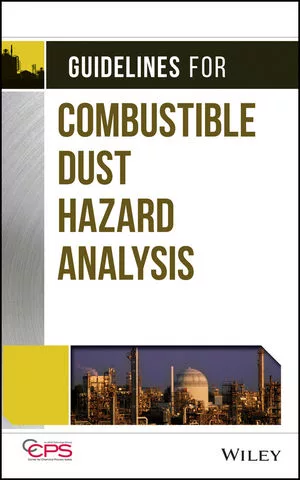
    Guidelines for Combustible Dust Hazard Analysis

See More Products

Related Directories

  • SonicAire

    SonicAire is the global leader in engineered solutions for combustible dust control. Our patented fan systems use BarrierAire™ technology to prevent dust from settling in overhead and hard-to-reach areas—helping facilities stay compliant with OSHA, NFPA, and insurance requirements. Thousands of manufacturers across wood products, food, grain, textiles, plastics, and more trust SonicAire to: Eliminate the risk of dust-related fires and explosions Automate housekeeping in overhead areas Protect worker health with improved air quality Reduce manual cleaning costs and production downtime Our systems are engineered for your facility, installed with precision, and backed by our Compliance Guarantee—because when it comes to safety, good enough is never enough. Create a cleaner, safer, and more compliant facility with SonicAire. ���� Visit www.SonicAire.com or call (336) 712-2437.
  • Scientific Dust Collectors

    Scientific Dust Collectors (SDC) began in 1981 when our first patent for improving filter cleaning was issued. Our patented UniFlow Supersonic Nozzle -based cleaning system is where it all starts. Combined with our High Side Inlets, Wide Filter Spacing, and Inlet Baffling, we are able to guarantee performance, efficiency, and filter life. ASHRAE 199 Test Lab on site.
  • Camfil Air Pollution Control

    Camfil APC is an industry leading global manufacturer of dust, fume and mist collection equipment for challenging industrial applications, with production facilities around the world including the Americas, Europe and Southeast Asia. Camfil makes filtration systems that improve indoor air quality in manufacturing and processing facilities and protect workers from toxic and combustible dusts. Camfil also makes replacement filter cartridges to fit most leading dust collection systems.
×

Become a Leader in Safety Culture

Build your knowledge with ISHN, covering key safety, health and industrial hygiene news, products, and trends.

JOIN TODAY
  • RESOURCES
    • Advertise
    • Contact Us
    • Directories
    • Manufacturing Division
    • Store
    • Want More
  • SIGN UP TODAY
    • Create Account
    • eMagazine
    • Newsletters
    • Customer Service
    • Manage Preferences
  • SERVICES
    • Marketing Services
    • Reprints
    • Market Research
    • List Rental
    • Survey/Respondent Access
  • STAY CONNECTED
    • LinkedIn
    • Facebook
    • YouTube
    • X (Twitter)
  • PRIVACY
    • PRIVACY POLICY
    • TERMS & CONDITIONS
    • DO NOT SELL MY PERSONAL INFORMATION
    • PRIVACY REQUEST
    • ACCESSIBILITY

Copyright ©2026. All Rights Reserved BNP Media, Inc. and BNP Media II, LLC.

Design, CMS, Hosting & Web Development :: ePublishing