ISHN logo
search
cart
facebook twitter linkedin youtube
  • Sign In
  • Create Account
  • Sign Out
  • My Account
ISHN logo
  • NEWS
    • Today's News
    • Global Safety News
    • Government Regulations
  • PRODUCTS
    • Product Innovations
    • Featured Products
  • TOPICS
    • Environmental Health and Safety
    • Facility Safety
    • Workplace Health
    • Occupational Safety
    • PPE
    • More Topics
  • CONSTRUCTION
  • TECHNOLOGY
  • COLUMNS
    • Best Practices
    • Dave Johnson: What’s going on
    • Editorial Comments
    • Leading Safety
  • MULTIMEDIA
    • ISHN Podcast
    • Videos
    • Cold Stress Education Quiz
    • Webinars
    • White Papers
  • MORE
    • Buyer's Guide
    • Newsletters
    • Convention Companion
    • Polls
    • Events
    • ISHN Store
    • Sponsor Insights
  • EMAGAZINE
    • eMagazine
    • Archived Issues
    • Contact
    • Advertise
  • JOIN TODAY!
Today's Safety NewsGlobal Safety News

How Europeans think digitalization will affect labor markets

Ten trends, including a "hallowing out" of the middle class
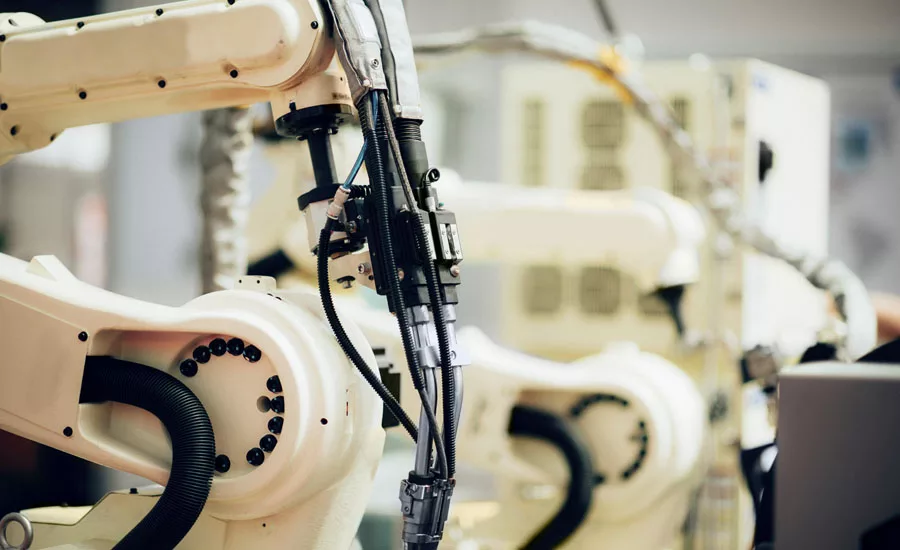
robot
July 1, 2016

Source: European Trade Union Institute (ETUI)

The Fourth Industrial Revolution is knocking on our door. It is going to radically change employment and the nature of work in the coming years. Our economies must prepare for a storm of unprecedented technical and socio-economic changes that will affect labour markets and will radically transform our relationship with work. Here are the 10 most significant trends triggered by this digital revolution.

  1. Digitalisation of the economy is not a new phenomenon, but it has reached a new tipping point. The marriage between Big Data and robotisation heralds a new economy and hence a new world of work.
  2. There are two principal new features of this phenomenon: one is the evolution of the platform-based economy, founded on new economic models with a ‘winner takes all’ philosophy, and the other is the development of peer-to-peer exchanges. Along with the proliferation of digitalised goods and services, together these features create a radical innovation in the labour market.
  3. Digitalised information as a strategic economic resource is also not a new phenomenon. It can in fact be traced back to the ideas of the networked society and knowledge-based economy popular in the 1990s.
  4. The Fourth Industrial Revolution is what we call the digital revolution today. It consists of developments in information technologies combined with robotisation, automation of tasks, the internet of things, 3D printing, driverless cars, and – in the field of defence and the fight against terrorism – drones, cyber-weapons, surveillance, etc. The first industrial revolution was that of the steam engine, the second that of electrification and mass production, and the third that of the computer.
  5. The Fourth Industrial Revolution could create new types of jobs, new sectors, new products and new services (data analysts, data miners, data architects, and software and application developers).
  6. It could also precipitate fundamental changes in working practices. There could be new forms of worker/machine interaction and new types of jobs – for instance in relation to the so-called ‘uberisation’ – which result in new risks (work intensification, health and safety, increasingly porous private/working life boundary, training mismatches, discrimination, etc.) and effects at the managerial level, such as the new digital management.
  7. Digitalisation also means job destruction: jobs that will be at risk over the next 10-20 years due to computerisation, automation and robotisation are increasing. While there is no consensus on exactly how many jobs will be lost, it is clear that the number will be very high.
  8. In Europe, an average of 54% of jobs are at risk, according to different studies. The peripheral countries in Europe seem to be the most affected by the job destruction caused by the computerisation of employment. Likewise, countries with developed broadband infrastructures and workers’ e-skills, as well as widespread use of the internet and digital public services, are likely to be less threatened by digitalisation than countries with a less developed digital infrastructure.
  9. Shifts in existing jobs towards their digitalized counterparts will occur in the workplace. This is particularly the case with the development of digital platforms and crowdworking, where workers from countries with high levels of social protection are brought into competition with those from countries with low levels of protection and from developing countries. The relocation of services facilitated by certain platforms of the ‘sharing economy’ is also applicable to high-skilled jobs, such as accounting, finance, etc.
  10. The digital economy is likely to create an increasingly polarised society characterised by gaping inequality between the few ‘winner-takes-all superstars’ and the masses of ‘losers’, as well as by a hollowing out of the middle classes, with the disappearance of large numbers of medium-skilled jobs and the proliferation of a new class of ‘digital galley slaves’ who perform the tasks of data sorting/ entry/ filtering/ filing, cleaning up forums, monitoring images, etc. It is to avoid a situation in which the industrial revolution of the 21st century plunges the world back into social conditions reminiscent of the 18th century that labour organisations in many European countries are calling for a new social charter to regulate the digital economy.
KEYWORDS: automation industry big data digital revolution robotics

Share This Story

Looking for a reprint of this article?
From high-res PDFs to custom plaques, order your copy today!

Recommended Content

JOIN TODAY
to unlock your recommendations.

Already have an account? Sign In

  • forklift safety

    Exploring the latest technologies in forklift safety

    With more staff and more stock in warehousing now more...
    Workplace Training Strategies
    By: Josh Cramer
  • welding

    All about welder’s flash or arc eye

    A flash burn is a painful inflammation of the cornea,...
    Environmental Health and Safety
  • dangerous jobs

    The 10 most dangerous jobs in the U.S.

    On-the-job deaths have been rising — hitting the highest...
    Occupational Safety
    By: Benita Mehta
Manage My Account
  • eMagazine Subscriptions
  • ISHN Newsletter & Other Newsletter Alerts
  • Online Registration
  • Manage My Preferences
  • Subscription Customer Service

More Videos

Sponsored Content

Sponsored Content is a special paid section where industry companies provide high quality, objective, non-commercial content around topics of interest to the ISHN audience. All Sponsored Content is supplied by the advertising company and any opinions expressed in this article are those of the author and not necessarily reflect the views of ISHN or its parent company, BNP Media. Interested in participating in our Sponsored Content section? Contact your local rep!

close
  • man wearing the the Sundström SR200 Full Face Mask Respirator
    Sponsored byOHD

    5 Fit Testing Mistakes That Could Cost You

  • This image shows Magid AcuSpex polarized blue mirrored safety glasses.
    Sponsored byMagid Glove and Safety

    Construction PPE Guide: What Crews Need for Each Task

  • lone worker in confined space
    Sponsored byAlphasense Ltd.

    GET THE LEAD OUT of your Safety Oxygen Sensors!

Popular Stories

SpaceX 7 launch

OSHA Investigating Fatal Fall at SpaceX Starbase

Worker Impairment

How to Tell When a Co-Worker is Impaired? A Safety Pro’s Challenge

Automated loading dock equipment

After March 2026 Rivian Death, Safety Managers Reassess Loading Dock Systems Under OSHA's Warehouse Emphasis Program

top 10 most dangerous jobs

Poll

Seasonal Readiness

With the federal heat stress prevention rule on the horizon, which area of your safety program needs the most attention?
View Results Poll Archive

Products

Surviving an OSHA Audit A Management Guide, 2nd Edition

Surviving an OSHA Audit A Management Guide, 2nd Edition

See More Products

ISHN Podcasts

Related Articles

  • How climate change will affect workers

    See More
  • How climate change will affect workers

    See More
  • future of safety profession

    How the tech revolution will affect what we do

    See More

Related Products

See More Products
  • Top Ten Pitfalls in OSHA Recordkeeping and How to Avoid Them

See More Products
×

Become a Leader in Safety Culture

Build your knowledge with ISHN, covering key safety, health and industrial hygiene news, products, and trends.

JOIN TODAY
  • RESOURCES
    • Advertise
    • Contact Us
    • Directories
    • Manufacturing Division
    • Store
    • Want More
  • SIGN UP TODAY
    • Create Account
    • eMagazine
    • Newsletters
    • Customer Service
    • Manage Preferences
  • SERVICES
    • Marketing Services
    • Reprints
    • Market Research
    • List Rental
    • Survey/Respondent Access
  • STAY CONNECTED
    • LinkedIn
    • Facebook
    • YouTube
    • X (Twitter)
  • PRIVACY
    • PRIVACY POLICY
    • TERMS & CONDITIONS
    • DO NOT SELL MY PERSONAL INFORMATION
    • PRIVACY REQUEST
    • ACCESSIBILITY

Copyright ©2026. All Rights Reserved BNP Media, Inc. and BNP Media II, LLC.

Design, CMS, Hosting & Web Development :: ePublishing