Children working dangerous jobs — let parents decide?
It’s a reform of regulation that is gaining traction
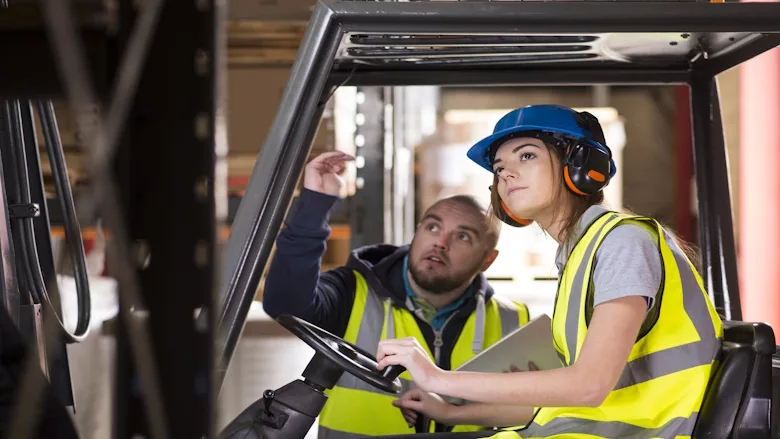
Credit: sturti / E+ / Getty Images Plus
What do you think of this idea?
Mom and dad, not the feds or states, should decide if children can work dangerous jobs. “Current rules forbid many young people, even if their family is running the business, from working in such jobs. This results in worker shortages in dangerous fields and often discourages otherwise interested young workers …”
This “let families decide” is one of scores of proposals in the 2025 Presidential Transition Project, also known as Project 2025. This controversial 900-page document is intended as a blueprint for a Republican administration assuming power in 2025. It was issued in 2023 by the Heritage Foundation, a Washington DC conservative think tank. It outlines sweeping reforms to downsize “the state.” Some of its extreme reforms have received heightened attention this year. Former President Trump’s campaign has distanced itself from the “mandate for leadership” it should be noted.
But this article is about youth safety, not politics. “Let families decide” is the only reform of the Department of Labor (DOL) chapter specifically referencing job safety. Here is the stated rationale behind the idea:
“Some young adults show an interest in inherently dangerous jobs… With parental consent and proper training, certain young adults should be allowed to learn and work in more dangerous occupations. This would give a green light to training programs and build skills in teenagers who may want to work in these fields. DOL should amend its hazard-order regulations to permit teenage workers access to work in regulated jobs with proper training and parental consent.”
Let parents decide to permit access. Not DOL’s Wage and Hour Division, which enforces the Fair Labor Standards ACT (FLSA), investigates child labor abuses and issues violations.
Some “inherently dangerous jobs” jobs, if tied to regulations, training and parental consent, might be open to “certain young adults showing an interest” under age 18. Dangerous work currently off-limits to kids under 18 include:
- Meat processing and slicing
- Power-driven woodworking machinery
- Compactors and balers
- Forklifts and skid-steers
- Logging, forestry and sawmilling
- Power-driven bakery machines
- Working with metal
- Power-driven saws
To be sure, children under 18 already can earn an income. The FLSA sets these minimum age requirements and limits the hours youngsters can work:
- 13 and under: Can babysit, deliver newspapers, or work as actors or performers
- 14 and 15: Can work in non-manufacturing, non-mining, non-hazardous jobs outside of school hours for limited periods of time and under specific conditions. They can't work more than 3 hours on a school day and 8 hours on a non-school day, and they can't work between 10 p.m. and 7 a.m. They also can't work in jobs that the Secretary of Labor has declared hazardous, such as excavation, driving, or operating power-driven equipment
- 16 and 17: Can work in any non-hazardous job for unlimited hours
- 18 and older: Can work any job, hazardous or not, for unlimited hours
The push to broaden access to dangerous jobs
This issue is bigger than the 900-page tome. A concerted effort to loosen or abolish regulations around children in the workforce is gaining momentum across the country. Republicans are pushing to loosen child labor laws in at least 16 states, according to the Economic Policy Institute. In 2023, at least five states — Georgia, Illinois, Iowa, Minnesota, and New York — introduced legislation to expand youth employment in hazardous occupations or workplaces. The Iowa bill, which was enacted, expanded hazardous employment for children as young as 14 — in violation of current federal law.
These statistics are also a reality:
• A new survey of 6,810 teens showed that more than half of them work, and 514 of them had been injured on the job.
• “The findings from this study clearly indicate that work-related injuries among youth are a significant health problem,” stated the researchers. In the American Journal of Health Behavior, the authors report that 150 of the teens were injured severely enough that activities at home, work, or school were affected for more than three days, and 97 filed for workers’ compensation.
• Nationally each year, “approximately 70 children die from injuries inflicted at work; hundreds are hospitalized and tens of thousands require treatment in hospital emergency rooms. The National Pediatric Trauma Registry and the National Center for Health Statistics report that occupational injuries are the fourth-leading cause of death among youth ages 10-19,” according to the researchers.
• Since 2015, the DOL’s Wage and Hour Division has seen increases in child labor investigations and violations. In fiscal year 2021, the division found 2,819 minors — as young as a six-year-old picking blueberries — employed in violation of the law and assessed employers with nearly $3.4 million in civil money penalties.
• Child labor violations across the U.S. are skyrocketing. Earlier this year, the Labor Department reported a 69% increase in children being employed illegally since 2018.
“Let the parents decide” is obviously open to debate — again, not about politics but youth safety. I think current laws are reasonable. I also think changes are possible. Here’s another idea:
“Because so many high school students are working during the school year, we advocate introducing a safety training course within the school health curriculum,” says one of the researchers, Kristina M. Zierold, Ph.D. Training could be geared to the youth's developmental level and age, she says. “Training would emphasize how to identify work-related hazards, how to protect themselves from hazards, and how to address their supervisors with their safety concerns. With the safety training, teens could feel empowered at the workplace by knowing their rights and how to protect themselves,” explains Zierold.
One more proposal
Here’s my thought: Define specifically who “certain” young adults are; take school safety training and add mandatory job-specific training; regulations that are enforced; on-the-job routine supervision; perhaps behavior-based safety observation and feedback; and specific recordkeeping of young adult hours worked, injuries, and any probation, suspension or dismissal for safety violations. Create a national registry for children under 18 working hazardous jobs. Then high-risk work for “certain” youth may be possible. But that’s asking schools nationwide to change curriculum — never easy — and impose new obligations for employers. That’s asking for a lot. Or should parental consent be enough?
What do you think?
Looking for a reprint of this article?
From high-res PDFs to custom plaques, order your copy today!