How to review, identify & categorize new hazards, SDSs and labels
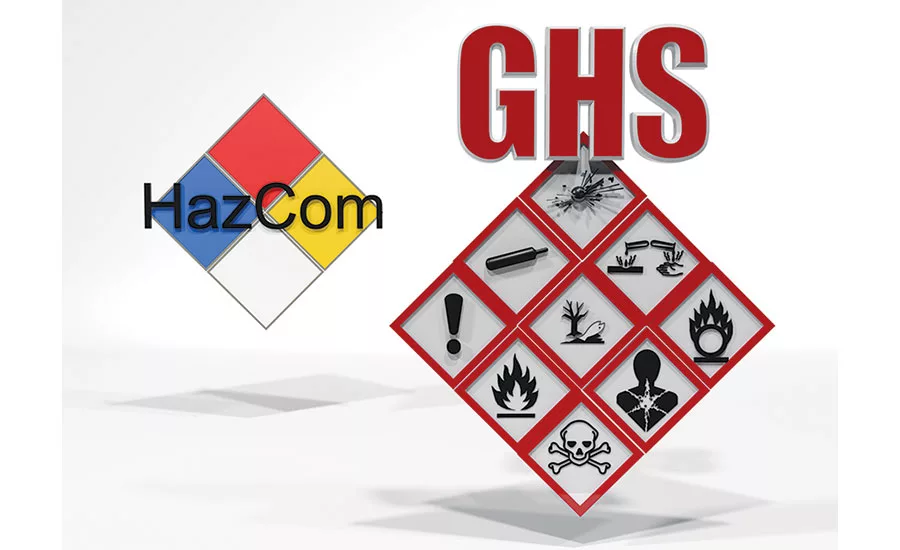
On March 26, 2012 the much anticipated revision to OSHA’s Hazard Communication Standard (29 Code of Federal Regulations (CFR) 1910.1200) was published in the Federal Register. The revised standard incorporated portions of the United Nation’s Globally Harmonized System of Classification and Labeling of Chemicals (GHS). This resulted in changes in three major areas – hazard classification, labels and safety data sheets (SDSs).
OSHA established a four-year timetable that stretched to June 1, 2016 for 100 percent transition. By now, you should have completed any needed updates to your written workplace hazard communication program, including workplace labeling procedures. Training of employees on their new workplace hazard communication program must also be completed.
OSHA's intent was that by now, chemical manufacturers and importers will have reclassified their hazardous chemicals according to the GHS-aligned requirements, and updated all Safety Data Sheets (SDSs) and shipped container labels to reflect these changes. Many took a wait-and-see approach to these requirements.
OSHA accounts for delays
In a February 9, 2015 memorandum (Enforcement Guidance for the Hazard Communication Standard's (HCS) June 1, 2015 Effective Date), OSHA anticipated these issues and took steps to lessen the pressure felt by mixture manufacturers and distributors. OSHA stated that downstream mixture manufacturers and distributors who have exercised and documented reasonable diligence and good faith efforts to obtain and integrate the required information, but have not received all the necessary information needed, must continue to use material safety data sheets (MSDSs) and labels that conform to the pre-2012 revised HCS until updated GHS-compliant information is received.
Establishing reasonable diligence and good faith effort requires that downstream users must demonstrate all attempt(s) to obtain the necessary SDSs through both oral and written communication directly with the upstream supplier. The effect of these delays made it difficult for employers to meet the June 1, 2016 deadline.
What compliance officers will look for
A new OSHA directive (CPL 02-02-079) “Inspection Procedures for the Hazard Communication Standard (HCS2012),” with an effective date of July 9, 2015, explains how the standard is to be enforced during the transition period and after it is fully implemented. It provides valuable information on what OSHA’s compliance officers will look for should they visit.
Inspectors are to determine if all applicable provisions of the HCS are covered in the written program and implemented in the workplace. These provisions include having a current chemical inventory, which shows a product identifier for each chemical known to be present that aligns with the SDS and label. In addition, the written program must designate the person(s) responsible for obtaining or maintaining SDSs, how the SDSs are to be maintained, procedures on how to retrieve SDSs electronically — including backup systems to be used in the event of failure of the electronic equipment — and how employees obtain access to SDSs. Also required are procedures addressing what to do if an SDS is not received at the time of the first shipment, if there is reason to believe the SDS is not appropriate and for determining if the SDS is current. Detailed requirements for labeling and training are also provided.
In the revised HCS, OSHA specifically outlines what information needs to be included on the 16-section SDSs and the order in which it appears.
Label format & content changes
Labels on shipped containers also underwent a dramatic format and content change. Those who ship hazardous chemicals from one facility to another must now include the product identifier, signal word(s), pictogram(s), hazardous statement(s), precautionary statement(s) and supplier information on the label of the shipped container. The signal word(s), hazard statement(s) and pictogram(s) must be located together on the label. Supplemental information (lot numbers, expiration dates, directions of use, etc.) is optional.
OSHA has not changed the general requirements for workplace labeling – they are continuing to give employers the flexibility to determine what types of workplace labels they will use. Employers have the ability to choose to label workplace containers either with the same label information used on the shipped containers or with alternate labels that meet the requirements of the HCS.
Employers may continue to use rating systems such as National Fire Protection Association (NFPA) diamonds or Hazardous Material Identification System (HMIS) requirements for workplace labels as long as they are consistent with the requirements of the HCS and the employees have immediate access to the specific hazard information. An employer using NFPA or HMIS labeling must, through training, ensure that its employees are fully aware of the hazards of the chemicals used.
Training requirements
The HCS requires that employers train employees on the hazardous chemicals in their work area before their initial assignment and when new hazards are introduced into the work area. This training must be conducted in a manner and language that employees can understand. Employees must be trained on the potential new GHS-label elements and new SDS format. They must also be aware of the protective measures available in their workplace, how to use or implement these measures, and whom they should contact if an issue arises. Training is an ongoing obligation. Employees must be able to comprehend the new SDSs and labels and understand how they work together.
Written hazard communication programs should be reviewed periodically, and revised if changes are necessary due to changes in the workplace, the use of new chemicals, changes in work procedures, or any other changes that might result in exposure to chemical hazards.
It is very difficult to predict when all chemicals in the United States will have fully GHS-compliant SDSs and labels. Suggested steps that employers can take to stay on the path toward compliance include:
- Take an inventory of the chemicals currently on hand and verify that you have the most up-to-date SDSs;
- Watch for updated SDSs and make sure they are saved for easy access;
- Watch for updated shipped container labels;
- Train employees on new hazards; and
- Be vigilant with your upstream suppliers.
Having procedures in place to review, identify and categorize new hazards, SDSs and labels will drive GHS-aligned compliance.
Looking for a reprint of this article?
From high-res PDFs to custom plaques, order your copy today!