ISHN logo
search
cart
facebook twitter linkedin youtube
  • Sign In
  • Create Account
  • Sign Out
  • My Account
ISHN logo
  • NEWS
    • Today's News
    • Global Safety News
    • Government Regulations
  • PRODUCTS
    • Product Innovations
    • Featured Products
  • TOPICS
    • Environmental Health and Safety
    • Facility Safety
    • Workplace Health
    • Occupational Safety
    • PPE
    • More Topics
  • CONSTRUCTION
  • TECHNOLOGY
  • COLUMNS
    • Best Practices
    • Dave Johnson: What’s going on
    • Editorial Comments
    • Leading Safety
  • MULTIMEDIA
    • ISHN Podcast
    • Videos
    • Cold Stress Education Quiz
    • Webinars
    • White Papers
  • MORE
    • Buyer's Guide
    • Newsletters
    • Convention Companion
    • Polls
    • Events
    • ISHN Store
    • Sponsor Insights
  • EMAGAZINE
    • eMagazine
    • Archived Issues
    • Contact
    • Advertise
  • JOIN TODAY!
Workplace Safety Culture

Safety myths undermine your program
By Carsten Busch
Safety myths
October 1, 2016

The safety world is riddled with myths, misconceptions and misunderstandings -- some of which have gained almost religious status. Long term myths do more harm than good, because they often lead to keeping up appearances and undermine safety work. It’s time to see them for what they are, and either correct them, or be done with them for good.

Are all accidents preventable?

If the presumption that all accidents are preventable is true, are we not trying hard enough? Or can we not prevent them after all? Is it nothing but wishful thinking and the rationale behind “Zero Harm”? Let me offer three points:

“All Accidents Are Preventable” is often an expression of hindsight bias. In real life and at the sharp end, we make decisions with limited knowledge, limited resources and under time pressure. Mostly we manage very well, but sometimes the outcome is not as expected. In hindsight, we see the things that went wrong, the things that we could have seen before, and what signals one could have reacted upon.

“All Accidents Are Preventable” pictures an ideal world where everything is under control, predictable and without surprises. Man, machine and systems run like a Swiss clockwork (better even), there are plenty of resources, and external influences are absent, as are fuzzy things like human mood swings, distraction, competing objectives and the like.

After critical probing, some will tell you that “All Accidents Are Preventable” actually means something else, like that it’s possible to learn something from every incident, or that “all” actually should be understood as “most.” My question is why we keep fooling ourselves, management and employees instead of saying what we actually mean to say?

Fact is that we cannot prevent all accidents. Resources, attention and knowledge are limited. We cannot foresee and control everything. We shouldn’t even want to prevent all accidents because there are certain things that we probably can live with. A small finger cut when filling paper into your printer is just one silly example.

Myths - how and why?

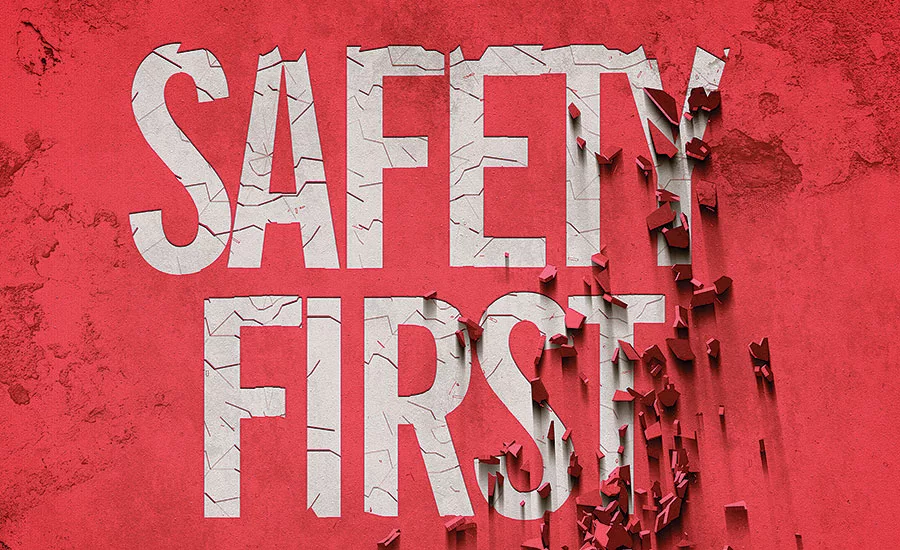
Other known myths include “Safety First,” pyramids, dominos, ratios, certification, culture change, error prevention, root causes and risk matrices. You name it and someone will probably have twisted it into something that it should not be.

Why do many of these myths prove to be so resilient? Many safety practitioners followed a course or workshop in the past and think this is sufficient for the remainder of their career. They don’t develop further because they don’t have time, aren’t interested or don’t get the opportunity from their employer. Instead, they function on hearsay and buzzwords without knowing or understanding the basics. This leads to a simplified, superficial and faulty understanding of concepts.

Oversimplification of safety into slogans coupled to lack of understanding leads to dumbing down, dogmatism and fundamentalism. This kind of black/white thinking often brings a “if you are not with us, you are against us” attitude. One cannot see that it is very well possible to be critical about certain concepts and slogans while at the same time striving for the same goal (in this case: improving safety).

A complacent and uncritical attitude prevents people from thinking about what they are saying and the meaning of what they are saying. Sometimes people start giving words and phrases new meanings or they do not think about the meaning of a slogan at all.

Some safety practitioners are afraid to come out of their comfort zones. Not seeing the importance of that which lies outside their immediate scope leads to so-called domain blindness: one does not recognize the importance of lessons elsewhere for their own situation.

Safety professionals are used sub-optimally. Many organizations see safety as an obligation with a primary focus on compliance. Safety seen in a strict sense of “preventing injuries” means missing opportunities. Safety can add sustainable value to the results of the organization through integrating safety in other processes and business objectives.

Other factors: vested interests, including commercial interests (having a safety program to sell); “Sunk Cost” (so many resources have been invested in safety that it is hard to let go, turn back or change direction); social or political acceptability (loyalty to managers, established contacts or clients); and convenience (some slogan or dogma-based systems offer managers an easy excuse to defer responsibility to employees).

Dispelling myths

We can escape traps caused by safety myths.  Here are some remedies:

  • Adopt a critical attitude, think logically and question established truths. Find things out for yourself, check sources and evidence, and look especially for evidence that disconfirms.
  • Seek professional development and improvement. Do look across borders; there is much to learn from others and beyond your immediate scope.
  • Find a good professional environment -- on or off the job. Surround yourself as often as possible with people that inspire and challenge you. You can learn more from a contra-argument and discussion than from confirmation.
  • Have fun doing what you are doing. Only the things that you really enjoy are the things that you are willing to invest a lot of time in, and doing these things often will make you excel.
  • Last but not least: let professional ethics come before commercial interests.
KEYWORDS: safety programs

Share This Story

Looking for a reprint of this article?
From high-res PDFs to custom plaques, order your copy today!

Carsten Busch has more than two decades of experience in HSEQ management at various levels in organizations from railway and oil & gas related companies in The Netherlands, United Kingdom and Norway. Currently he works as Senior Advisor Occupational Safety at Politidirektoratet.

Recommended Content

JOIN TODAY
to unlock your recommendations.

Already have an account? Sign In

  • forklift safety

    Exploring the latest technologies in forklift safety

    With more staff and more stock in warehousing now more...
    Facility Safety
    By: Josh Cramer
  • welding

    All about welder’s flash or arc eye

    A flash burn is a painful inflammation of the cornea,...
    Environmental Health and Safety
  • dangerous jobs

    The 10 most dangerous jobs in the U.S.

    On-the-job deaths have been rising — hitting the highest...
    Government Safety Regulations
    By: Benita Mehta
Manage My Account
  • eMagazine Subscriptions
  • ISHN Newsletter & Other Newsletter Alerts
  • Online Registration
  • Manage My Preferences
  • Subscription Customer Service

More Videos

Sponsored Content

Sponsored Content is a special paid section where industry companies provide high quality, objective, non-commercial content around topics of interest to the ISHN audience. All Sponsored Content is supplied by the advertising company and any opinions expressed in this article are those of the author and not necessarily reflect the views of ISHN or its parent company, BNP Media. Interested in participating in our Sponsored Content section? Contact your local rep!

close
  • man wearing the the Sundström SR200 Full Face Mask Respirator
    Sponsored byOHD

    5 Fit Testing Mistakes That Could Cost You

  • This image shows Magid AcuSpex polarized blue mirrored safety glasses.
    Sponsored byMagid Glove and Safety

    Construction PPE Guide: What Crews Need for Each Task

  • lone worker in confined space
    Sponsored byAlphasense Ltd.

    GET THE LEAD OUT of your Safety Oxygen Sensors!

Popular Stories

SpaceX 7 launch

OSHA Investigating Fatal Fall at SpaceX Starbase

Automated loading dock equipment

After March 2026 Rivian Death, Safety Managers Reassess Loading Dock Systems Under OSHA's Warehouse Emphasis Program

psychology in the workplace

Most Workplaces Measure Psychological Safety, Ignoring Psychosocial Risks

top 10 most dangerous jobs

Poll

Seasonal Readiness

With the federal heat stress prevention rule on the horizon, which area of your safety program needs the most attention?
View Results Poll Archive

Products

Surviving an OSHA Audit A Management Guide, 2nd Edition

Surviving an OSHA Audit A Management Guide, 2nd Edition

See More Products

ISHN Podcasts

Related Articles

  • Electrical safety: Improving your program

    See More
  • safety professional executives Getty.jpg

    EHS performance checklist: How does your program measure up to best practices?

    See More
  • EDITORIAL COMMENTS: Taking your program public

    See More

Related Products

See More Products
  • 0470074876vol4.jpg

    Patty's Industrial Hygiene, Volume 4, Program Management and Specialty Areas of Practice , 6th Edition

See More Products

Related Directories

  • Voluntary Protection Programs Participants' Assn. (VPPPA)

    The Voluntary Protection Programs Participants' Association, Inc. - The Premier Global Safety & Health Organization, is dedicated to cooperative occupational safety, health and environmental management systems. VPPPA is a member-based association, supporting worksites across the U.S. in their efforts to achieve and maintain safety and health excellence.
×

Become a Leader in Safety Culture

Build your knowledge with ISHN, covering key safety, health and industrial hygiene news, products, and trends.

JOIN TODAY
  • RESOURCES
    • Advertise
    • Contact Us
    • Directories
    • Manufacturing Division
    • Store
    • Want More
  • SIGN UP TODAY
    • Create Account
    • eMagazine
    • Newsletters
    • Customer Service
    • Manage Preferences
  • SERVICES
    • Marketing Services
    • Reprints
    • Market Research
    • List Rental
    • Survey/Respondent Access
  • STAY CONNECTED
    • LinkedIn
    • Facebook
    • YouTube
    • X (Twitter)
  • PRIVACY
    • PRIVACY POLICY
    • TERMS & CONDITIONS
    • DO NOT SELL MY PERSONAL INFORMATION
    • PRIVACY REQUEST
    • ACCESSIBILITY

Copyright ©2026. All Rights Reserved BNP Media, Inc. and BNP Media II, LLC.

Design, CMS, Hosting & Web Development :: ePublishing