It’s time to standardize performance reporting
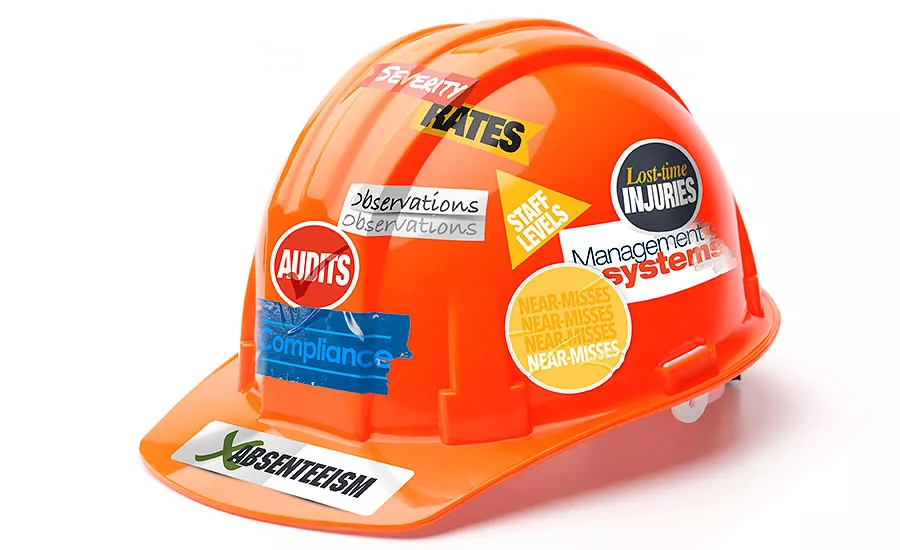
How do you report safety and health metrics?
The question is more relevant in 2016 than ever — and it’s just going to become more important in the coming years.
Why?
How you report your organization’s safety and health performance is, in effect, how you explain and sell the value of safety and health to the senior leaders who control your budget, staff and resources.
There’s broad consensus today that lagging indicators (traditional OSHA and Bureau of Labor Statistics [BLS] injury and illness incidence rates) fail to fully explain safety and health performance and relevance. In 2014, the BLS reported U.S. private industry averaged 3.2 recordable accident cases per 100 full-time workers. Most of those cases were not severe. Less than one-third involved lost workdays. The case rate doesn’t explain what you’re doing to reduce and prevent serious injuries and fatalities (SIFs). And it is SIFs that are most damaging to your workforce and your organization’s reputation.
Most safety and health professionals realize this. In 2013, 51 percent of ISHN readers said it was a priority to improve their performance measures. Their attention, and probably yours, is on leading indicators. What are you doing day-to-day before accidents happen?
How many risks are being identified and mitigated?
How many organization-wide problems and exposures have reached closure, and how many remain outstanding?
How many employees have received training, how often, and on what topics?
How many reports of hazardous conditions and near-accidents are being filed? What actions are taken in response?
Too many options
Here’s the problem: there are too many reporting alternatives. Investors, analysts and the business media need commonality to benchmark and make comparisons. Many activities contribute to safety and health performance and add value to an organization’s culture and reputation, so which ones do you report on? There’s no consensus. Everyone has their own custom-designed dashboard.
Maybe the matrix of metrics you’ve developed works for your purposes. But larger forces are at work that you should know about. There’s a pressing need for safety and health reporting standardization, and it will intensify in the next 3-5 years.
What’s driving standardized reporting?
It’s not OSHA. OSHA’s “electronic recordkeeping” rule (effective January 1, 2017) will publicize companies’ tried-and-tired lagging measures — incident rates. There’s fear that going public with injury rates will push some companies to fudge records in order to look good.
Hyper-transparency
The push for standardized reporting is not coming from Washington DC, but Wall Street. The business world is becoming more transparent — some call it hyper-transparency. Investors and analysts want a holistic understanding of a company’s ability to sustain profitability over the long run, and a well-rounded perspective puts more emphasis on non-financial factors. The Sustainability Accounting Standards Board, for example, identifies five categories that, depending on the industry, have a material effect on profits and earnings. They are: environment, social capital, human capital, business model and innovation, and leadership and governance.
You should become familiar with the acronym ESG — environmental, social and governance reporting — if you’re not already. ESG is an umbrella term that incorporates health and safety measures. ESG risks are on Wall Street’s radar. One reason is that reputational risk is potentially embedded in every kind of ESG risk — this is called an amplifier risk. It often takes a scandal, an incident, a catastrophic worst-case blow to a company’s reputation to wake up management to the importance of ESG issues. That’s because ESG is a relatively new concept. It’s a broad method of accounting for how a company creates — and loses — value.
Think about the implications:
Safety and health is a social issue — shared norms, values, behaviors, trust, the ability to enhance individual’s well-being — are influenced by safety and health performance.
Safety and health is a governance issue — compliance, management oversight and accountability.
Safety and health is a human capital issue — it influences 1) employees’ well-being, alertness and productivity; 2) the ability to engage employees; and 3) employees’ degree of loyalty and motivation.
A company that is socially dysfunctional, poorly governed, and mismanages its human assets is a long-shot to remain sustainable. You can see the opportunity here to advance the profession. Safe work conditions and healthy employees are no longer solely a matter of regulatory compliance. Depending on the industry — manufacturing and healthcare, say, versus banking — safety and health is material to enhancing shareholder value.
To make the most of this opportunity gets back to standardized reporting. It’s time to align your reporting with the new financial accounting forces at play. Safety and health professionals and their organizations need to be on the same page in order for safety and health’s value to be understood in the business community.
Recommend best practice guide
The Center for Safety and Health Sustainability (CSHS) in June released recommended standard reporting metrics. Established in 2010, CSHS is a collaborative venture of the American Industrial Hygiene Association, the American Society of Safety Engineers, the Canadian Society for Safety Engineering, and the Institution for Occupational Safety and Health (United Kingdom). CSHS represents more than 100,000 professionals worldwide.
Here are seven components of CSHS’s descriptive reporting requirements:
1 - Structure & reporting
Describe your organizational structure and reporting relationships for the central or corporate safety and health function(s). This should include your staffing levels and reporting relationships, including which department your function reports to (legal, operations, supply chain, human resources, financial, etc.) and the position to whom it reports directly (such as the CEO, president, or the director of a department). Indicate whether a member of your organization’s board of directors has direct oversight responsibility for safety and health.
2 - Scope
Describe your program’s scope of coverage. Include all organizational sites, facilities, business units, business operations, suppliers, and contractors. Note any subsidiaries, joint ventures, and recent acquisitions or divestments.
3 - Policy or codes of conduct
Summarize the top-level safety and health policy and/or codes of conduct. Indicate if the policy and codes apply to the entire organization. Policies and codes unique to particular operating divisions or business units should be identified.
4 - Management systems
Describe your organization’s safety and health management system. In ISHN’s 2013 reader survey, 36 percent used a custom-developed DIY management system; 21 percent used the Voluntary Protection Program management system; 11 percent used the OHSAS 18001 voluntary standard (the basis of the upcoming ISO 45001 safety and health management system standard); and 34 percent did not use any sort of management system.
If you use a custom management system, describe the key components and indicate whether it meets nationally/internationally recognized standards. If the management system has been registered or certified by a third-party auditor, provide the date of certification or registration. If some sites are not registered or certified, this should be noted.
5 - Performance auditing
Describe your approach to auditing. This is restricted to broad inspections or audits to determine your organization’s compliance with internal and/or mandated standards. This does not include routine or specific inspections — for example, weekly housekeeping inspections, behavioral observations or job safety analyses.
6 - Performance metrics
This is the heart of standardization. Each of the CSHS’s recommended five metrics should be used by every organization and cover a minimum of five years:
= Lost-time injury and illness frequency rate, lost-time injury and illness severity rate, and number of fatalities (all employees/workers — five-year period).
= Lost-time injury and illness frequency rate, lost-time injury and illness severity rate, and number of fatalities (all contractors — five-year period).
= % of owned or leased manufacturing, production, or warehousing facilities that have implemented a safety and health management system that meets nationally or internationally recognized standards or guidelines.
= % of owned or leased manufacturing, production, or warehousing facilities that have had their management systems audited.
= % of direct/first tier suppliers’ facilities that were audited for compliance with safety and health standards.
7 - Optional elements
Targets — metrics that provide performance against safety and health continual improvement goals or targets (such as reduce lost-time injuries by 20 percent over three years).
Safety and health involvement in capital investments — Describe programs and approaches that assure safety and health oversight of capital investments, including new construction or equipment, process redesign, expansion, modernization, etc. The trigger points (the process or type of equipment or corporate costs that would initiate oversight) should be described.
Worker involvement — Describe participation in areas such as safety and health committees, union safety and health representation, joint inspections and investigations, job safety analyses and risk assessments. Summarize safety and health training for all levels, including contractors and any others who are pertinent. This could be reported as, for example, safety and health training hours per thousand hours worked.
Risks — Document the strategic risk management process your organization uses to identify and manage key health and safety risks. List key risks that result from the process and how they are being mitigated. Only the most significant risks should be included and should reflect risks common to the organization’s industry (such as hospitals and infectious disease and back injuries, etc.).
Additional information — Summarize safety fairs; campaigns; community programs; awards and recognition programs; wellness and health promotion programs; return to work programs; workers exposed above recommended limits but wearing personal protective equipment; safety culture indicators; and behavioral safety observations.
Leverage your reporting
In a 2007 ISHN reader survey, 57 percent of respondents worked for publicly-held companies and 43 percent for private enterprises. The growing Wall Street dynamic behind financial and non-financial integrated reporting is relevant when management has stockholders to please. But private companies have reputations and valued assets to protect as well.
Forty-two percent of ISHN readers work for multinational corporations, while 29 percent work for firms with fewer than 100 employees. Size is a leverage point. The larger the operation, the harder it is to avoid scrutiny.
Says current ASSE President Tom Cecich: “To date most of (CSHS’s) focus has been on ensuring that safety is part of the sustainability strategy for companies that have already embraced sustainability. The impetus usually comes from some external stakeholder or stakeholders. Being the champion for their organization embracing sustainability would make a safety professional far more valuable, but I sense many safety professionals are too deep into fighting battles in the trenches to engage senior management to embrace sustainability.
Cecich offers a caveat: “The big emphasis for SASB is sustainability issues that are ‘material’ to investors and hence the companies. What might be material to organizations like ASSE might not be material to investors. A fatality for a large global conglomerate is a big deal to safety professionals but might be viewed as inconsequential to investors if it doesn’t have a big impact on overall business. The importance of safety as a material issue to businesses will gain attention in some business sectors but perhaps not in others, such as banking and finance.”
So, how do you measure up?
Looking for a reprint of this article?
From high-res PDFs to custom plaques, order your copy today!