ISHN logo
search
cart
facebook twitter linkedin youtube
  • Sign In
  • Create Account
  • Sign Out
  • My Account
ISHN logo
  • NEWS
    • Today's News
    • Global Safety News
    • Government Regulations
  • PRODUCTS
    • Product Innovations
    • Featured Products
  • TOPICS
    • Environmental Health and Safety
    • Facility Safety
    • Workplace Health
    • Occupational Safety
    • PPE
    • More Topics
  • CONSTRUCTION
  • TECHNOLOGY
  • COLUMNS
    • Best Practices
    • Dave Johnson: What’s going on
    • Editorial Comments
    • Leading Safety
  • MULTIMEDIA
    • ISHN Podcast
    • Videos
    • Cold Stress Education Quiz
    • Webinars
    • White Papers
  • MORE
    • Buyer's Guide
    • Newsletters
    • Convention Companion
    • Polls
    • Events
    • ISHN Store
    • Sponsor Insights
  • EMAGAZINE
    • eMagazine
    • Archived Issues
    • Contact
    • Advertise
  • JOIN TODAY!
Facility Safety

Hard facts about Hard floors

Few firms inspect anti-fatigue mats for wear & tear
By Ben Herbert
ISHN0317_F5_pic.jpg
March 1, 2017

In the course of my travels and visits to a great many diverse business facilities over the last few years, I have come across very few situations where standing operators have not been provided with some sort of relief from the hard floors of their workplace. Not surprising given that soreness or pain are one of the top three reasons given for lost work days (National Safety Council stats 2014-15). It is widely accepted in industry, thankfully, that the provision of an anti-fatigue mat contributes to the operators’ wellness and productivity.

The subject of ergonomics has also raised awareness in the office environments, where personnel experience long periods of sitting in chairs. With the introduction of fully adjustable chairs, breakout areas and the sit/stand workstation, corporations, large and small, are investing in the wellness of their most valuable asset – their workforce. When you consider the cost to recruit, train and retain these persons, then it makes perfect sense to look after them rather than all the additional costs that are incurred to replace them, if they decided to look for a better employment or environment elsewhere.

Keep mats well maintained

I’d like to briefly point out the necessity of not only providing anti-fatigue mats, but maintaining them so that they achieve the results that they were purchased for. Most pieces of equipment have periodic inspections to keep them in good working order, but sadly, very few organizations check out that mat on the floor that operators can spend their entire working week standing on. This is the reason that we see the following:

  • Broken and torn mats, creating trip hazards.
  • Mats so old that they have long failed to provide any cushion, only some thin barrier between the concrete and the operator.
  • Multiple mats stacked on top of each other – old worn out mats not disposed of but left in situ under the misunderstanding that they will provide extra anti-fatigue comfort.
  • Mats with curled edges providing a potential trip hazard.
  • Other material for standing on- wood platforms, even old pallets, cardboard or hard rubber pieces like cut up conveyor belts.
  • Using the wrong type of mat for the application, i.e. using a regular dry environment anti-fatigue mat for a welding operator.
  • Multiple mats become a hazard – if you need a long runner – get a one-piece mat – the right size.
  • Mats being run over by forklifts. If anti-fatigue is needed in areas where there could be forklift traffic, there are solutions available for this.
  • Mats with no provision to drain excess oil and coolants, making damaged or slick surfaces.
  • Mats being destroyed by metal chips, chemicals and solvents – there are mats designed to prevent this – ask your supplier to test out a sample before you buy.
  • Cut up pieces of disposable roll from matting being used as a fix-all solution and way past their useful life.
  • Mats not staying in position, especially on very smooth or coated concrete floors. There are solutions available to fix this.
  • Electrostatic discharge: anti-fatigue mats not ground wired correctly or not grounded at all.
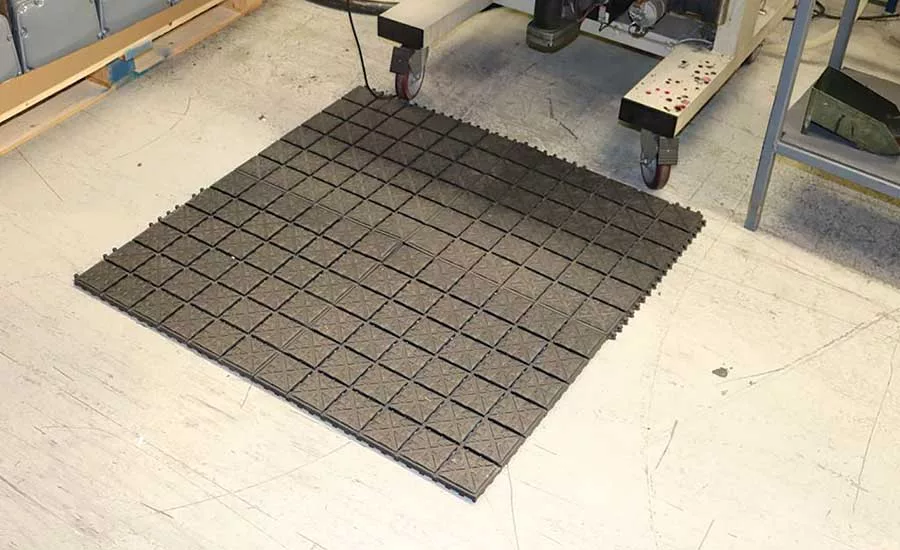
  • No bevel edges on mats presenting a 90-degree edge for the unwary to trip on (see image).

So with a regular walk around, say every quarter, checking the condition of all your mats, these problem areas can be identified and quickly rectified. Remember the golden rule: Prevention is better than cure!

This routine check can be incorporated into 5S programs to ensure standards are met and that regular cleaning of the mats is carried out.

Do your research

If you are not sure which mats you should be using where, get advice from a reputable mat company. Many will sell you the mats that you “choose” to buy, but not many provide you with the necessary time or advice to ensure you get the right mat for the job.

Do not settle for making do with standard size mats when a particular size or shape is needed for the job. Ask for a custom one, as there are companies that will provide this. Yes, it will cost a little more, but potential trip hazards will be eliminated and the investment will provide greater value.

A good quality anti-fatigue mat is one of the best investments that you can make for a valued team member. Do not look at it as just another expense to pay for.

If I have raised more awareness to provide the right anti-fatigue mats and maintain them in good order, then my time writing this article will have been well spent.

KEYWORDS: fatigue foot pain safety flooring

Share This Story

Looking for a reprint of this article?
From high-res PDFs to custom plaques, order your copy today!

Ben Herbert is Project Consultant at AcroMat. He can be reached at ben.herbert@acromat.com. Visit www.acromat.com.

Recommended Content

JOIN TODAY
to unlock your recommendations.

Already have an account? Sign In

  • forklift safety

    Exploring the latest technologies in forklift safety

    With more staff and more stock in warehousing now more...
    Workplace Training Strategies
    By: Josh Cramer
  • welding

    All about welder’s flash or arc eye

    A flash burn is a painful inflammation of the cornea,...
    Environmental Health and Safety
  • dangerous jobs

    The 10 most dangerous jobs in the U.S.

    On-the-job deaths have been rising — hitting the highest...
    Occupational Safety
    By: Benita Mehta
Manage My Account
  • eMagazine Subscriptions
  • ISHN Newsletter & Other Newsletter Alerts
  • Online Registration
  • Manage My Preferences
  • Subscription Customer Service

More Videos

Sponsored Content

Sponsored Content is a special paid section where industry companies provide high quality, objective, non-commercial content around topics of interest to the ISHN audience. All Sponsored Content is supplied by the advertising company and any opinions expressed in this article are those of the author and not necessarily reflect the views of ISHN or its parent company, BNP Media. Interested in participating in our Sponsored Content section? Contact your local rep!

close
  • man wearing the the Sundström SR200 Full Face Mask Respirator
    Sponsored byOHD

    5 Fit Testing Mistakes That Could Cost You

  • This image shows Magid AcuSpex polarized blue mirrored safety glasses.
    Sponsored byMagid Glove and Safety

    Construction PPE Guide: What Crews Need for Each Task

  • lone worker in confined space
    Sponsored byAlphasense Ltd.

    GET THE LEAD OUT of your Safety Oxygen Sensors!

Popular Stories

SpaceX 7 launch

OSHA Investigating Fatal Fall at SpaceX Starbase

Worker Impairment

How to Tell When a Co-Worker is Impaired? A Safety Pro’s Challenge

Automated loading dock equipment

After March 2026 Rivian Death, Safety Managers Reassess Loading Dock Systems Under OSHA's Warehouse Emphasis Program

top 10 most dangerous jobs

Poll

Seasonal Readiness

With the federal heat stress prevention rule on the horizon, which area of your safety program needs the most attention?
View Results Poll Archive

Products

Surviving an OSHA Audit A Management Guide, 2nd Edition

Surviving an OSHA Audit A Management Guide, 2nd Edition

See More Products

ISHN Podcasts

Related Articles

  • AIHA releases updated “Facts about Mold” brochure

    See More
  • eye

    Key facts about glaucoma

    See More
  • Fast facts about texting and driving

    See More
×

Become a Leader in Safety Culture

Build your knowledge with ISHN, covering key safety, health and industrial hygiene news, products, and trends.

JOIN TODAY
  • RESOURCES
    • Advertise
    • Contact Us
    • Directories
    • Manufacturing Division
    • Store
    • Want More
  • SIGN UP TODAY
    • Create Account
    • eMagazine
    • Newsletters
    • Customer Service
    • Manage Preferences
  • SERVICES
    • Marketing Services
    • Reprints
    • Market Research
    • List Rental
    • Survey/Respondent Access
  • STAY CONNECTED
    • LinkedIn
    • Facebook
    • YouTube
    • X (Twitter)
  • PRIVACY
    • PRIVACY POLICY
    • TERMS & CONDITIONS
    • DO NOT SELL MY PERSONAL INFORMATION
    • PRIVACY REQUEST
    • ACCESSIBILITY

Copyright ©2026. All Rights Reserved BNP Media, Inc. and BNP Media II, LLC.

Design, CMS, Hosting & Web Development :: ePublishing