ISHN logo
search
cart
facebook twitter linkedin youtube
  • Sign In
  • Create Account
  • Sign Out
  • My Account
ISHN logo
  • NEWS
    • Today's News
    • Global Safety News
    • Government Regulations
  • PRODUCTS
    • Product Innovations
    • Featured Products
  • TOPICS
    • Environmental Health and Safety
    • Facility Safety
    • Workplace Health
    • Occupational Safety
    • PPE
    • More Topics
  • CONSTRUCTION
  • TECHNOLOGY
  • COLUMNS
    • Best Practices
    • Dave Johnson: What’s going on
    • Editorial Comments
    • Leading Safety
  • MULTIMEDIA
    • ISHN Podcast
    • Videos
    • Cold Stress Education Quiz
    • Webinars
    • White Papers
  • MORE
    • Buyer's Guide
    • Newsletters
    • Convention Companion
    • Polls
    • Events
    • ISHN Store
    • Sponsor Insights
  • EMAGAZINE
    • eMagazine
    • Archived Issues
    • Contact
    • Advertise
  • JOIN TODAY!
PPE

"Hard-boiled" hard hats have evolved into integrated systems
By Fred Ravetto
May 31, 2011


Thanks to advances in safety, the hard hat has evolved over the decades. There have been many improvements in the last decade, but the story began almost 100 years ago.

The “Hard-Boiled Hat,” patented in 1919, was so called because of the steam used in the manufacturing process. The original “Hard-Boiled Hat” was manufactured of steamed canvas, glue and black paint. North America’s first application was the San Francisco Golden Gate Bridge construction site. This workplace had a problem with falling rivets, so it is understandable that head protection became necessary.

We have now evolved from those days of primitive materials and no standards to having 21st Century design and materials and an organization like ANSI helps to bring us to the next level.
 

Key issues

When selecting head protection equipment, it’s important to choose a well-designed hard hat system. Comfort and adjustability are key issues to consider as buyers evaluate designs. You’ll find many features available that are not specified in the ANSI Z89 1-2009 standard; features that are important when wearing a hard hat for several hours a day, five days a week.
 

What's new?

The latest hard hat system is properly designed and integrates all components to insure worker safety, high performance and comfort. Advances in design include a recessed rim, which allows for a proper fit over the ears. This design improves fit for cap-mounted muffs. When you have a better fit, you have improved protection.
 

Adjustability

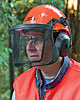
Look for brands of hard hats that have built-in adjustability for a head-hugging fit and slots for adapting accessories. Accessories called slot adaptor or “blades” fit into slots, to combine a visor (face shield) with or without cap-mounted ear muffs. This allows the user to adjust the position of the face shield closer to, or further from, their face. It also positions the shield in front of the face or overhead when not required.

A well-designed system allows the worker to adjust the cap muffs in a number of ways. Muffs can be positioned vertically up and down to fit comfortably over the ears. Muffs can be positioned on standby, by folding the muffs out and positioning them on top of the hard hat, available for future use. This integrated system is an excellent option, allowing easy access to shield and muffs when entering a hazardous environment. Ease of adjustability improves comfort and performance in the following ways:

  • A head-hugging suspension can be vital for workers angling their head or working in a leaning position. Hard hats should provide for height adjustability of the headband. In some designs, a rear swivel band insures adjustability to the shape of back of the head. Together these features increase comfort and help users find the best position for a snug fit.
  • Slot adaptors (blades) should have channels with position stops for moving a face shield close to, or further from, the face. This prevents fogging and is critical when wearing face masks.
  • Visor brackets should have strong springs to hold the shield firmly in position when overhead. No one wants a shield flopping up and down while walking.
  • Utilizing system components made of non-metal provides adjustability, with dielectric construction.
  • Hard hats that have recesses in the rim allow ear muffs to slide up and down easily without restricting fit, performance and comfort.


Classes of industrial protective headwear

The ANSI standard also covers dielectric properties. To qualify for a Class E rating (electric), manufacturers must also ensure that the materials used to make a hard hat — both the shell and the suspension — be dielectric, as a hat must pass an electrical test that protects up to 20,000 volts. For a Class G rating (general purpose) the conductivity test must qualify with a protection limit of 2,200 volts. Lastly, a Class C rating is a hard hat manufactured of conductive material, or a hard hat that does not meet Classes E or G. This would only be suitable in areas where there is no risk of electrical hazards.
 

Hard hat maintenance

An often-overlooked area in many articles of personal protective equipment (PPE) is maintenance. Hard hats are no exception and must be maintained. A dirty hat covers up small cracks and is very difficult to inspect. Too many workers don’t read the manufacturer’s instructions and don’t maintain their hard hats. Hard hats are some of the most important PPE that workers wear. They are lifesaving devices and should be treated as such.

A hard hat system that is properly designed and integrates all components will insure worker safety, high performance and comfort.

KEYWORDS: Head protection

Share This Story

Looking for a reprint of this article?
From high-res PDFs to custom plaques, order your copy today!

Fred is vice president sales for Elvex Corporation in Bethel, Conn., USA. Fred has more than 30 years of experience in the environmental and industrial safety fields. His work in advancing worker safety has taken him to more than 30 countries on 6 continents. He holds a mechanical engineering degree from Clarkson University in Potsdam, NY.

Recommended Content

JOIN TODAY
to unlock your recommendations.

Already have an account? Sign In

  • forklift safety

    Exploring the latest technologies in forklift safety

    With more staff and more stock in warehousing now more...
    Workplace Training Strategies
    By: Josh Cramer
  • welding

    All about welder’s flash or arc eye

    A flash burn is a painful inflammation of the cornea,...
    Environmental Health and Safety
  • dangerous jobs

    The 10 most dangerous jobs in the U.S.

    On-the-job deaths have been rising — hitting the highest...
    Occupational Safety
    By: Benita Mehta
Manage My Account
  • eMagazine Subscriptions
  • ISHN Newsletter & Other Newsletter Alerts
  • Online Registration
  • Manage My Preferences
  • Subscription Customer Service

More Videos

Sponsored Content

Sponsored Content is a special paid section where industry companies provide high quality, objective, non-commercial content around topics of interest to the ISHN audience. All Sponsored Content is supplied by the advertising company and any opinions expressed in this article are those of the author and not necessarily reflect the views of ISHN or its parent company, BNP Media. Interested in participating in our Sponsored Content section? Contact your local rep!

close
  • man wearing the the Sundström SR200 Full Face Mask Respirator
    Sponsored byOHD

    5 Fit Testing Mistakes That Could Cost You

  • This image shows Magid AcuSpex polarized blue mirrored safety glasses.
    Sponsored byMagid Glove and Safety

    Construction PPE Guide: What Crews Need for Each Task

  • lone worker in confined space
    Sponsored byAlphasense Ltd.

    GET THE LEAD OUT of your Safety Oxygen Sensors!

Popular Stories

SpaceX 7 launch

OSHA Investigating Fatal Fall at SpaceX Starbase

dust explosion

Tennessee OSHA Issues Record $3.1M Fine After Deadly Explosion at Munitions Plant

Worker Impairment

How to Tell When a Co-Worker is Impaired? A Safety Pro’s Challenge

top 10 most dangerous jobs

Poll

Seasonal Readiness

With the federal heat stress prevention rule on the horizon, which area of your safety program needs the most attention?
View Results Poll Archive

Products

Surviving an OSHA Audit A Management Guide, 2nd Edition

Surviving an OSHA Audit A Management Guide, 2nd Edition

See More Products

ISHN Podcasts

Related Articles

  • Select hard hats that prevent back-of-head traumatic injuries

    See More
  • Customized hard hats by Honeywell Safety Products

    See More
  • MSA

    MSA Super-V hard hats now available – new and improved!

    See More

Related Products

See More Products
  • ANSI/AIHA/ASSE Z9.9-2010 Portable Ventilation Systems

See More Products
×

Become a Leader in Safety Culture

Build your knowledge with ISHN, covering key safety, health and industrial hygiene news, products, and trends.

JOIN TODAY
  • RESOURCES
    • Advertise
    • Contact Us
    • Directories
    • Manufacturing Division
    • Store
    • Want More
  • SIGN UP TODAY
    • Create Account
    • eMagazine
    • Newsletters
    • Customer Service
    • Manage Preferences
  • SERVICES
    • Marketing Services
    • Reprints
    • Market Research
    • List Rental
    • Survey/Respondent Access
  • STAY CONNECTED
    • LinkedIn
    • Facebook
    • YouTube
    • X (Twitter)
  • PRIVACY
    • PRIVACY POLICY
    • TERMS & CONDITIONS
    • DO NOT SELL MY PERSONAL INFORMATION
    • PRIVACY REQUEST
    • ACCESSIBILITY

Copyright ©2026. All Rights Reserved BNP Media, Inc. and BNP Media II, LLC.

Design, CMS, Hosting & Web Development :: ePublishing