ISHN logo
search
cart
facebook twitter linkedin youtube
  • Sign In
  • Create Account
  • Sign Out
  • My Account
ISHN logo
  • NEWS
    • Today's News
    • Global Safety News
    • Government Regulations
  • PRODUCTS
    • Product Innovations
    • Featured Products
  • TOPICS
    • Environmental Health and Safety
    • Facility Safety
    • Workplace Health
    • Occupational Safety
    • PPE
    • More Topics
  • CONSTRUCTION
  • TECHNOLOGY
  • COLUMNS
    • Best Practices
    • Dave Johnson: What’s going on
    • Editorial Comments
    • Leading Safety
  • MULTIMEDIA
    • ISHN Podcast
    • Videos
    • Cold Stress Education Quiz
    • Webinars
    • White Papers
  • MORE
    • Buyer's Guide
    • Newsletters
    • Convention Companion
    • Polls
    • Events
    • ISHN Store
    • Sponsor Insights
  • EMAGAZINE
    • eMagazine
    • Archived Issues
    • Contact
    • Advertise
  • JOIN TODAY!
Facility Safety

Solutions to reduce arc flash energy
By Joseph Deane
Arc flash energy reduction

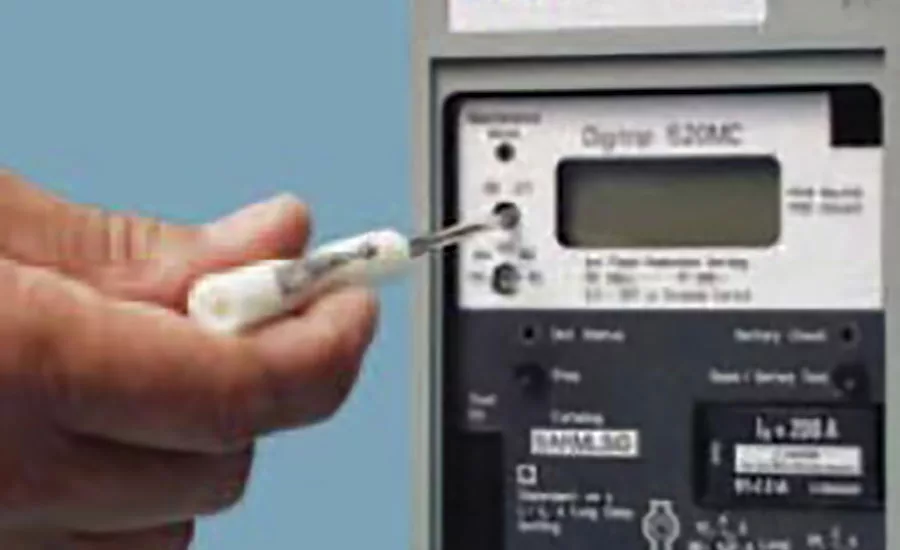
Circuit breaker with instantaneous setting set to “off” and incorporating energy reducing maintenance setting.

Photo courtesy of Eaton.

August 24, 2017

The NFPA 70E Standard “Electrical Safety in the Workplace” recognizes that the quicker a circuit breaker operates (instantaneous trip preferred) the less incident energy (arc flash) an individual maybe exposed who is working on electrical equipment and an arc flash incident occurs.

Circuit breakers that operate instantaneously may reduce their incident energy levels from 40 calories/cm2 (Arc Flash PPE Category 4) or greater to levels that in many cases are 8 calories/cm2 (Arc Flash PPE Category 2) or less. In many cases, depending on available fault current and working distance to exposed energized equipment, the incident energy levels will be less than 1.2 calories or no worse than a second-degree burn. Therefore, we like high speed (or instantaneous) tripping.

The National Electrical Code (NEC) recognized the advantages of instantaneous operation of circuit breakers from an arc flash standpoint and accepted a proposal for the 2011 NEC code requiring circuit breakers without an instantaneous trip function to require one of the following methods to reduce the incident energy levels:

  • Zone Selective Interlocking (ZSI)
  • Differential relaying
  • Energy reducing maintenance switching with a local status indicator
  • Or an approved equivalent means. 

This new section is entitled 240.87 Non-instantaneous Trip for the 2011 NEC.

This section of the NEC has been updated in 2014 and clarified to indicate we’re only talking circuit breakers that are rated 1200 amp breakers and above. This section was updated again in 2017.

Trying to isolate faults

It’s quite common for engineers, who perform selective coordination, to specify circuit breakers without the instantaneous trip function or intentionally turn the instantaneous trip setting to off; the main circuit breaker in a facility typically does not have instantaneous settings. If it did, there may be a race between the main breaker and a feeder breaker for a downstream fault. The goal with selective coordination is to isolate a fault by its closest upstream device without any further upstream devices operating.

2014 revision

The 2014 edition of the NEC made significant changes to this new section starting with a new title: “Arc Energy Reduction.”  Now the intent of the requirement has been made clear: “Reduce the arc flash energy level.” Circuit breakers without instantaneous trip function must have one of the methods listed earlier for the intent of reducing the incident energy level.

The section also clarified that it was only for 1200 amp breakers and above, It also clarified that it applies to an adjustable breaker that has a setting of 1200 amps or higher, even if it is set lower e.g. 0.9 x 1200 amps = 1080 amp pickup. Where the highest continuous current trip setting for which the actual overcurrent device installed in a circuit breaker is rated or can be adjusted is 1200 amps or higher,240.87(A) and (B) shall apply.

2017 revision

The 2017 edition of the NEC has made additional changes to the Arc Energy Reduction section. The section reads as follows. Additional methods to reduce clearing time:

  • Zone Select Interlocking
  • Differential relaying
  • Energy reducing maintenance switching with local status indicator
  • Energy reducing active arc flash mitigation system
  • An instantaneous trip setting that is less than the available arcing current
  • An instantaneous override that is less than the available arcing current
  • An approved equivalent means

My personal preference is the energy reducing maintenance switch which allows a worker to set a circuit breaker trip unit to “no intentional delay” to reduce clearing time while the worker is working within the arc flash boundary and then to set to trip unit back to a normal time delay setting after the energized work has been completed. The energy reducing maintenance switch is a means by which an intentional time delay in the opening of the circuit breaker can be overridden while maintenance, service or diagnostic tasks are being performed.

An energy reducing active arc flash mitigation system helps in reducing arcing duration in the electrical distribution system. No change in the circuit breaker settings is required during maintenance. Typically a fiber optic sensor triggered by the arcing fault is used.

An instantaneous trip is a function that causes a circuit breaker to trip with no intentional time delay. If arcing currents are above the instantaneous trip setting, the circuit breaker will trip in the minimum possible time.

Each of the various options has advantanges and disadvantages in both cost and space requirements. Investigate each option to determine what’s best for your facility and ways to reduce the arc fault energy.

KEYWORDS: Arc flash injuries

Share This Story

Looking for a reprint of this article?
From high-res PDFs to custom plaques, order your copy today!

Joseph Deane, PE, is principal for KTR Electrical Solutions with over 30 years experience. KTR specializes in providing NFPA 70E training and arc flash studies for companies. KTRassociates.com

Recommended Content

JOIN TODAY
to unlock your recommendations.

Already have an account? Sign In

  • forklift safety

    Exploring the latest technologies in forklift safety

    With more staff and more stock in warehousing now more...
    Facility Safety
    By: Josh Cramer
  • welding

    All about welder’s flash or arc eye

    A flash burn is a painful inflammation of the cornea,...
    Environmental Health and Safety
  • dangerous jobs

    The 10 most dangerous jobs in the U.S.

    On-the-job deaths have been rising — hitting the highest...
    Transportation Safety
    By: Benita Mehta
Manage My Account
  • eMagazine Subscriptions
  • ISHN Newsletter & Other Newsletter Alerts
  • Online Registration
  • Manage My Preferences
  • Subscription Customer Service

More Videos

Sponsored Content

Sponsored Content is a special paid section where industry companies provide high quality, objective, non-commercial content around topics of interest to the ISHN audience. All Sponsored Content is supplied by the advertising company and any opinions expressed in this article are those of the author and not necessarily reflect the views of ISHN or its parent company, BNP Media. Interested in participating in our Sponsored Content section? Contact your local rep!

close
  • man wearing the the Sundström SR200 Full Face Mask Respirator
    Sponsored byOHD

    5 Fit Testing Mistakes That Could Cost You

  • This image shows Magid AcuSpex polarized blue mirrored safety glasses.
    Sponsored byMagid Glove and Safety

    Construction PPE Guide: What Crews Need for Each Task

  • lone worker in confined space
    Sponsored byAlphasense Ltd.

    GET THE LEAD OUT of your Safety Oxygen Sensors!

Popular Stories

SpaceX 7 launch

OSHA Investigating Fatal Fall at SpaceX Starbase

Automated loading dock equipment

After March 2026 Rivian Death, Safety Managers Reassess Loading Dock Systems Under OSHA's Warehouse Emphasis Program

psychology in the workplace

Most Workplaces Measure Psychological Safety, Ignoring Psychosocial Risks

top 10 most dangerous jobs

Poll

Seasonal Readiness

With the federal heat stress prevention rule on the horizon, which area of your safety program needs the most attention?
View Results Poll Archive

Products

Surviving an OSHA Audit A Management Guide, 2nd Edition

Surviving an OSHA Audit A Management Guide, 2nd Edition

See More Products

ISHN Podcasts

Related Articles

  • National survey: "Companies feel pressure to reduce arc-flash hazards"

    See More
  • Use good design to reduce arc flash hazard (AFH)

    See More
  • Reduce arc flash risks with Condition Based Maintenance

    See More

Related Directories

  • e-Hazard

    E-Hazard is dedicated to building an electrical safety culture with you. Our electrical engineering services and training will prepare your team for any electrical safety needs or concerns. E-Hazard can help with electrical training, arc flash studies, electrical audits, electrical safety programs, LOTO, infrared scanning, NFPA 70B, consulting and much more.
×

Become a Leader in Safety Culture

Build your knowledge with ISHN, covering key safety, health and industrial hygiene news, products, and trends.

JOIN TODAY
  • RESOURCES
    • Advertise
    • Contact Us
    • Directories
    • Manufacturing Division
    • Store
    • Want More
  • SIGN UP TODAY
    • Create Account
    • eMagazine
    • Newsletters
    • Customer Service
    • Manage Preferences
  • SERVICES
    • Marketing Services
    • Reprints
    • Market Research
    • List Rental
    • Survey/Respondent Access
  • STAY CONNECTED
    • LinkedIn
    • Facebook
    • YouTube
    • X (Twitter)
  • PRIVACY
    • PRIVACY POLICY
    • TERMS & CONDITIONS
    • DO NOT SELL MY PERSONAL INFORMATION
    • PRIVACY REQUEST
    • ACCESSIBILITY

Copyright ©2026. All Rights Reserved BNP Media, Inc. and BNP Media II, LLC.

Design, CMS, Hosting & Web Development :: ePublishing