Handling combustible dusts
“Preventing dust explosions”
Many in the manufacturing industry are not knowledgeable about combustible dusts and the potential impact of those dusts on their business. Accidents such as the massive explosion at the Imperial Sugar factory in 2008 and increasingly stringent regulation and enforcement of standards for managing combustible dusts have raised awareness in the field. Under a Combustible Dust National Emphasis Program (NEP) reissued in 2008 following the disaster at the Imperial factory, the agency is increasing its vigilance and enforcement of worker safety regulations in plants that handle combustible dusts, which include almost every food manufacturing plant.
Lessons Learned from Imperial Sugar
The four-story Imperial Sugar refinery on the bank of the Savannah River was built in 1916. The facility was about 872,000 square feet, and it refined 14.51 million hundredweight of sugar in the last full fiscal year before the disaster. The explosion occurred at around 7 PM on Feb. 7, 2008 and the cause was determined to be sugar dust. Fourteen people were killed and 42 injured.
Imperial Sugar was a poster child for a problem that is highly prevalent in the industry — older facilities using antiquated equipment without awareness of the danger of combustible dusts.
Newer plants are designed with that danger in mind, but decisionmakers at older plants may erroneously assume that their older equipment and facilities are grandfathered in, or that dusts are not a problem. The truth is that in any situation where any kind of powder is being handled, precautions must be taken to control combustible dusts in line with regulations.
About Combustible Dusts
Almost every organic product is combustible. That includes sugar, cocoa, flour, spices, and starch. Any plant that handles grain products like wheat flour or corn flour is dealing with combustible dust. Other examples include whey powder, nonfat dried milk, egg white powder, and gluten. Artificial sweeteners are particularly dangerous, as they are highly explosive.
Flour milling, sugar drying, spray drying of liquids, and handling of grains are processes that commonly generate combustible dust. Milling and grinding are also risky operations. Once a cloud of dust is created, an ignition source can quickly lead to an explosion. Catastrophic explosions occur when an initial primary explosion is followed by a secondary explosion of dust released by the first explosion.
A 2006 study by the U.S. Chemical Safety Board found that there were at least 281 dust explosions in the U.S. between 1980 and 2005, killing 119 workers and injuring 718. Statistics on combustible dust explosions are thought to be under-reported. If an incident occurs, and no one is injured, it may be quietly corrected.
Under OSHA’s NEP, it is inspecting facilities that generate or handle combustible dusts that pose a hazard. A plant may comply with local fi re department regulations, but still run afoul of OSHA. In spite of OSHA’s stepped-up vigilance, the Chemical Safety Board documented a further 35 explosions, with 26 dead and 128 injured, since the beginning of 2008.
The National Fire Protection Association issues consensus standards related to combustible dusts, including guidelines for testing dusts for the potential to cause a fire or explosion.
Preventing Dust Explosions
The biggest mistake food manufacturers make is assuming that because their plants have been in operation for years without accidents and without being cited, that they are in compliance. It is the manufacturer’s responsibility to know the regulations and bring all facilities up to date. Measures for mitigating risk from combustible dusts include those that prevent dust explosions and those that protect human life when those explosions occur.
Because retrofitting is costly, many plant managers attempt to economize by meeting the bare minimum that regulations require. Unfortunately, that strategy can leave gaps in safety coverage.
The first step in assessment of combustible dust hazard is a Process Hazards Analysis (PHA), in which an expert inspects the plant and identifies all of the risks. The inspector will look for issues such as potential for static electricity to create sparks where dusts are suspended in the air. For example, if the workers are using a standard shop vacuum to clean up the dust, it may generate a static charge due to being ungrounded, and that can ignite the powder.
Explosions commonly begin inside a piece of equipment, like a dust collector or a dryer, or inside process equipment, so a thorough inspection will include the insides of all equipment. There are a number of ways of dealing with that type of risk. One is through an explosion vent, which directs the force through a certain exit, in a direction that will not put any workers at risk. Another choice is a fi re suppression system inside the equipment. The device sprays dry chemicals into the chamber to suppress the explosion. Lastly, the potential for injury and damage can be minimized by investing in equipment heavy enough to withstand an explosion without falling apart or deforming.
Dust collectors are used to control airborne dusts. For example, in a facility that grinds corn, a dust collector will be used to remove airborne dust that could otherwise build up and explode. However, in older facilities, those dust collectors are set up inside the building. The process of retrofitting may require that the dust collection chamber be relocated outside the building, where, if it explodes, it will be less likely to cause damage and injury.
Electrical equipment must comply with national electric code. Improper ignition control can lead to sparks that ignite airborne dusts. Many companies have been fined because they don’t have appropriate electrical equipment for operation in a dusty environment.
Housekeeping & Documentation
An often-overlooked contributor to dust problems is a simple lack of housekeeping. Many companies assume that a dirty plant is the nature of the business, and allow dusts to accumulate. However, that accumulated dust represents a fuel source that can feed a fire in case of an accident. One of the goals of OSHA’s NEP is encouraging housekeeping programs to prevent the buildup of dust.
OSHA’s guidelines indicate that cleaning is generally needed whenever a layer of dust reaches 1/32-inches (the thickness of a paper clip) over a surface area of at least five percent of the floor area. That calculation should include dust on beams, joists, ducts, and the tops of equipment. Vertical surfaces may also count if dust sticks to them.
Some plants already have stringent housekeeping standards, such as factories regulated by the FDA or plants that must conform to bakery industry standards. Those plants tend to be very clean of combustible dust. But even those plants can have problems if a machine fails and dust accumulates. Housekeeping programs should include procedures for equipment failure and other unusual situations that could lead to a buildup of dust.
OSHA is also requiring the inclusion of combustible dust hazards in its safety data sheets (SDS). Outdated safety sheets, which used to be called material safety data sheets (MSDS), are no longer acceptable. Workers handling combustible dusts should be informed that the materials they are handling are potentially combustible.
Safety procedures for workers should include an emergency escape plan. Workers should know how to get out if there’s an accident, and OSHA has fined companies whose workers do not receive all of the required information.
Many larger companies are up to date and aware of the stricter regulations, but small companies operating on a shoestring budget could be caught unprepared if inspected.
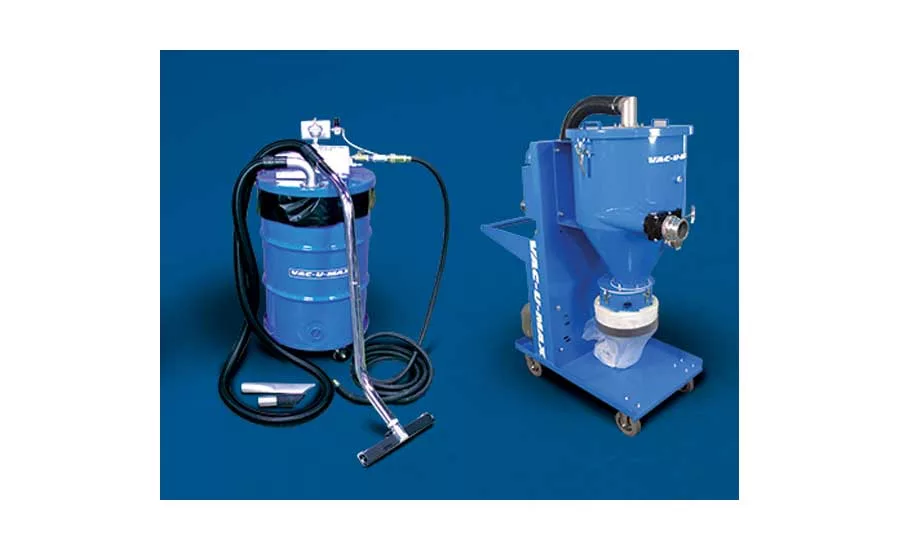
The expense of retrofitting equipment is justified, compared to the risk to human life and the high dollar cost of a dust explosion. Once equipment is retrofitted, it should be checked out regularly to make sure the dust handling components are in good condition and working properly. Specialized vacuum cleaning and pneumatic conveying systems can be an important part of a program for handling combustible dusts.
To learn more about VAC-U-MAX’s full range of industrial vacuum cleaning systems, and to find out how a properly designed pneumatic conveying system can reduce ingredient and energy costs, yet increase production and end product quality for a safe dust-free plant environment, please visit www.vac-u-max.com.
Looking for a reprint of this article?
From high-res PDFs to custom plaques, order your copy today!