Energized Equipment Update: Reviewing the NFPA 70E 2018 changes
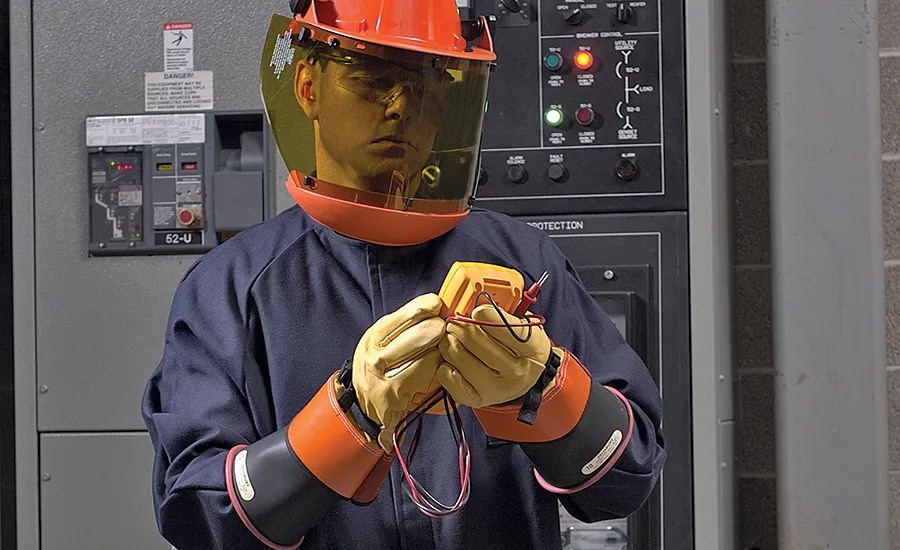
Changes in the NFPA 70E 2018 edition include new guidelines for selecting personal protective equipment (PPE) and an emphasis on the hierarchy of controls for risk assessment.1 Here are the key NFPA 70E changes that EHS leaders need to know:
Simplified PPE selection process
Now a part of NFPA 70E’s “mandatory” text, the new PPE selection process helps employers choose arc-rated clothing and gear when using either the incident energy analysis method or the arc flash PPE category method to determine arc flash risk.
NFPA 70E Table 130.5(G) is used to select arc-rated clothing and other PPE when the Incident Energy Analysis Method is used.
Updated risk assessment procedures
The most common causes of arc flash incidents are human interaction and human error, such as dropping tools or metallic parts into energized work areas; not using test equipment properly; using test equipment not rated for the equipment that is being worked on; and not using appropriate safety-related work practices.2
The standard’s risk assessment procedure now requires organizations to address human error and its negative consequences on people, processes, work environments, and equipment. To help reduce human errors before any work is started, employers must:
- Address employee exposure to electrical hazards.
- Identify the process to be used by the employee to identify hazards.
- Assess risks.
- Implement risk control according to the hierarchy of risk control methods.
- Address the potential for human error and its negative consequences on people, processes, the work environment, and equipment.
Using a new table in NFPA 70E (Table 130.5(C)), EHS Leaders can now more confidently estimate the likelihood of an occurrence of an arc flash incident for AC and DC systems. Where this Table identifies “No” as an estimate of likelihood of occurrence, it means that an arc flash incident is not likely to occur. Where this Table identifies “Yes” as an estimate of likelihood of occurrence it means that additional protective measures are required, implemented according to the hierarchy of risk control.3
Examples of likelihood of occurrence include:
For AC systems, working on energized electrical conductors and circuit parts (including voltage testing) or removing or installing circuit breakers or switches performed under any equipment condition may have a likelihood of an arc flash occurrence.
Workers who are voltage-testing individual battery cells or who are removing or installing covers for equipment (i.e., wireways or junction boxes), under normal equipment conditions, are not likely to experience an arc flash.
However, those workers that maintain or test individual battery cells or insert or remove individual cells of a battery system in an open rack — on abnormally functioning equipment — are susceptible to arc flash occurrences.
Hierarchy of risk and control methods
In its 2018 update, NFPA 70E also addressed the logical, systematic process used to manage risks in electrical safety through:
- Communication and consultation
- Establishing risk assessment context and objectives
- Risk assessment
- Risk treatment
- Recording and reporting the risk assessment results and risk treatment decisions
- Monitoring and reviewing risks
When developing their own risk assessment procedures, the new guidelines state employers should utilize preventative and protective risk controls using this six-step hierarchy. In order from most to least effective, the six controls are:
- Elimination: This method focuses on eliminating the hazard. True elimination of electrical hazards may not be possible in many cases, as electrical loads have to be served in some manner.
- Substitution: With this method, less hazardous equipment, such as non-electrical or battery-operated tools, may be used.
- Engineering controls: This method involves the use of products or solutions intended to reduce hazards or mitigate risks, such as circuit breakers or current-limiting fuses.
- Awareness: Proper labeling, posted signs, barriers, and alerts are required to warn workers of the danger and keep them out of harm’s way. Proper worker training also can help increase awareness of hazards and risk control methods.
- Administrative controls: To create safer work conditions, electrical professionals should focus on planning processes, training, permits, job planning and work procedures.
- PPE: Rated to mitigate an arc flash event to a survivable level.4
Job checklists and training requirements
Before starting each job that involves exposure to electrical hazards, employers must ensure that a “qualified person” completes a job safety plan and conduct a job briefing with all of the workers who are involved with the project. The plan must:
- Be completed by a qualified person.
- Be documented.
- Include a job and task description.
- Identify the electrical hazards associated with each task.
- Include a shock risk and arc flash assessment.
- Outline the work procedures, special precautions, and energy source controls.
Employers must also document that employees working in energized environments have received training and demonstrated proficiency in the work practices involved.
Safe release and lockout/tagout considerations
According to the NFPA 70E’s 2018 update, any employee who has been exposed to shock hazards—and those responsible for the safe release of victims from contact with energized electrical conductors or circuit parts—must be trained in safe release methods with refresher training taking place on an annual basis.
NFPA 70E 2018 updates: Keeping workers safe
As a standard that requires employers to conduct flash hazard analyses and supply employees with the proper PPE to protect against arc flash, NFPA 70E is an important safety guideline for anyone who is working in and around energized equipment. With thorough and ongoing training, good risk assessments, and knowledge of which PPE to use for specific applications, employers can help prevent arc flash incidents and keep workers safe from harm.
Sources:
- Druley, Kevin. NFPA 70E: A look at the 2018 edition, http://www.safetyandhealthmagazine.com/articles/16668-nfpa-70e-a-look-at-the-2018-edition
- Hall, Brian. What Causes an Arc Flash?, http://www.70econsultants.com/causes-arc-flash/
- Phillips, Jim. What's New? What's Changed? https://www.ecmag.com/section/safety/whats-new-whats-changed-2018-nfpa-70e-update
- Parsons, Antony. Job Planning and Risk Assessment Under NFPA 70E 2018, http://constructionexec.com/article/job-planning-and-risk-assessment-under-nfpa-70e-2018
Looking for a reprint of this article?
From high-res PDFs to custom plaques, order your copy today!