Fentanyl epidemic presents unexpected risks
Gloves for a Crisis
The statistics are numbing. Drug overdoses killed 64,070 people in the U.S. in 2016 – more than the number of Americans killed in the Vietnam War. The death toll was up 21 percent over 2015, and all indications are it will be even higher when the 2017 numbers are determined, according to the Center for Disease Control and Prevention (CDC). Overdoses are more than an epidemic; they’re a national crisis.
If you dig a little deeper, you’ll see the scope of the problem expands. Opioid overdoses killed 42,249 Americans in 2016, and the fastest growing cause of overdose deaths is the use of synthetic opioids – the most common of which is fentanyl. These drugs are especially dangerous, resulting in 20,145 deaths in 2016 — more than double the total from 2015, according to the CDC. In fact, the rate of fatal overdoses from synthetic opioids other than methadone has increased an average of 88 percent each year since 2013. In 2016, the Drug Enforcement Administration (DEA) reported more than 30,000 seizures of fentanyl, up from just 5,000 in 2014.
Significant risk
The increase in synthetic opioid use and overdoses matters because these drugs pose a significant risk to others beyond the drug user. Small amounts of fentanyl can be fatal if ingested or inhaled and the drug also can be absorbed through incidental physical contact, triggering overdose symptoms. Because the drug is so powerful — estimated at 50 to 100 times more potent than heroin — it takes just a small amount to cause an overdose for someone simply coming in contact with the drug.
Awareness among first responders about the safety risks of fentanyl exposure is growing, but it’s not just EMTs and police officers that routinely come in contact with the drug. Many unexpected — and unprepared — groups are at risk. Doctors, nurses, technicians and admins in emergency room settings increasingly face contact exposure through fentanyl residue on clothing or in bodily fluids. Even hotel cleaning staff is at risk. Just trace amounts of fentanyl can be extremely dangerous. Would most operations, maintenance or cleaning crews be able to tell the difference between a few granules of fentanyl and some spilled table salt?
Compounding the issue is an unpleasant reality: One of the many ugly reactions to a fentanyl overdose is vomiting, and fentanyl remains potent even when mixed with gastric acid. It’s not just pure fentanyl posing a risk to third parties, but also the fentanyl present in the vomit of overdose victims.
Chemical protection necessary
The circle of those who could be affected is larger than we’ve ever seen with any other kind of drug overdose. Forensic scientists and lab technicians handle and test clothing and other items from overdose victims and locations. Think about the number of people and objects TSA personnel come in contact with every day. It’s easy to imagine someone cleaning a bathroom coming into contact with the drug, or someone repairing or cleaning a taxi.
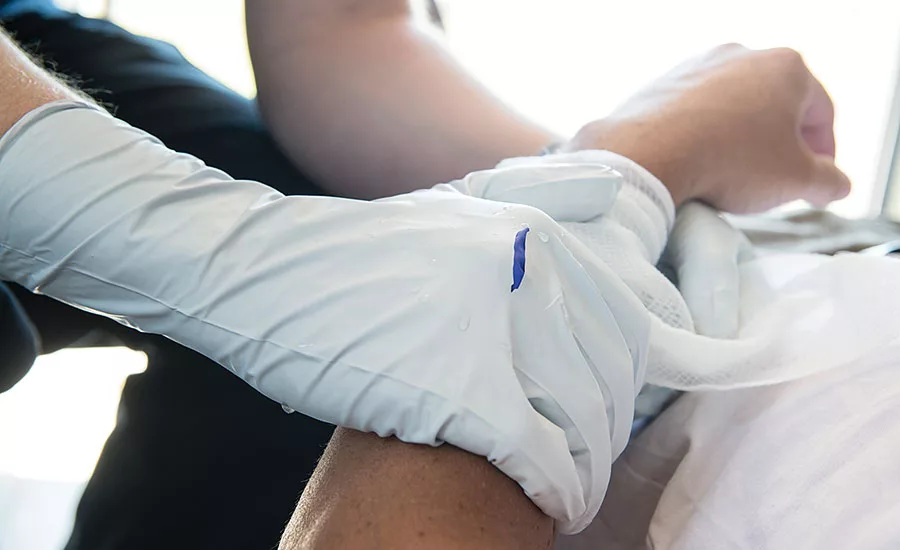
Of course, some of the workers in question routinely wear PPE, especially hand protection. EMTs, police officers, medical personnel and lab techs usually wear exam-type gloves when required or appropriate. Even maintenance staff usually wears rubber cleaning gloves.
Problem solved, right?
Not exactly, although it’s certainly a good start. Unfortunately, many of the gloves commonly used in these environments are not designed specifically for protection against ranges of fentanyl exposure. As with any chemical, fentanyl reacts differently to different materials. This is of particular concern in overdose scenarios where the victim has vomited. Human stomach acids can be strong, aggressive compounds and require appropriate hand protection in their own right. That means the gloves used in these situations should be tested for resistance to the combination of gastric acid and fentanyl — tests that are rare in today’s PPE marketplace.
Call for more PPE
Appropriate glove selection is critical, but gloves are just part of the solution. Additional PPE, including masks and body protection, should be considerations for first responders in high-risk environments. And everyone who uses gloves for fentanyl protection should be diligent about best practices — wiping sweat from the brow or scratching an itch can transfer fentanyl to unprotected parts of the body. That is also true of heroin or cocaine, of course, but the consequences of fentanyl transfer are far more severe.
The call for increased and improved fentanyl-protective PPE is not meant to be alarmist, and we’re not suggesting all dry cleaners start wearing fentanyl-resistant gloves. However, these threats are real, and everyone at risk needs to act responsibly. Those most at risk — first-responders, ER staff and forensic lab personnel, for example — should be transitioning to gloves that protect against fentanyl and gastric acid. Others at risk — from the TSA employees to the hotel cleaning staff — should have access to those types of gloves and training on the dangers of fentanyl exposure.
As always, the key is glove selection. There are tests to establish a glove’s effectiveness against virtually any chemical, including fentanyl. If you are unsure about a product’s suitability for fentanyl protection, ask if it has been tested and, if so, what the breakthrough time is. Breakthrough time is the point at which the chemical reaches a predetermined threshold on the opposite side of the glove film. Leading manufacturers are going a step further and testing for both fentanyl and gastric acid in specific, real-world exposure scenarios. New, innovative gloves are standing up to the test — some protecting against both substances for greater than 240 minutes.
Glove manufacturers must continue to develop fentanyl-resistant PPE solutions and educate and work with glove decision-makers and end users to deliver gloves and other PPE that keep wearers safe. When it comes time to make your PPE selection, ask the right questions and make informed choices. The risks are too great to ignore.
Looking for a reprint of this article?
From high-res PDFs to custom plaques, order your copy today!