ISHN logo
search
cart
facebook twitter linkedin youtube
  • Sign In
  • Create Account
  • Sign Out
  • My Account
ISHN logo
  • NEWS
    • Today's News
    • Global Safety News
    • Government Regulations
  • PRODUCTS
    • Product Innovations
    • Featured Products
  • TOPICS
    • Environmental Health and Safety
    • Facility Safety
    • Workplace Health
    • Occupational Safety
    • PPE
    • More Topics
  • CONSTRUCTION
  • TECHNOLOGY
  • COLUMNS
    • Best Practices
    • Dave Johnson: What’s going on
    • Editorial Comments
    • Leading Safety
  • MULTIMEDIA
    • ISHN Podcast
    • Videos
    • Cold Stress Education Quiz
    • Webinars
    • White Papers
  • MORE
    • Buyer's Guide
    • Newsletters
    • Convention Companion
    • Polls
    • Events
    • ISHN Store
    • Sponsor Insights
  • EMAGAZINE
    • eMagazine
    • Archived Issues
    • Contact
    • Advertise
  • JOIN TODAY!
Occupational SafetyEnvironmental Health and SafetyPPEOSHA

Bump caps protect against ‘worker-generated’ impacts

No hard hat required?

By Greg Schrab
Bump caps protect against ‘worker-generated’ impacts
September 10, 2018

It’s easy to think of head injuries as catastrophic, and they certainly can be. It’s also easy to think of hard hats as the only head injury prevention solution, and they certainly do provide essential protection.

But let’s go a little deeper. According to the Bureau of Labor Statistics, roughly 40,000 injuries to the head result in at least one day away from work every year in the private sector. Of those, a mere six percent occur in construction, where hard hats are most likely being worn.

Meanwhile, the manufacturing sector — where workers may or may not be wearing hard hats — accounts for roughly ten percent of head injuries. Transportation and warehousing make up another 9 percent. And those folks are likely not wearing hard hats. All told, that’s more than three times the amount of head injuries than construction.

Does that mean they should all be wearing hard hats? Probably not.

Object-generated impact vs. worker-generated impact

Hard hats are designed to protect from “object-generated impact,” which involves an object falling onto the worker. That’s in contrast to “worker-generated impact,” where the worker initiates the contact.

The injury might not be catastrophic but could still get ugly and expensive — a National Institute of Health study put the average cost of an emergency room visit at $1,200.

And where are these injuries from worker-generated impacts likely to occur? Industries like manufacturing, warehousing, transportation and other services where workers often find themselves maneuvering in tight spaces. Thankfully, these folks have alternative head protection options to combat nasty dings to the dome.

The bump cap

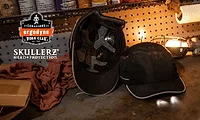
Typically built around a padded, impact-resistant plastic shell, the bump cap is less obtrusive than a hard hat, looks like a basic ball cap, and is designed to provide comfortable, lightweight protection against worker-generated impact.

Who should wear a bump cap?

Basically, anybody working in tight, confined spaces where hard hats are not required should wear a bump camp. While hard hats are ideal for working in open construction situations where falling debris and/or tools are a common hazard, they can become annoying hindrances to those working in tight quarters, such as crawl spaces or under sinks. In those conditions where you’re navigating beneath overhead plumbing, low ceilings and hanging hazards, you’re more likely to bump your head than get struck by a falling brick.

While worker-generated impacts may seem less severe than object-generated impacts, they can lead to some gruesome gashes, concussions and as mentioned above, no small medical expense.

Bump cap applications include:

  • Mechanics
  • Airline workers
  • In-home service employees
  • Weekend workshoppers

What to look for in a bump cap:

  • Impact and puncture resistance
  • Strategic venting to avoid overheating
  • Lightweight shell with padded foam for comfort
  • Brim length options; “micro” brims have become increasingly popular
  • Hands-free LED lighting offers a “bump” in utility

Because bump caps are tested to a different standard than hard hats, they should never be used where hard hats are required. The only bump cap standard in the world right now is the European standard: EN 812: 2012.

Universal bump cap inserts

As the term implies, bump cap inserts can be placed inside any regular baseball cap, essentially turning your favorite hat into head protection. Many times, workers (like cable/dish technicians, for example) are already wearing hats – either their own or as part of a uniform. Inserts are a low-cost, unobtrusive way to offer a level of protection against the bumps, scrapes and bruises they’re guaranteed to initiate themselves from time to time.

Just like traditional bump caps, there’s a wide a variance in fit, comfort and performance, so take the time to compare your options. Ideally, the insert is designed with a lightweight, breathable, flexible shell and a customizable trim feature to accommodate all styles of caps – low or high-profile—so that it’s truly universal.

Use your head

Ultimately, the decision to opt for a hard hat or bump cap comes down to the nature of each individual working environment and assessing the overall risk of head injury can be unique to every situation.

The most up-to-date Bureau of Labor Statistics data determined that head and neck injuries account for the third most common work-related emergency room visits and can often have the potential to be the most life-threatening of injuries. Combine that with the fact head injuries can be the most debilitating and costly workplace injuries — both in terms of actual care and rehabilitation costs and compensation — and the scope and necessity of proper head protection becomes abundantly clear. 

KEYWORDS: bump cap Head protection safety equipment industry

Share This Story

Looking for a reprint of this article?
From high-res PDFs to custom plaques, order your copy today!

Greg Schrab is SVP of Operations & Product Management at Ergodyne.

Recommended Content

JOIN TODAY
to unlock your recommendations.

Already have an account? Sign In

  • forklift safety

    Exploring the latest technologies in forklift safety

    With more staff and more stock in warehousing now more...
    Facility Safety
    By: Josh Cramer
  • welding

    All about welder’s flash or arc eye

    A flash burn is a painful inflammation of the cornea,...
    Environmental Health and Safety
  • dangerous jobs

    The 10 most dangerous jobs in the U.S.

    On-the-job deaths have been rising — hitting the highest...
    Government Safety Regulations
    By: Benita Mehta
Manage My Account
  • eMagazine Subscriptions
  • ISHN Newsletter & Other Newsletter Alerts
  • Online Registration
  • Manage My Preferences
  • Subscription Customer Service

More Videos

Sponsored Content

Sponsored Content is a special paid section where industry companies provide high quality, objective, non-commercial content around topics of interest to the ISHN audience. All Sponsored Content is supplied by the advertising company and any opinions expressed in this article are those of the author and not necessarily reflect the views of ISHN or its parent company, BNP Media. Interested in participating in our Sponsored Content section? Contact your local rep!

close
  • man wearing the the Sundström SR200 Full Face Mask Respirator
    Sponsored byOHD

    5 Fit Testing Mistakes That Could Cost You

  • This image shows Magid AcuSpex polarized blue mirrored safety glasses.
    Sponsored byMagid Glove and Safety

    Construction PPE Guide: What Crews Need for Each Task

  • lone worker in confined space
    Sponsored byAlphasense Ltd.

    GET THE LEAD OUT of your Safety Oxygen Sensors!

Popular Stories

SpaceX 7 launch

OSHA Investigating Fatal Fall at SpaceX Starbase

Automated loading dock equipment

After March 2026 Rivian Death, Safety Managers Reassess Loading Dock Systems Under OSHA's Warehouse Emphasis Program

psychology in the workplace

Most Workplaces Measure Psychological Safety, Ignoring Psychosocial Risks

top 10 most dangerous jobs

Poll

Seasonal Readiness

With the federal heat stress prevention rule on the horizon, which area of your safety program needs the most attention?
View Results Poll Archive

Products

Surviving an OSHA Audit A Management Guide, 2nd Edition

Surviving an OSHA Audit A Management Guide, 2nd Edition

See More Products

ISHN Podcasts

Related Articles

  • Ergodyne

    Ergodyne launches lightweight and breathable bump caps

    See More
  • Ergodyne debuts new head protection line with launch of two new bump caps

    See More
  • Bump Caps

    See More

Related Products

See More Products
  • industrial hy.jpg

    Industrial Hygiene: Improving Worker Health through an Operational Risk Approach

  • 2016_WM.jpg

    ANSI/ASSE Z9.11-2016 Laboratory Decommissioning

See More Products
×

Become a Leader in Safety Culture

Build your knowledge with ISHN, covering key safety, health and industrial hygiene news, products, and trends.

JOIN TODAY
  • RESOURCES
    • Advertise
    • Contact Us
    • Directories
    • Manufacturing Division
    • Store
    • Want More
  • SIGN UP TODAY
    • Create Account
    • eMagazine
    • Newsletters
    • Customer Service
    • Manage Preferences
  • SERVICES
    • Marketing Services
    • Reprints
    • Market Research
    • List Rental
    • Survey/Respondent Access
  • STAY CONNECTED
    • LinkedIn
    • Facebook
    • YouTube
    • X (Twitter)
  • PRIVACY
    • PRIVACY POLICY
    • TERMS & CONDITIONS
    • DO NOT SELL MY PERSONAL INFORMATION
    • PRIVACY REQUEST
    • ACCESSIBILITY

Copyright ©2026. All Rights Reserved BNP Media, Inc. and BNP Media II, LLC.

Design, CMS, Hosting & Web Development :: ePublishing