ISHN logo
search
cart
facebook twitter linkedin youtube
  • Sign In
  • Create Account
  • Sign Out
  • My Account
ISHN logo
  • NEWS
    • Today's News
    • Global Safety News
    • Government Regulations
  • PRODUCTS
    • Product Innovations
    • Featured Products
  • TOPICS
    • Environmental Health and Safety
    • Facility Safety
    • Workplace Health
    • Occupational Safety
    • PPE
    • More Topics
  • CONSTRUCTION
  • TECHNOLOGY
  • COLUMNS
    • Best Practices
    • Dave Johnson: What’s going on
    • Editorial Comments
    • Leading Safety
  • MULTIMEDIA
    • ISHN Podcast
    • Videos
    • Cold Stress Education Quiz
    • Webinars
    • White Papers
  • MORE
    • Buyer's Guide
    • Newsletters
    • Convention Companion
    • Polls
    • Events
    • ISHN Store
    • Sponsor Insights
  • EMAGAZINE
    • eMagazine
    • Archived Issues
    • Contact
    • Advertise
  • JOIN TODAY!
Government Safety RegulationsEnvironmental Health and SafetyPPE

Give your hearing the protection it needs

Attenuation attention
By Eric Henzie
Give your hearing the protection it needs
January 3, 2019

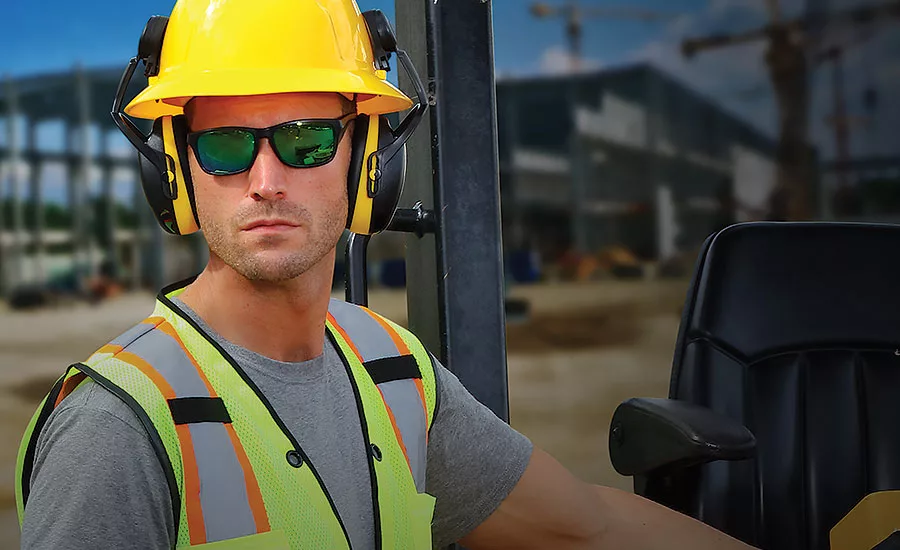
This article aims to recap basic information about hearing protection and how to help prevent long-term hearing loss. This is an important topic that should be reinforced in order to ensure workers are provided a comprehensive and efficient hearing protection products and programs. 

Work-related hearing loss is often caused by frequent exposure to loud noises and constant sounds. This type of hearing damage occurs slowly over the course of time, so while one may not notice any hearing loss presently, this doesn’t mean that one is safe from long-term effects in the future. For some people the impact of work-related hearing damage is constant and debilitating. To help address this problem, OSHA has issued requirements that employers must follow regarding hearing protection.

OSHA's occupational noise exposure guidelines are laid out under the standard 1910.95. These standards are not only important for remaining in compliance with the government regulations, but also for ensuring employees are given the correct hearing protection. 

Prolonged noise exposure guidelines

Most hearing protection is issued with an NRR rating, (Noise Reduction Rating). This is often called the attenuation rating, the measurement of the reduction of the amplitude of a noise. The NRR is a single standardized number assigned to hearing protection PPE in the United States. The current range of NRR extends from 0 to 33 decibels. The rating will look something like this, “NRR 32.” The numeric value of 32 is the number of decibels a hearing protection product prevents from entering the ear if properly worn.

Hearing protection alternatives

Different situations are best served by different types of hearing protection. When considering the alternatives, proper noise reduction and the ability to communicate need to be balanced with comfort and fit. The best, most effective hearing protection PPE is of little consequence if the workers aren’t wearing it.

There are inexpensive disposable options like foam earplugs that are very effective. Earplugs are accepted under the OSHA standard for environments on the low level of the attenuation scale. A conveniently located box of NRR 32 ear plugs is an affordable and convenient form of hearing protection for workers who enter and work in loud environments.   

Ear muffs are a more feature-rich form of hearing protection. This form of hearing protection is designed to fit over or around the wearers head and cover the ears fully. A properly fitting pair of earmuffs can provide a tremendous amount of protection since they stop the sound from entering the ear, rather than just the ear canal. There are many types of earmuffs and ranges of protection, so it is important that the right type is chosen for the right situation.

Hearing is extremely important for communication and situational awareness, especially in loud working environments. This is a key reason why “Active listening” ear muffs are gaining in popularity. Active listening earmuffs feature microphones on the outside and small speakers on the inside. These earmuffs can "listen" to the environment and permit those sounds that are at a safe volume. This makes it possible for workers to communicate in loud environments, while staying protected. The benefits of active listening technology far outweigh the additional cost in the long run. 

Active listening ear muff models equipped with Bluetooth® can connect to mobile devices to allow for phone calls or stream audio entertainment, without compromising the wearer’s ability to hear warning signals or communicate with those around them.

Notifications and testing

All of this is pointless if the employees aren’t receiving the proper information and training. OSHA mandates noise level monitoring on a regular basis. This monitoring information must be passed along to employees, so they understand the risks associated with the noise levels they encounter on the job site. 

Employers are required to provide free audiometric testing for employees that are exposed to noise levels for an extended period. Testing programs must establish a baseline for each employee and testing must occur as frequently as possible, so the proper action can be taken to address the problem. Hearing loss can impact your life on and off the job and is something you cannot reverse.

KEYWORDS: hearing protection OSHA regulatory compliance PIP

Share This Story

Looking for a reprint of this article?
From high-res PDFs to custom plaques, order your copy today!

Eric Henzie is the Marketing Manager of Industrial Safety at Protective Industrial Products. He can be reached at (518) 595-1509 or by email at ehenzie@pipusa.com. For a complete line of hearing protection visit the Protective Industrial Products (PIP) website: www.pipusa.com/hearing.

Recommended Content

JOIN TODAY
to unlock your recommendations.

Already have an account? Sign In

  • forklift safety

    Exploring the latest technologies in forklift safety

    With more staff and more stock in warehousing now more...
    Facility Safety
    By: Josh Cramer
  • welding

    All about welder’s flash or arc eye

    A flash burn is a painful inflammation of the cornea,...
    Environmental Health and Safety
  • dangerous jobs

    The 10 most dangerous jobs in the U.S.

    On-the-job deaths have been rising — hitting the highest...
    Construction Industry Safety and Health
    By: Benita Mehta
Manage My Account
  • eMagazine Subscriptions
  • ISHN Newsletter & Other Newsletter Alerts
  • Online Registration
  • Manage My Preferences
  • Subscription Customer Service

More Videos

Sponsored Content

Sponsored Content is a special paid section where industry companies provide high quality, objective, non-commercial content around topics of interest to the ISHN audience. All Sponsored Content is supplied by the advertising company and any opinions expressed in this article are those of the author and not necessarily reflect the views of ISHN or its parent company, BNP Media. Interested in participating in our Sponsored Content section? Contact your local rep!

close
  • man wearing the the Sundström SR200 Full Face Mask Respirator
    Sponsored byOHD

    5 Fit Testing Mistakes That Could Cost You

  • This image shows Magid AcuSpex polarized blue mirrored safety glasses.
    Sponsored byMagid Glove and Safety

    Construction PPE Guide: What Crews Need for Each Task

  • lone worker in confined space
    Sponsored byAlphasense Ltd.

    GET THE LEAD OUT of your Safety Oxygen Sensors!

Popular Stories

chemical safety

It Was Just Sugar: Catastrophic Safety Failures in Louisville

psychology in the workplace

Most Workplaces Measure Psychological Safety, Ignoring Psychosocial Risks

Workers in high-visibility clothing descending stairs in an industrial facility.

Faster evacuations and lower operating costs with the SST Series Solution from WatchGas Detection

top 10 most dangerous jobs

Events

July 21, 2026

When Dust Becomes a Disaster

In this webinar, attendees will gain a foundational understanding of combustible dust hazards, including the conditions that lead to fires and explosions, common ignition sources, and high-risk processes found throughout industry.

View All Submit An Event

Poll

Seasonal Readiness

With the federal heat stress prevention rule on the horizon, which area of your safety program needs the most attention?
View Results Poll Archive

Products

Surviving an OSHA Audit A Management Guide, 2nd Edition

Surviving an OSHA Audit A Management Guide, 2nd Edition

See More Products

ISHN Podcasts

Related Articles

  • noise

    Take the hearing loss quiz during “National Protect Your Hearing Month”

    See More
  • hearing

    National Protect Your Hearing Month – Time to fill the “know-do” gap

    See More
  • pedestrians

    Protect your hearing: Top ten noisiest cities in the U.S.

    See More

Events

View AllSubmit An Event
  • September 22, 2016

    Bang! Damage from impulse noise and the effectiveness of hearing protection

    Some of the most hazardous sounds we hear are brief sounds – noises from impacts and impulses. These arise from sources like household tools, construction, industrial noise, firecrackers, guns, and even automotive airbags.
View AllSubmit An Event

Related Directories

  • MSA - The Safety Co.

    WE KNOW WHAT'S AT STAKE. Unpredictable work environments are often part of the job. That's why it's critically important to have the right safety equipment at the moment it matters most. MSA's complete lines of safety solutions help protect those workers at the heart of your operation.
×

Become a Leader in Safety Culture

Build your knowledge with ISHN, covering key safety, health and industrial hygiene news, products, and trends.

JOIN TODAY
  • RESOURCES
    • Advertise
    • Contact Us
    • Directories
    • Manufacturing Division
    • Store
    • Want More
  • SIGN UP TODAY
    • Create Account
    • eMagazine
    • Newsletters
    • Customer Service
    • Manage Preferences
  • SERVICES
    • Marketing Services
    • Reprints
    • Market Research
    • List Rental
    • Survey/Respondent Access
  • STAY CONNECTED
    • LinkedIn
    • Facebook
    • YouTube
    • X (Twitter)
  • PRIVACY
    • PRIVACY POLICY
    • TERMS & CONDITIONS
    • DO NOT SELL MY PERSONAL INFORMATION
    • PRIVACY REQUEST
    • ACCESSIBILITY

Copyright ©2026. All Rights Reserved BNP Media, Inc. and BNP Media II, LLC.

Design, CMS, Hosting & Web Development :: ePublishing