ISHN logo
search
cart
facebook twitter linkedin youtube
  • Sign In
  • Create Account
  • Sign Out
  • My Account
ISHN logo
  • NEWS
    • Today's News
    • Global Safety News
    • Government Regulations
  • PRODUCTS
    • Product Innovations
    • Featured Products
  • TOPICS
    • Environmental Health and Safety
    • Facility Safety
    • Workplace Health
    • Occupational Safety
    • PPE
    • More Topics
  • CONSTRUCTION
  • TECHNOLOGY
  • COLUMNS
    • Best Practices
    • Dave Johnson: What’s going on
    • Editorial Comments
    • Leading Safety
  • MULTIMEDIA
    • ISHN Podcast
    • Videos
    • Cold Stress Education Quiz
    • Webinars
    • White Papers
  • MORE
    • Buyer's Guide
    • Newsletters
    • Convention Companion
    • Polls
    • Events
    • ISHN Store
    • Sponsor Insights
  • EMAGAZINE
    • eMagazine
    • Archived Issues
    • Contact
    • Advertise
  • JOIN TODAY!
Today's Safety NewsOccupational SafetyEnvironmental Health and SafetyColumnsSafety Industry White PapersEditorial Comments: Safety & Health | ISHNGlobal Safety NewsOSHA Workplace HealthWorkplace Training Strategies

Another country bans glyphosate use
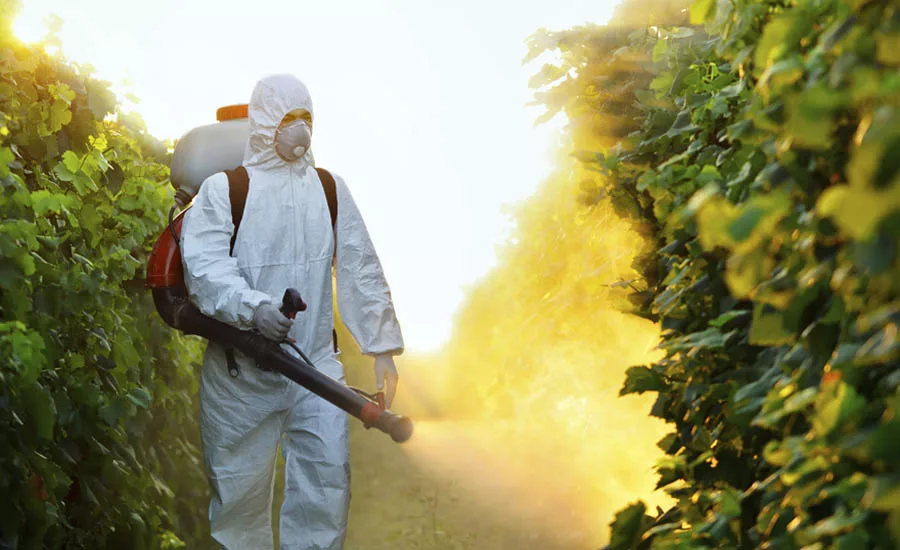
pesticide
January 21, 2020

Luxembourg has become the first European Union (EU) country to completely ban products containing glyphosate, the controversial herbicide at the center of high-profile lawsuits, and conflicting scientific studies and health claims. Glyphosate has already been banned in Vietnam and Thailand. Mexico has announced plans to do the same.

Luxembourg’s recently enacted ban will go into effect in three phases: authorization to market it will be withdrawn on February 1, 2020. Stocks will be allowed to be used up until June 30. Finally, the total ban on the use of herbicides containing glyphosate will go into effect on December 31, 2020. The measure was announced last month.

Glyphosate, which controls broadleaf weeds and grasses, has been registered as a pesticide in the U.S. since 1974 and has been reviewed and approved by the EPA in regular reassessments since then.

Its use in RoundUp, a popular weed killer used on farms as well as lawns, has led to multi-million-dollar jury awards to people who claim that exposure to the product caused their non-Hodgkins lymphoma.

The EPA and Monsanto – RoundUp’s manufacturer – claim the product is safe when used according to the directions on the label. The EPA says on its website that it “continues to find that there are no risks to public health when glyphosate is used in accordance with its current label and that glyphosate is not a carcinogen… Glyphosate products can be safely used by following label directions. There are no risks to children or adults from currently registered uses.”

Monsanto cites numerous studies it says demonstrates that there is no health risk from using RoundUp. However, a study by researchers at the University of Washington found that glyphosate raises the risk of non-Hodgkins lymphoma to those exposed to the substance by 41 percent. The World Health Organization's International Agency for Research on Cancer said glyphosate is "probably carcinogenic to humans," but regulatory agencies in Canada, Australia, Germany, New Zealand and Japan have classified it as noncarcinogenic.

To complicate the issue further, Bayer – the parent company of Monsanto – claims the use of RoundUp is actually good for the environment, because it reduces the need for tillage, a traditional form of weed control that involves turning over the soil. According to Bayer, tillage releases greenhouse gases stored in the soil and worsens erosion, which robs the soil of nutrients.

While the debate rages on, measures partially banning glyphosate are being adopted in various EU countries, although not without pushback from supporters of products that contain the chemical. In Austria, for instance, the parliament voted to ban glyphosate in July 2019. However, in December 2019, the Austrian home affairs ministry announced that the ban would not be implemented, thereby avoiding a conflict with the European Commission on a procedural aspect (the lack of notification of the measure to the European Commission). It is now up to the new Austrian government formed this month to decide the question. However, this government is a coalition between the Christian Conservatives, who are in favor of retaining glyphosate-based herbicides on the national market, and the Greens, who favor of banning it. In September 2019, Germany announced that it would ban such products as of 2023, even if the EU renewed the authorization of this substance.

KEYWORDS: cancer hazardous materials hazmat health and wellness

Share This Story

Looking for a reprint of this article?
From high-res PDFs to custom plaques, order your copy today!

Recommended Content

JOIN TODAY
to unlock your recommendations.

Already have an account? Sign In

  • forklift safety

    Exploring the latest technologies in forklift safety

    With more staff and more stock in warehousing now more...
    Workplace Training Strategies
    By: Josh Cramer
  • welding

    All about welder’s flash or arc eye

    A flash burn is a painful inflammation of the cornea,...
    Environmental Health and Safety
  • dangerous jobs

    The 10 most dangerous jobs in the U.S.

    On-the-job deaths have been rising — hitting the highest...
    Government Safety Regulations
    By: Benita Mehta
Manage My Account
  • eMagazine Subscriptions
  • ISHN Newsletter & Other Newsletter Alerts
  • Online Registration
  • Manage My Preferences
  • Subscription Customer Service

More Videos

Sponsored Content

Sponsored Content is a special paid section where industry companies provide high quality, objective, non-commercial content around topics of interest to the ISHN audience. All Sponsored Content is supplied by the advertising company and any opinions expressed in this article are those of the author and not necessarily reflect the views of ISHN or its parent company, BNP Media. Interested in participating in our Sponsored Content section? Contact your local rep!

close
  • man wearing the the Sundström SR200 Full Face Mask Respirator
    Sponsored byOHD

    5 Fit Testing Mistakes That Could Cost You

  • This image shows Magid AcuSpex polarized blue mirrored safety glasses.
    Sponsored byMagid Glove and Safety

    Construction PPE Guide: What Crews Need for Each Task

  • lone worker in confined space
    Sponsored byAlphasense Ltd.

    GET THE LEAD OUT of your Safety Oxygen Sensors!

Popular Stories

SpaceX 7 launch

OSHA Investigating Fatal Fall at SpaceX Starbase

Automated loading dock equipment

After March 2026 Rivian Death, Safety Managers Reassess Loading Dock Systems Under OSHA's Warehouse Emphasis Program

psychology in the workplace

Most Workplaces Measure Psychological Safety, Ignoring Psychosocial Risks

top 10 most dangerous jobs

Poll

Seasonal Readiness

With the federal heat stress prevention rule on the horizon, which area of your safety program needs the most attention?
View Results Poll Archive

Products

Surviving an OSHA Audit A Management Guide, 2nd Edition

Surviving an OSHA Audit A Management Guide, 2nd Edition

See More Products

ISHN Podcasts

Related Articles

  • Global hiring predictions for 2013 depend upon country

    See More
  • GHS Labeling

    Chemical labeling requirements vary from country to country

    See More
  • FAA bans PEDs in the cockpit

    See More

Events

View AllSubmit An Event
  • June 26, 2025

    NFPA 660: How to Use the New Consolidated Combustible Dust Standard

    ON DEMAND: Combustible dust and particulate solids can pose a serious hazard in many industries. Over the last 100 years, the National Fire Protection Association (NFPA) committees created many industry- and commodity-specific standards to mitigate those hazards.
View AllSubmit An Event

Related Directories

  • Logitrans US

    With more than 85 years of experience, Logitrans is one of the leading manufacturers of world class material handling equipment. Logitrans delivers ergonomic material handling solutions that improve workplace safety, reduce injury risk, and enhance efficiency. Our equipment supports EHS leaders in creating safer, more productive environments across industrial, food, and pharmaceutical operations, enabling safer lifting, moving, and positioning of materials with measurable performance gains.
×

Become a Leader in Safety Culture

Build your knowledge with ISHN, covering key safety, health and industrial hygiene news, products, and trends.

JOIN TODAY
  • RESOURCES
    • Advertise
    • Contact Us
    • Directories
    • Manufacturing Division
    • Store
    • Want More
  • SIGN UP TODAY
    • Create Account
    • eMagazine
    • Newsletters
    • Customer Service
    • Manage Preferences
  • SERVICES
    • Marketing Services
    • Reprints
    • Market Research
    • List Rental
    • Survey/Respondent Access
  • STAY CONNECTED
    • LinkedIn
    • Facebook
    • YouTube
    • X (Twitter)
  • PRIVACY
    • PRIVACY POLICY
    • TERMS & CONDITIONS
    • DO NOT SELL MY PERSONAL INFORMATION
    • PRIVACY REQUEST
    • ACCESSIBILITY

Copyright ©2026. All Rights Reserved BNP Media, Inc. and BNP Media II, LLC.

Design, CMS, Hosting & Web Development :: ePublishing