Frequently-asked questions about controlling dangerous dusts
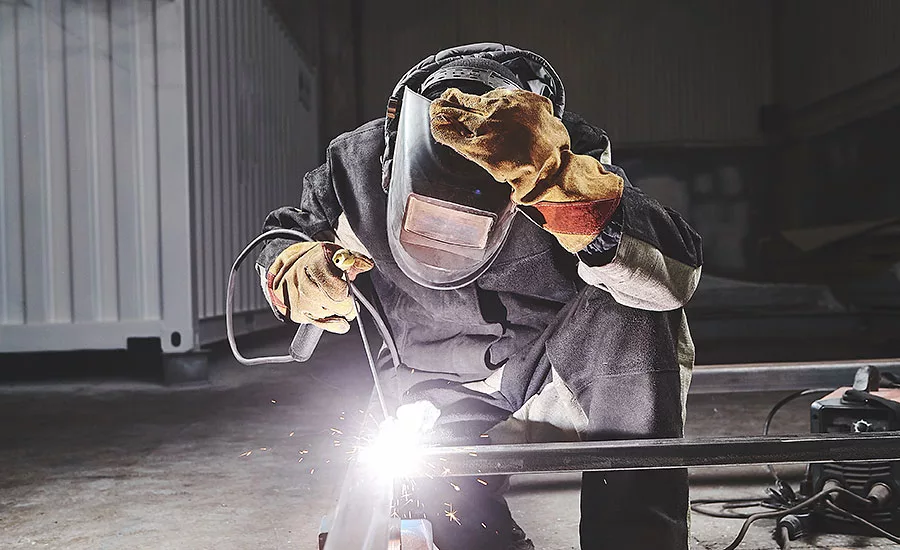
Dust particles become airborne during indoor metalworking processes like welding and plasma cutting. They also become airborne during the manufacturing and processing of food, chemicals, pharmaceuticals and other dry products. Some of these particles are toxic and/or combustible, so it is important to shield workers, products and expensive equipment from them. Here are the most frequently asked questions about controlling dangerous dusts in order to maintain a safe work environment.
Q. What makes a dust dangerous?
When products are manufactured indoors, small particles often become airborne and have the potential to do serious harm to people, products, equipment and/or facilities. Dusts that are combustible can cause fires and explosions. Other dusts can contain ingredients that are toxic when swallowed or inhaled. Others can cross-contaminate other products that are manufactured in the same facility. When combustible dusts are collected from the air into a dust collection system, the system itself can be a source of combustible dust explosions if not properly protected. Besides being required to do so by OSHA, companies are morally obligated to protect workers from these hazards.
Q. Which industries most often deal with dangerous dusts?
Many industries have combustible dust, but the following are at most risk: metalworking facilities, welding shops, woodworking shops, chemical processors, food manufacturers, and pharmaceutical companies that make solid dose products (tablets).
Q. Which agencies regulate dangerous dusts?
OSHA is ultimately responsible for protecting employees from dangerous dusts. However, the National Fire Protection Agency (NFPA) plays a major role in recommending standards and guidelines for managing combustible dusts. If manufacturers don’t follow these guidelines, they can be fined by OSHA, face legal scrutiny and risk a damaged reputation.
Q. What are common dust hazards in the food processing industry?
The biggest threats are occupational exposure and combustible dust explosions. Dust can cause dermatitis and allergic reactions. More seriously, dust particles can become embedded in the lungs and can cause respiratory problems like asthma and lung cancer. In addition, many solid food ingredients are combustible, including sugar, starch, spices, proteins and flour. Lastly, food particles can damage other food products. For example, particles that contain gluten or peanuts could cross-contaminate products that are supposed to be gluten free, causing severe allergic reactions for customers who trust those product labels.
OSHA requires companies to control dust emissions in indoor workplaces and to comply with legal limits set for each ingredient and material. If no legal limits are applicable, the company must define in writing, implement and measure its own environmental safety plan. The FDA’s Food Safety Modernization Act requires food processing facilities to implement measures to prevent or minimize contamination hazards.
Q. What are common dust hazards in the chemical processing industry?
The biggest threats are occupational exposure to toxic dusts and combustible dust explosions. Processes like blending, coating, conveying, crushing, weighing, milling, mixing and pelletizing all generate dust that will become airborne. If not captured and contained, these dusts expose workers to hazards and can cause combustible dust incidents. OSHA requires chemical companies to comply with permissible exposure limits (PEL) for workers. The PEL is the maximum air concentration to which a worker can be safely exposed for an eight-hour shift without potentially suffering adverse health affects. For example, the PEL of zinc oxide is 15 micrograms per cubic meter of air.
Q. What are common dust hazards in the pharmaceutical manufacturing?
As above, occupational exposure is a common hazard because active pharmaceutical ingredients (APIs) can be toxic and allergenic. It is critical to understand the toxicological properties of this dust to determine the PEL of each API. In addition, APIs can travel through the air and cross-contaminate other pharmaceutical products. Lastly, many pharmaceutical ingredients are combustible and can cause explosions if not handled correctly.
Q. What are common dust hazards in metalworking facilities?
Metalworking facilities use processes like welding, thermal cutting, sanding and polishing are at the most risk because these processes send tiny metal particles into the air that can be toxic. This is especially important if you work with iron oxide, lead oxide, manganese, nickel, and chromium. Metalworking facilities must follow OSHA permissible exposure limit (PEL) for these and other metal dusts. In addition, many metal dusts are highly combustible and can increase the chances of an explosion in your dust collector. Dust collection systems must be sized correctly and have the proper filters and protection devices to mitigate the risk of an explosion. Burnable dusts pose a higher risk for a combustible dust explosion in a dust collector. Even a small amount of dust can have severe consequences.
Q. What equipment is used to capture hazardous dusts?
Industrial dust collectors are used to capture and contain dust and other harmful particles from the air in plants, factories and other processing facilities. Much of this airborne dust is too small to be seen with the naked eye. Collectors capture dust by continually cycling the dust-laden airstream through a series of filter cartridges. The dust remains on the cartridges, and the clean air is returned to the work environment. Dust collectors are generally large pieces of equipment that can be placed inside or outside the manufacturing facility.
Q. How does an explosion occur in a dust collector?
A dust collector is a closed vessel, and any closed vessel that is full of dry particles is ripe for an explosion. An explosion usually begins when a suspended cloud of combustible dust is present in high concentration inside the collector. As the fan draws in large volumes of air, an outside spark or ember can be sucked into the collector and collide with the dust cloud under pressure, triggering an explosion. The source of the spark may be a production process, a cigarette butt thrown into a dust capture hood or a static electricity discharge from improperly grounded nearby equipment.
Q. How do you protect a dust collector from a combustible dust explosion?
First of all, it is important to have all collectors sized properly for the facility they will be handling. Second, it is important to understand that combustible dust explosions can’t always be prevented from occurring in the dust collector. However, they can put systems in place that ensure that the explosion doesn’t cause harm. These systems are called explosion protection systems, and there are a variety of options. The most common is explosion venting because it is the most cost-effective, but some facilities may also be required to have an explosion isolation valves or integrated safety monitoring filters. All of these mitigate incidents and prevent the flame front and pressure to travel to process areas. The NFPA provides guidelines to design, locate, install and maintain these explosion protection devices to minimize harm to personnel as well as structural and mechanical damage.
Q. What does explosion venting do?
A well-designed explosion vent functions as a weak element in the dust collector’s pressure envelope. It relieves internal combustion pressure (back pressure) to keep the collector from blowing up into pieces. The vent’s function is illustrated in the series of photos below that show a staged deflagration in a cartridge dust collector equipped with an explosion vent.
Typically, the collector is located outside so that it vents away from buildings and populated area to a safe location. If it is properly equipped and located indoors, standards mandate that you designate a safe area. While explosion venting will usually save the dust collector from being a total loss, the collector can sustain major internal damage. Nonetheless, if personnel remain safe and facility structural damage is minimized, the explosion venting equipment has done its job.
Q. Which facilities are required to have their dust tested?
NFPA standards require a dust hazard analysis (DHA) for any facilities that generate, handle or store potentially explosive dust. The burden of proof is on manufacturers to demonstrate that their dust is not combustible, so it is important for them to have their process dust tested by a valid third party testing lab and keep records on file proving that it is not combustible.
If tests show that the facility has combustible dust, it is required by NFPA 652 to complete a dust hazard analysis (DHA) of their dust collection systems. The also need to keep this report on file to show when requested by the local fire marshal or other authority having jurisdiction. In addition, explosion venting equipment must be inspected at least annually based on the documented operating experience.
Q. How are vents and discharge ducts sized to make sure they are right for a dust collector?
Chapters 7 through 9 of NFPA 68 provide the calculations to use for properly sizing explosion vents, vent discharge ducts (also called vent ducts) and other components. A reputable dust collector supplier will follow the vent sizing equations in Chapter 8 (Venting of Deflagrations of Dusts and Hybrid Mixtures). They can also supply a calculations sheet that becomes part of the documentation you keep on file to demonstrate your plant’s compliance.
Q. Should all dust collectors be installed outdoors?
Obviously, placing dust collectors outdoors is the safest option if they vent away from buildings and populated areas. However, it isn’t always feasible to place them outside. Dust collectors placed indoors must have the appropriate explosion protection system if they will handle any combustible dusts.
Q. Is it safe to recirculate the air from your dust collector back into the work environment?
Recirculating heated or cooled air back into the workspace can provide significant energy savings and eliminate the cost to replace that conditioned air. Containing the air indoors also avoids the time-consuming permitting involved when contaminated air is exhausted outside. This can be safely done even if the facility handles explosive dust by outfitting the dust collector with a safety monitoring filter. This helps isolate the downstream equipment from the progression of a flame front during an explosion.
Looking for a reprint of this article?
From high-res PDFs to custom plaques, order your copy today!