Prepare facilities and frontline employees to respond to oil sheens and spills
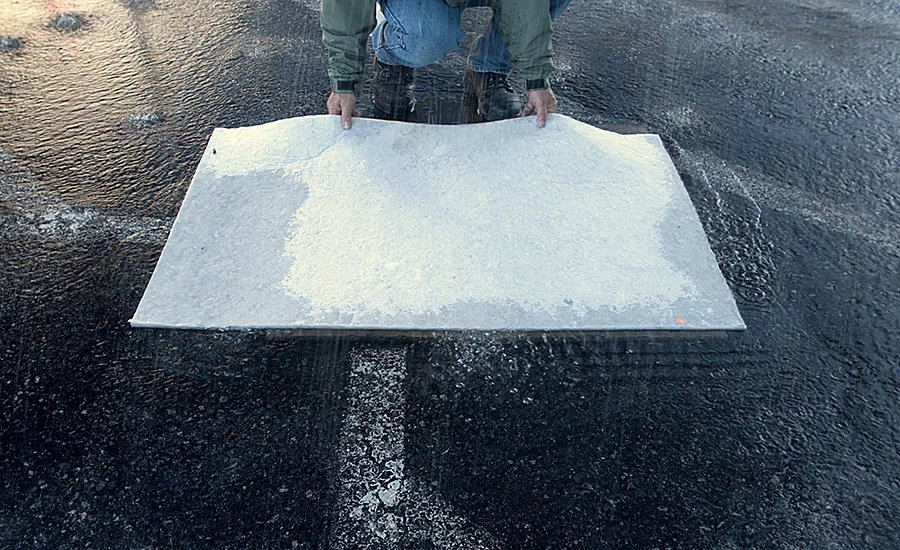
Arriving at a worksite on a rainy morning, the truck’s headlights pick up the unmistakable, multicolor hues of an oil sheen. Well-trained employees will immediately recognize that this isn’t going to be a routine day. They’ll also know that finding the source of the sheen and fixing it will be a top priority - after the storm drain is protected.
Frontline workers are usually the first to discover oil leaks, drips and spills. Whether it's discovered upon arrival, found during a routine inspection or is the result of an operational error; even small oil leaks and spills can quickly escalate from being a minor nuisance to a large-scale event if they enter storm drains.
The sooner that employees can get an oily sheen under control, the easier — and faster — it will be to clean up. If they can prevent it from reaching storm drains and other environmentally sensitive areas, they may also be able to help environmental managers avoid time-consuming and costly release reporting.
Oil sheens may appear as a slight discoloration or a dark stain on paved surfaces when the weather is dry. In wet weather, these discolorations and stains are easily lifted from the surface and float on top of rainwater. When this happens, very small oil sheens may appear as a cloudy discoloration. Small sheens typically display swirly, rainbow colors as they reflect light and move across the top of storm water.
Larger refined oil spills also float on the water’s surface, but they will be whatever color the oil happens to be: from a very pale yellow to dark black. Often, when there is a large oil spill in wet weather, small sheens and discolorations will also be present.
Identifying sources of oily sheen
Oil sheens may be the result of a vehicle that leaked while it was onsite, but has since left; making the source of the sheen a mystery. However, a vast majority of oil sheens can be traced to an onsite source.
Oil-filled equipment is a common source of oil leaks and drips. Equipment may include mobile vehicles as well as stationary machinery, especially items with hydraulic systems. For some of these items, a leak or drip might indicate the need for maintenance. For others, leaks and drips may be a normal part of their operation.
Bulk liquid storage tanks that are in good condition and are well maintained typically don't leak or drip. They can, however, develop leaks or even fail when subjected to hurricanes, tornadoes, severe weather or earthquakes.
Piping, hoses, valves and fittings connected to tanks are more likely sources of leaks, drips and failures in bulk fluid storage areas. This is one of the reasons why engineers design secondary containment systems for bulk storage tanks to also include containment for these items within their walls.
Additional sources of outdoor oily sheens are fluid dispensing and waste collection areas. When oil and fuel moves from one container to another, small leaks and drips are common. If these are not promptly cleaned up, they get tracked to other areas and eventually end up being carried to drains with storm water.
Preparing for outdoor oil leaks and spills
Small oil leaks and drips tend to stay near their source when the weather is dry. Left unchecked, they may even create a small puddle over time. However, when it rains, oil quickly spreads. In fact, in a moderate rain storm, it can easily reach speeds of four to six miles per hour on paved surfaces.
Some preparations can be made in anticipation of oil leaks and spills. For example, many facilities with National Pollutant Discharge Elimination System (NPDES) permits and/or Spill Prevention Control and Countermeasure (SPCC) Plans establish the best practice of routinely placing drip pans or absorbents under vehicles, equipment, valves or hoses which have a tendency to leak.
In dry weather, these items provide a quick indication of leaks and can help to identify the source of the leak. They also make cleanup easier because the oil doesn’t have to be removed from the soil, concrete or asphalt. The pan can be emptied or the absorbents replaced.
In wet weather, drip pans can overfill and absorbents can become coated with rainwater or float away, making them ineffective at absorbing new oil leaks. For unmanned sites, or in areas that are not monitored daily, filtering drip pans that capture oil and allow clean water to pass through prevent oily sheens from becoming waterborne.
Facilities can also proactively guard storm drains with in-drain or above-drain filtering media. Although it will not prevent large oil spills from being released, drain filters can capture trace oil sheens, sediment and other storm-water pollutants.
Additionally, being prepared involves having plans and materials available to respond quickly to sheens and spills whenever and wherever they may happen. For some facilities, this may mean stocking response supplies in a central location that is easily accessible. For others, supplies may be stocked in each area where oil is stored, handled or transferred.
At unmanned sites, employees may keep a stock of response supplies on their work vehicles. Some facilities, especially those who have a lot of outdoor equipment and activities even choose to have small response kits on each piece of equipment. Both of these options allow employees to respond immediately and control oily leaks and spills until additional response resources arrive.
Training employees to respond
Establishing and adhering to standard operating procedures, conducting preventative maintenance and performing routine inspections are all best practices that help reduce the likelihood of oil leaks, drips and spills. In ideal circumstances these practices would always work and employees would never experience an oil sheen or spill. But, few things operate in ideal conditions 100 percent of the time.
Even if outside contractors will be utilized for cleaning up spills, training frontline employees to recognize oil sheens and spills is essential because they are the ones who are most likely to discover an oil sheen or spill. Teaching them how to control sheens and small spills by guarding storm drains and protecting environmentally sensitive areas until professional cleanup teams arrive can prevent costly remediation and fines for releases.
But, chances are, they don’t have to deal with oil sheens and spills every day. It may be months or even years until they experience one. By then, the things that they learned in a training that took place shortly after they were hired may not be fresh in their minds.
Incorporating refreshers into toolbox talks and hosting response drills at least annually can help to improve recall. Keeping instructions or QR codes with response supplies also helps to provide information on how to use supplies when they are needed.
Providing employees with effective response tools is another critical part of the equation. Audit the current response supplies that are stocked in kits at least twice a year. If they have degraded due to UV exposure or age; or they simply aren’t effective response tools, replace them. As items are replaced, update plans and training modules to reflect new supplies and tools.
Most frontline employees don’t start their day anticipating the interruption of an oil sheen or spill. Identifying areas where sheens and spills are most likely, stocking effective response tools and training help employees to take immediate action prevents releases to the environment and minimizes cleanup time.
Looking for a reprint of this article?
From high-res PDFs to custom plaques, order your copy today!