ISHN logo
search
cart
facebook twitter linkedin youtube
  • Sign In
  • Create Account
  • Sign Out
  • My Account
ISHN logo
  • NEWS
    • Today's News
    • Global Safety News
    • Government Regulations
  • PRODUCTS
    • Product Innovations
    • Featured Products
  • TOPICS
    • Environmental Health and Safety
    • Facility Safety
    • Workplace Health
    • Occupational Safety
    • PPE
    • More Topics
  • CONSTRUCTION
  • TECHNOLOGY
  • COLUMNS
    • Best Practices
    • Dave Johnson: What’s going on
    • Editorial Comments
    • Leading Safety
  • MULTIMEDIA
    • ISHN Podcast
    • Videos
    • Cold Stress Education Quiz
    • Webinars
    • White Papers
  • MORE
    • Buyer's Guide
    • Newsletters
    • Convention Companion
    • Polls
    • Events
    • ISHN Store
    • Sponsor Insights
  • EMAGAZINE
    • eMagazine
    • Archived Issues
    • Contact
    • Advertise
  • JOIN TODAY!
Government Safety RegulationsOccupational SafetyIndustrial HygieneOil and Gas Industry Safety & Health

Avoid dust-ups with OSHA over NFPA 652 Compliance
By Megan E. Baroni, Christopher Y. Eddy, Peter Knight, Jonathan H. Schaefer
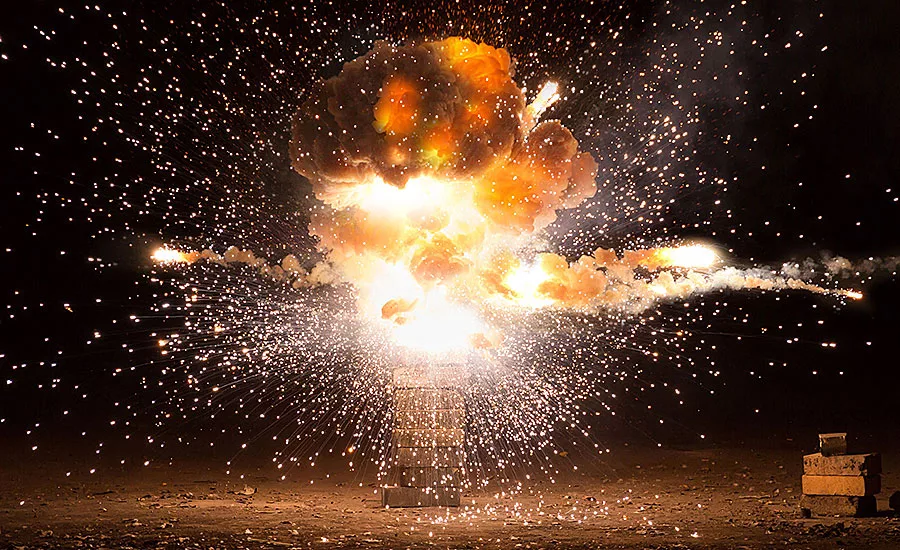
CombustibleDust-RobinsonCole-mainPic-forweb.jpg
March 22, 2021

For more than a decade, OSHA has placed an emphasis on combustible dust hazards, which have resulted in numerous deadly incidents over the years. While no OSHA standard directly addresses combustible dust, this has not hindered OSHA enforcement. Instead, OSHA has relied on the General Duty Clause and reference to the National Fire Protection Association (NFPA) standards when citing employers for combustible dust hazards.


What is combustible dust?

OSHA defines combustible dust as “a combustible particulate solid that presents a fire or deflagration hazard when suspended in air or some other oxidizing medium over a range of concentrations, regardless of particle size or shape.” When suspended in the right concentration and exposed to an ignition source, these dust particles can lead to fires, deflagrations, or explosions that can cause chain reactions throughout a facility, with potentially deadly results.


National emphasis program

To help protect employees from these hazards, OSHA issued its Combustible Dust National Emphasis Program (NEP) in March of 2008 after a dust explosion at a sugar refinery. The NEP provides inspectors with a set of guidelines to follow when inspecting workplaces in which combustible dusts could be found. The NEP does not create new rules or establish enforcement parameters, but it does provide that OSHA will inspect for, and issue fines related to, combustible dust. While the NEP does not create any specific standard that employers must adhere to, it does state that the NFPA standards should be consulted to identify potential hazards and abatement methods. The NEP also states that the NFPA standards are “useful in providing evidence of industry recognition of the hazard.”

Since adopting the NEP, OSHA inspectors have cited employers for combustible-dust hazards under the General Duty Clause. Due to the fact OSHA has not adopted a specific combustible-dust standard, the General Duty Clause remains OSHA’s primary regulatory enforcement tool to protect employees from these hazards.


General Duty Clause

The General Duty Clause (GDC) requires an employer to provide each employee with “employment and a place of employment which are free from recognized hazards that are causing or are likely to cause death or serious physical harm.” The GDC applies to all OSHA-regulated employers, which includes most private sector employers. OSHA routinely relies upon the GDC when a specific OSHA standard is not set forth relative to a particular hazard.

For OSHA to successfully cite a GDC violation, the relevant hazard must be: (1) recognized by the industry or the employer; (2) have caused, or be likely to cause, death or serious physical harm; and (3) have a feasible means available to correct the hazard. OSHA has cited the NFPA combustible-dust standards as evidence of all three GDC requirements. Many OSHA combustible-dust citations also involve poor hazard communication, substandard housekeeping, under-maintained electrical components, a lack of appropriate personal protective equipment, or a lack of fire extinguisher.


NFPA 652

The NFPA previously established standards for specific industries or commodities, and in 2015 created NFPA 652 – Fundamentals of Combustible Dust (NFPA 652). NFPA 652 is intended to be an overarching standard applicable to all facilities and processes. Over the last several years, NFPA 652 has become the go-to standard for all industries with the potential for combustible-dust hazards.

NFPA 652 was also intended to provide facilities with basic guidance on how to handle the hazards associated with combustible dust. However, NFPA 652 guidelines are not always consistent with commodity-specific standards. According to NFPA’s guidelines, when faced with such inconsistencies, the facility can decide which of the two standards is more appropriate for the facility to follow. NFPA 652 provides facility layouts and building requirements for fire protection and requires facilities to understand and monitor the combustion properties of the materials they are using. There are also prescriptive requirements for certain pieces of equipment, and management system requirements for facility operations.


Dust Hazard Analysis

NFPA 652 also requires that all existing and new facilities complete a dust hazard analysis (DHA). The 2015 NFPA 652 standard originally established September 7, 2018 as the deadline to complete a DHA. However, in 2019, NFPA 652 was revised and the deadline was extended to September 7, 2020. That date has not been further extended. Once a DHA has been completed, it must be reviewed and updated every five (5) years. DHAs must also be completed for new processes or equipment added to facilities.

A DHA is intended to review a facility’s processes to identify the presence and potential for combustible dust, site-specific hazards, existing and recommended safeguards, and an implementation plan. The chief objective of a DHA is to identify all the hazards within the facility or process, not just the ones known to be present at the time.

Completion of a DHA does not require hiring an outside consultant, though doing so can often be an efficient approach. A DHA can be completed by an internal team, which can include personnel such as plant managers, maintenance, quality control, shop floor supervisors, or anyone else who is knowledgeable about potential issues associated with combustible dust. For larger facilities and processes, a team of people will likely be required to complete a DHA.

Whether the DHA is led by internal or external personnel, it must be performed by or at the direction of a qualified person. In this case, qualification includes familiarity with combustible dust and the hazards it creates, as well as knowledge of the specific processes being inspected. If a facility does not have internally someone qualified, then it would be necessary to engage an outside consultant capable of performing a DHA.


Enforcement risk

Facilities that have known combustible-dust hazards and have not yet completed a DHA should do so as soon as possible. While NFPA 652 is not a legally binding standard, OSHA looks to the NFPA standards, and NFPA 652 in particular, to establish GDC violations regarding combustible dust.

The absence of a complete and up-to-date DHA presents a citation risk during an OSHA inspection. With the deadline to complete a DHA now passed, facilities with a recognized combustible-dust hazard and an insufficient DHA could be subject to citations for serious or willful violations.

Once a DHA is completed, employers should look to NFPA 652 and the commodity- specific standards to determine what kinds of remedial actions will be necessary to reduce risks to employees and the possibility of an OSHA inspection or citation.

While many employers may be capable of identifying, addressing, and mitigating combustible-dust hazards, including compliance with NFPA 652, it may be necessary or appropriate for others to engage outside technical and legal consultants to ensure their workplace is kept safe.

KEYWORDS: Combustible dust dust protection hazards

Share This Story

Looking for a reprint of this article?
From high-res PDFs to custom plaques, order your copy today!

Megan E. Baroni is a partner at Robinson+Cole law firm. She has extensive experience counseling clients on a wide variety of environmental, health, and safety issues. She frequently represents manufacturers and distributors and is a contributing author to the firm's Manufacturing Law Blog, focusing on environmental, health, and safety trends that will impact the industry. Read more about Megan. 

Christopher Eddy is an associate in the law firm Robinson + Cole's Environmental, Energy + Telecommunications Group, and focuses his practice in the areas of environmental law, environmental litigation, retail energy supply and utility regulatory law. Read more about Christopher. 

Peter Knightis president of Context America.

Jon schaefer

Jonathan Schaefer, a partner at the law firm Robinson + Cole's Environmental, Energy + Telecommunications Group, focuses his practice on environmental compliance counseling, permitting, site remediation, occupational health and safety, energy regulatory compliance and siting, and litigation related to federal and state regulatory programs. Read more about Jonathan.

Recommended Content

JOIN TODAY
to unlock your recommendations.

Already have an account? Sign In

  • forklift safety

    Exploring the latest technologies in forklift safety

    With more staff and more stock in warehousing now more...
    Workplace Training Strategies
    By: Josh Cramer
  • welding

    All about welder’s flash or arc eye

    A flash burn is a painful inflammation of the cornea,...
    Environmental Health and Safety
  • dangerous jobs

    The 10 most dangerous jobs in the U.S.

    On-the-job deaths have been rising — hitting the highest...
    Construction Industry Safety and Health
    By: Benita Mehta
Manage My Account
  • eMagazine Subscriptions
  • ISHN Newsletter & Other Newsletter Alerts
  • Online Registration
  • Manage My Preferences
  • Subscription Customer Service

More Videos

Sponsored Content

Sponsored Content is a special paid section where industry companies provide high quality, objective, non-commercial content around topics of interest to the ISHN audience. All Sponsored Content is supplied by the advertising company and any opinions expressed in this article are those of the author and not necessarily reflect the views of ISHN or its parent company, BNP Media. Interested in participating in our Sponsored Content section? Contact your local rep!

close
  • man wearing the the Sundström SR200 Full Face Mask Respirator
    Sponsored byOHD

    5 Fit Testing Mistakes That Could Cost You

  • This image shows Magid AcuSpex polarized blue mirrored safety glasses.
    Sponsored byMagid Glove and Safety

    Construction PPE Guide: What Crews Need for Each Task

  • lone worker in confined space
    Sponsored byAlphasense Ltd.

    GET THE LEAD OUT of your Safety Oxygen Sensors!

Popular Stories

SpaceX 7 launch

OSHA Investigating Fatal Fall at SpaceX Starbase

Automated loading dock equipment

After March 2026 Rivian Death, Safety Managers Reassess Loading Dock Systems Under OSHA's Warehouse Emphasis Program

psychology in the workplace

Most Workplaces Measure Psychological Safety, Ignoring Psychosocial Risks

top 10 most dangerous jobs

Poll

Seasonal Readiness

With the federal heat stress prevention rule on the horizon, which area of your safety program needs the most attention?
View Results Poll Archive

Products

Surviving an OSHA Audit A Management Guide, 2nd Edition

Surviving an OSHA Audit A Management Guide, 2nd Edition

See More Products

ISHN Podcasts

Related Articles

  • facility inspection

    COVID-19 and its impact on the OSHA inspection process

    See More
  • coronavirus

    COVID-19 and OSHA: Where we started and where we are now

    See More
  • Legal issues

    Breaking the chain of “substantial continuity” — Tenth Circuit clarifies test for repeat OSHA violations

    See More

Related Products

See More Products
  • Top Ten Pitfalls in OSHA Recordkeeping and How to Avoid Them

  • 1119010160.jpg

    Guidelines for Combustible Dust Hazard Analysis

  • 9781264257829_24.jpeg

    Construction Safety: Health, Practices and OSHA

See More Products

Events

View AllSubmit An Event
  • June 26, 2025

    NFPA 660: How to Use the New Consolidated Combustible Dust Standard

    ON DEMAND: Combustible dust and particulate solids can pose a serious hazard in many industries. Over the last 100 years, the National Fire Protection Association (NFPA) committees created many industry- and commodity-specific standards to mitigate those hazards.
View AllSubmit An Event

Related Directories

  • Scientific Dust Collectors

    Scientific Dust Collectors (SDC) began in 1981 when our first patent for improving filter cleaning was issued. Our patented UniFlow Supersonic Nozzle -based cleaning system is where it all starts. Combined with our High Side Inlets, Wide Filter Spacing, and Inlet Baffling, we are able to guarantee performance, efficiency, and filter life. ASHRAE 199 Test Lab on site.
  • SonicAire

    SonicAire is the global leader in engineered solutions for combustible dust control. Our patented fan systems use BarrierAire™ technology to prevent dust from settling in overhead and hard-to-reach areas—helping facilities stay compliant with OSHA, NFPA, and insurance requirements. Thousands of manufacturers across wood products, food, grain, textiles, plastics, and more trust SonicAire to: Eliminate the risk of dust-related fires and explosions Automate housekeeping in overhead areas Protect worker health with improved air quality Reduce manual cleaning costs and production downtime Our systems are engineered for your facility, installed with precision, and backed by our Compliance Guarantee—because when it comes to safety, good enough is never enough. Create a cleaner, safer, and more compliant facility with SonicAire. ���� Visit www.SonicAire.com or call (336) 712-2437.
×

Become a Leader in Safety Culture

Build your knowledge with ISHN, covering key safety, health and industrial hygiene news, products, and trends.

JOIN TODAY
  • RESOURCES
    • Advertise
    • Contact Us
    • Directories
    • Manufacturing Division
    • Store
    • Want More
  • SIGN UP TODAY
    • Create Account
    • eMagazine
    • Newsletters
    • Customer Service
    • Manage Preferences
  • SERVICES
    • Marketing Services
    • Reprints
    • Market Research
    • List Rental
    • Survey/Respondent Access
  • STAY CONNECTED
    • LinkedIn
    • Facebook
    • YouTube
    • X (Twitter)
  • PRIVACY
    • PRIVACY POLICY
    • TERMS & CONDITIONS
    • DO NOT SELL MY PERSONAL INFORMATION
    • PRIVACY REQUEST
    • ACCESSIBILITY

Copyright ©2026. All Rights Reserved BNP Media, Inc. and BNP Media II, LLC.

Design, CMS, Hosting & Web Development :: ePublishing