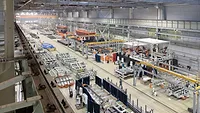
7 types of workers for a fully functional production floor

As with any complex workspace, a production floor comprises a host of different workers, each with their respective duties, types of expertise, and lines of reporting. Organization of work is essential, which is why every type of worker needs to be managed in some way. Even the production head reports to someone.
For the purpose of this article, the term “production floor” will refer to all interlinked activities and processes required, from the production of raw materials or inputs, to the finished products or outputs. With that in mind, here is some insight into the seven principal types of workers you need for a fully functional production floor.
1. Machine operators
Machine operators could be considered the foot soldiers of your production floor.
Operators are the essential shop floor workers in any production facility. Their skills could be specific to the type of energy sources that run certain machines, such as mechanical, electrical, pneumatic, or fuel-run machinery, or have skills that are a combination thereof.
In terms of duties, machine operators can be involved in an array of machine-specific functions, ranging from ensuring that machinery is indeed functional, to being able to operate their machinery at their most optimal capabilities and even perform pre-use or interval quality checks.
Machine operators will usually report directly to a supervisor or line manager, depending on the machinery they operate and the given line of production in which they operate.
2. Maintenance technicians
Maintenance technicians could be considered the fixer-uppers in production.
Maintenance technicians tend to have generalized skills that allow them to do the required maintenance on the overall infrastructure or built environment of a given facility. So, they may be the technicians who do general maintenance tasks in and around the production floor. That could include repairing a malfunctioning access ramp or fixing a broken workbench for an operator, for example.
The usual duties of maintenance technicians are akin to the general responsibilities of a typical maintenance department, which may include keeping equipment and operating systems optimized in order to minimize potential health and safety issues.
Although these technicians are in the business of doing repairs, it is also their job to try and prevent the need for repairs where possible by being proactive with maintenance. The technician also needs to recognize when the maintenance at hand requires the need for a specialist, such as an electrician, plumber, or a heating and cooling systems specialist.
Maintenance technicians will invariably report to the maintenance or facility manager, or both.
3. Maintenance mechanics
Maintenance mechanics could be considered your production’s machine experts.
Maintenance mechanics are specialists for specific machinery or classes of machinery. They are often confused with maintenance technicians, but the key difference is that mechanics have specialized training and expertise that maintenance technicians do not. They will tend to be better qualified and have more experience in the maintenance field than technicians.
A maintenance mechanic will typically specialize in certain forms of maintenance, including heating, ventilation, and air-conditioning (HVAC) or electrical systems, or certain machinery on the production line that requires specific know-how. They will usually be the person tasked to install equipment, as well as diagnose and repair mechanical systems.
Maintenance mechanics will usually report to maintenance managers or supervisors, although they may need to report findings regarding critical equipment to higher management when needed.
4. Supervisors
Supervisors should be considered the first line of defense on the production floor.
Also referred to as the process or manufacturing supervisor, this supervisory role is typically the first tier of management in most production facilities. Their primary duty is to provide hands-on management (i.e. supervision) of production floor personnel, albeit usually in a specific area or for a certain production process. They must monitor the quality of work by production employees and ensure production targets are met at the fundamental operational level.
Since they have a predominantly supervisory role, they will be actively involved in the monitoring and appraisal of work by individual employees, either on a continuous, ad-hoc basis or on a more formal basis. They should also mentor, coach, counsel, and discipline workers as needed. There is a critical need for the supervisory function to be a constant presence on any production floor.
Supervisors will typically report to line management or area managers.
5. Line managers
Line managers or area managers are the second line of defense in production.
As with supervisors, line managers serve a management function in production, although on a higher level. A line manager typically controls a specific department. On the production floor, they may oversee a specific production line or process, hence the term line’ manager. They are also an important aspect of ensuring that health and safety standards are met and that occupational risk assessments are done in a timely and risk-appropriate manner.
Line managers are tasked with the quality control of completed products, as well as ensuring that company policies are adhered to and overall quotas and costs met. Line managers need to offer managerial support and counsel to supervisors when needed. They will also tend to be the ‘last word’ in the enforcement of employee discipline.
Line managers will usually report to the head of production, although they may often liaise with other managers to ensure production efficiencies, such as those in logistics, finance, or HR.
6. Production engineers
The production engineer is likely the guru on your production floor.
The production engineer – also referred to as a process engineer – is responsible for the main oversight and supervision of the entire production process. They are a guru in two ways, given that they have both technical expertise as engineers and are system efficiency specialists. Unsurprisingly, production engineers will be well-educated, often to Masters or, in very large or complex production plants, even PhD level.
The primary function of a production engineer is to improve production inputs and outputs in a plant or factory. These engineers are also instrumental in formulating strategies that can improve efficiency and, in turn, increase profitability. They may also be team leaders or primary advisers regarding carbon reduction and sustainability initiatives by a plant.
They will usually report to the head of production or an executive manager.
7. Head of production
Unsurprisingly, the head of production is the chief honcho of production.
The head of production or production director is predominantly an upper management function, with all the multiple duties and responsibilities that should entail. The head of production is ultimately responsible for all employees, functions, and processes on the production floor. Importantly, they also bear full responsibility for production targets being met and the financial viability of the production floor. As the saying goes, ‘the buck stops here’ for this particular senior manager.
Production is often a complex amalgamation of machinery, processes, and skills. It is comprised of employees who ensure that equipment works properly, systems are adhered to, and, ultimately, that production is commercially viable. Each has an invaluable role in the "grand orchestra" that is the production floor.
Looking for a reprint of this article?
From high-res PDFs to custom plaques, order your copy today!