OSHA Assistant Secretary David Keeling Outlines Strategy for Enforcement, Modernization
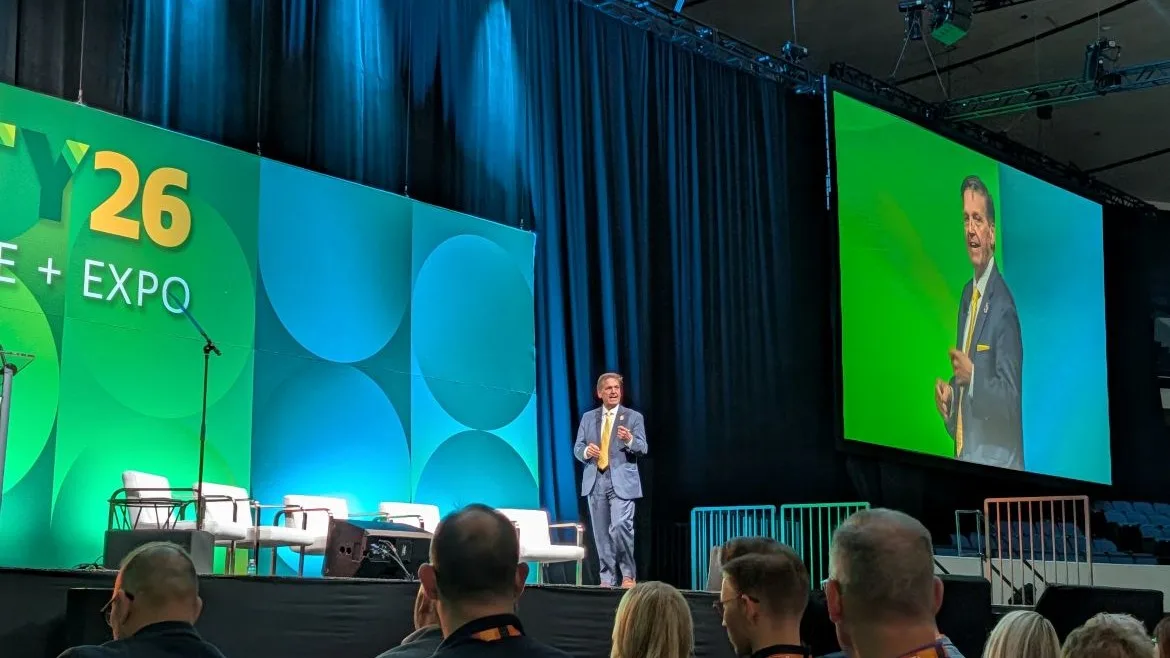
At the ASSP Safety Conference in Anaheim, Calif., in June, Assistant Secretary of Labor David Keeling delivered a conversational address that signaled a cultural and operational evolution for OSHA. Engaging directly with the audience, Keeling tried to make it clear that while OSHA remains an enforcement agency, its future success relies on moving beyond traditional policing toward meaningful partnership and proactive risk management.
Beyond the Traditional Scope: ‘OSHA Cares’
Keeling opened by grounding the audience with numbers: out of roughly 5,000 annual workplace fatalities reported by the Bureau of Labor Statistics, traditional OSHA regulations directly cover only a portion, he said.
He spoke about "OSHA Cares," a new initiative in which the agency is adopting a holistic approach to workplace safety. Rather than focusing solely on paperwork or traditional facility hazards, OSHA is expanding its concern to broader issues impacting today's workforce, including motor vehicle accidents, mental health, suicide, and substance abuse, particularly in high-risk sectors like construction.
Drawing a Line
Addressing OSHA’s enforcement mandate, Keeling drew a sharp distinction between what he called intentional bad actors and employers striving to operate safely.
For the 2% to 5% of employers who deliberately exploit workers, skirt laws, and repeatedly re-emerge under new business names to evade liability, he said, OSHA is taking an uncompromising stance. Keeling announced that the agency is establishing a dedicated criminal division in lockstep with the Office of Inspector General and local authorities.
"I'm firmly in the camp that if you take advantage of your workers... I'm not necessarily interested in raising the bill for fines. I want to set this down for people in jail," Keeling stated.
An Olive Branch for the 95%
Conversely, Keeling emphasized that the vast majority — roughly 95% of employers — genuinely want to protect their people. He highlighted the severe burden enforcement actions can place on small and medium-sized businesses, where a $20,000 to $30,000 fine could threaten the livelihood of a family-owned operation.
To support these businesses, OSHA is actively updating policies to empower local regional officials to negotiate flexible settlement agreements. Under this framework, financial assessments can be redirected into on-site safety investments and engineering controls.
"It's not about 'gotcha.' It's about 'get better,'" Keeling explained. "We don't want to be in the fire and brimstone business. We want to be in the faith-based business... helping small businesses get job-ready and stay safe."
Modernizing Standards & Embracing Consensus
Addressing the regulatory landscape, Keeling highlighted the urgency of updating legacy standards that have stalled for decades. Pointing to Lockout/Tagout (LOTO), which has not seen major updates since the late 1980s, he stressed the need for modernization over deregulation.
To keep pace with rapid industrial and technological advancements, Keeling announced that OSHA will rely much more aggressively on consensus standards. Because consensus standards evolve alongside business and technology far faster than formal federal rulemaking, they offer a viable path to keep federal oversight relevant and aligned with modern operations.
Addressing the regulatory landscape, Keeling highlighted the urgency of updating legacy standards that have stalled for decades.
From Cops to Facilitators
Addressing a long-standing industry talking point — that it would take OSHA nearly two centuries to inspect every facility in the country — Keeling urged safety leaders to abandon the metric altogether.
"Doubling or tripling the number of inspectors isn't the answer," Keeling noted. "The answer is the people sitting in this room. We need to be facilitators. We need to help people be successful. We need to be leaders in the space and not try to be the cops in the space. It doesn't work. We've tried it."
Keeling concluded his address by inviting continuous dialogue between safety professionals and the agency, calling on EHS leaders to leverage programs like the Voluntary Protection Program (VPP) modernization and to share best practices directly with OSHA leadership as the agency reshapes its role for the future.
Looking for a reprint of this article?
From high-res PDFs to custom plaques, order your copy today!