Aluminized apparel takes the heat
New technologies provide protection that’s not heavy or rigid
|
| Photo courtesy of Chapman Innovations |
rigid in order to adequately protect against both radiant heat and molten metal splash. Lighter-weight alternatives are regarded for radiant heat protection alone, but provide little resistance to molten splash hazards.
Considering these garments are usually worn in environments where ambient temperatures can exceed 200°F, the use of heavy, rigid apparel may pose serious risks to the wearer’s safety and productivity. Added weight combined with restricted movement can cause the wearer to expend more energy in doing his or her job, thereby increasing the potential for heat-stress related injuries while reducing productivity.
New fabrics and technologies are now being introduced that do not require professionals to sacrifice comfort and productivity for protection. These fabrics can protect against both radiant heat and molten metal splash at a fraction of the weight of current alternatives, and they offer significantly improved flexibility.
Layers of reflective protection
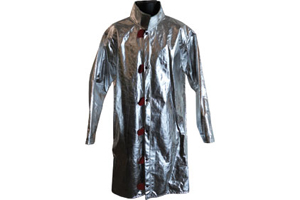
Aluminized apparel is used in the outer layer of a personal protective equipment (PPE) system, such as coats, jackets, hoods, full-body suits, pants, ankle-high leggings, overshoes or spats. Various levels of protection can be obtained from different types of aluminized garments and garment combinations.
Aluminized clothing is most often worn by professionals who are exposed to both radiant heat and molten splash hazards. Its primary purposes are to protect the wearer from extended exposure to radiant heat; to help maintain the wearer’s normal body temperature; and to shield the wearer from getting burned.
With its mirror finish, aluminized clothing is very effective at reflecting radiant heat. The aluminized coating can reflect up to 95 percent of thermal radiation away from the wearer, and some fabrics can withstand temperatures as high as 3000°F for short durations. Aluminized fabrics are often constructed with a flame-resistant base fabric and multiple layers of aluminum, protective films, and heat-stable adhesives so that when one layer of aluminum breaks down, another layer is there to protect. This multi-layer structure improves abrasion resistance and helps ensure that fabrics remain highly reflective even after repeated use and proper care and cleaning.
Aluminum: No match for molten steel
Aluminized apparel also acts as a barrier to molten metal splash in many environments. However, the melting point of aluminum is around 1220°F, while the temperature of molten metal in a steel mill, for example, can exceed 2900°F. Upon contact with such a molten substance, the aluminum coating will quickly melt away, leaving only the base fabric between the skin and metal. Because so much depends on the protective properties of the base fabric, especially in a splash situation, its abilities to withstand extremely high temperatures and to shed molten metal are critical factors to consider when selecting aluminized apparel.
A good measure of an aluminized fabric’s protective performance is its ability to pass the ASTM F955 pour test. This test demonstrates and quantifies a protective fabric’s resistance to contact with molten metal and the amount of heat transferred to the wearer. Heat sensors are used to measure the temperature change on the backside of a fabric while 1 kilogram of molten iron or aluminum is poured directly onto the material at a 70-degree angle. The sensors continue monitoring heat as it transfers across the fabric.
These measurements indicate how effectively a fabric, or fabric combination, limits the amount of heat transferred through the material to the wearer, and they show what levels of protection are needed to prevent a theoretical second-degree burn. The test also evaluates how effectively the fabric sheds molten liquids. The more quickly a fabric can shed a hazard, the less likely it is a serious burn will occur. The results of this test are widely used in the industry and are generally accepted as the minimum standard.
Fabrics vary in construction & performance
There are many materials that can be coated with aluminum to make heat-resistant clothing with various qualities. They range in price, weight, temperature resistance, flexibility and abrasion resistance.
Aluminized fiberglass fabrics are most frequently used in heat-resistant clothing designed for firefighting. Firefighter gear must adhere to strict standards and NFPA testing, control and approval. Heavier in weight (around 18–20 oz/yd2) and rigid, aluminized fiberglass fabrics provide superior insulation and high temperature resistance. But over time, aluminized fiberglass fabrics can begin to harden and must be replaced.
There are also aluminized fabrics which feature a blend of fiberglass and para-aramid (Kevlar® or an equivalent product) materials. These fabrics are relied upon for their high temperature resistance and abrasion resistance. Also heavier in weight (around 19 oz/yd2), these fabrics are not very flexible and limit comfort.
Another heavier fabric alternative is aluminized Carbon/Kevlar fabrics (around 17+ oz/yd2), which are designed to repel molten metal splash up to 2850°F and offer strong durability and tear resistance. Kevlar-based aluminized fabrics can be more expensive and often become rigid over time.
Aluminized Rayon is one of the most economical aluminized fabrics. It is lighter in weight (around 15 oz/yd2), flexible, and reflects radiant heat at the same level as other materials. But aluminized Rayon does not perform well in resisting abrasion and molten metal splash.
New fabric receives passing grade
Fabric and clothing manufacturers have been challenged with developing lighter-weight (around 10–12 oz/yd2) aluminized fabrics able to pass the ASTM F955 pour test while improving comfort, reducing heat stress, and increasing productivity. One recently launched 12-oz aluminized fleece fabric is comprised of a blend of carbonized fibers designed to offer a high level of protection and significantly enhanced comfort. Inherently flame resistant, this fabric passes the ASTM F955 pour test, protects against molten metal splash, and will not burn, melt or ignite, providing maximum temperature resistance. The fleece base fabric maintains its flexibility even after it is aluminized and is soft to the touch, enhancing the wearer’s comfort and productivity.
Explore your options
With new fabrics and technologies on the market, now is a good time to evaluate your company’s high-heat PPE solutions, including aluminized outerwear. Don’t limit your search to the traditional, heavyweight choices but consider exploring new technology and lighter-weight alternatives that are proving they can take the heat.
Looking for a reprint of this article?
From high-res PDFs to custom plaques, order your copy today!