Report: Nighttime-breathing treatment for sleep apnea most effective
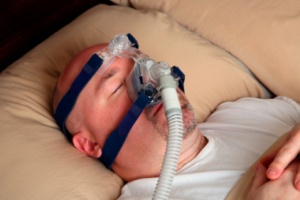 A nighttime-breathing machine called a CPAP is the most effective treatment for obstructive sleep apnea, followed by a mouthpiece also worn at night, according to a new report funded by HHS' Agency for Healthcare Research and Quality (AHRQ).
Sleep apnea is a disorder that disrupts sleep for an estimated 12 million Americans, with millions more likely undiagnosed. The report found that the continuous positive airway pressure (CPAP) machine, which pumps air through a mask while the patient is asleep, is highly effective in improving sleep and related symptoms of obstructive sleep apnea by improving airflow. Another treatment, a mouthpiece called a mandibular advancement device (MAD), can also be very effective, the report found.
Weight loss and surgery may also be effective, although the evidence behind these treatments is not as strong, according to the report, a comparative effectiveness review prepared by the Tufts Medical Center Evidence-based Practice Center for AHRQ's Effective Health Care Program. The report does note that all treatments have possible side effects.
To highlight the findings of the report, AHRQ also published guides for consumers and clinicians that summarize the latest evidence for treating obstructive sleep apnea, a disorder that can lead to heart disease, diabetes and multiple other health problems. The report and the companion guides are available at www.effectivehealthcare.ahrq.gov.
"Obstructive sleep apnea is a frustrating and debilitating condition for so many Americans, and millions of people don't even know they have it. The resultant poor sleep and daytime sleepiness can lead to work-related or driving accidents," said AHRQ Director Carolyn M. Clancy, M.D. "These guides and this new report will help patients and their doctors understand what treatment options might be best for them."
The companion guides summarize the report's findings for consumers and clinicians. The consumer guide defines sleep apnea for patients and their families, summarizes treatment options, offers a list of questions to discuss with a doctor and contains basic cost information. The clinician guide covers these topics, provides "confidence ratings" for existing scientific evidence and offers a "clinical bottom line" to give clinicians tools to discuss treatment options with their patients.
Obstructive sleep apnea is a chronic disorder that causes people to stop breathing during sleep. It is caused by the repeated collapse and blockage of the upper airway during sleep. While almost everyone has very brief periods in which they stop breathing during sleep, people with obstructive sleep apnea stop breathing or take in less air more often. In addition, they often restart breathing with a loud snort or choking sound and stop breathing five or more times an hour; sometimes every 2 or 3 minutes. The condition can lead to heart disease, high blood pressure, diabetes and greater risk of accidents due to general sleeplessness.
The CPAP machine is frequently prescribed for treatment for obstructive sleep apnea. The CPAP mask pushes a steady stream of air through the nose to keep the throat and airway open. Many kinds of CPAP machines and masks exist; some masks fit over the nose, and others cover both the nose and mouth.
However, while the CPAP machine is effective in reducing sleeplessness and improving airflow, its possible side effects-feeling trapped, dry nose and mouth, nosebleeds and chest discomfort-lead many patients to abandon the treatment, and the CPAP machine is only effective if used every night, the report said. The MAD, a mouthpiece often made of hard plastic that moves the jaw forward and keeps the airway open, is often used if patients do not tolerate the CPAP machine. This treatment also is effective but has possible side effects of its own, including potentially loose or damaged teeth, the report said.
The third major treatment for obstructive sleep apnea is surgery to clear the airway blockage, but the report did not find enough evidence to determine if surgery is more or less effective than non-surgical treatments. Other treatments were also examined, including weight loss programs and medication, but in general, the evidence was insufficient to draw conclusions about these treatments.
It is widely believed that millions of Americans suffer from obstructive sleep apnea without knowing it. The report did not identify the best way to diagnose the condition.
The report, Comparative Effectiveness Review of the Diagnosis and Treatment of Obstructive Sleep Apnea in Adults, is the latest comparative effectiveness review from AHRQ's Effective Health Care Program. The Effective Health Care Program sponsors the development of evidence reports and technology assessments to assist public- and private-sector organizations in their efforts to improve the quality of health care in the United States. The program is intended to help patients, doctors, nurses, pharmacists and others choose the most effective treatments. More information about the program can be found at www.effectivehealthcare.ahrq.gov.
Looking for a reprint of this article?
From high-res PDFs to custom plaques, order your copy today!


