ISHN logo
search
cart
facebook twitter linkedin youtube
  • Sign In
  • Create Account
  • Sign Out
  • My Account
ISHN logo
  • NEWS
    • Today's News
    • Global Safety News
    • Government Regulations
  • PRODUCTS
    • Product Innovations
    • Featured Products
  • TOPICS
    • Environmental Health and Safety
    • Facility Safety
    • Workplace Health
    • Occupational Safety
    • PPE
    • More Topics
  • CONSTRUCTION
  • TECHNOLOGY
  • COLUMNS
    • Best Practices
    • Dave Johnson: What’s going on
    • Editorial Comments
    • Leading Safety
  • MULTIMEDIA
    • ISHN Podcast
    • Videos
    • Cold Stress Education Quiz
    • Webinars
    • White Papers
  • MORE
    • Buyer's Guide
    • Newsletters
    • Convention Companion
    • Polls
    • Events
    • ISHN Store
    • Sponsor Insights
  • EMAGAZINE
    • eMagazine
    • Archived Issues
    • Contact
    • Advertise
  • JOIN TODAY!
PPE

Prepare for escape and rescue at working heights

By Steve Kosch, Jeff Wild
June 2, 2014
Planning for fall protection plays an important role in safety in any industry where workers are at height. While companies may understand the importance of having a plan and equipment in place, many fail to fully address the issue of escape from heights and/or rescue after a fall has occurred.

When things go wrong when working at height, no matter if it is 10 or even 300 feet in the air, it’s too late to fine-tune your rescue plan. You have just minutes to rescue a worker before suspension trauma can occur. Research indicates that suspension in a fall arrest device can result in unconsciousness, followed by death, in less than 30 minutes.1

If someone needs to escape or be rescued, do you have a plan in place?

Has that plan been tested?

To assist with escape and rescue of workers on towers, cranes, platforms, scaffolding, aerial lifts, rigs and other at-height environments, it is vital to have the right plan in place. Calling 911 and relying on first responders isn’t an effective rescue plan because they may not have the resources to perform a timely rescue at height. Further, the Code of Federal Regulations requires all employers to have a rescue plan.

This underscores the need for employers to have their own plans for the prompt rescue of workers in the event of a fall and to ensure that workers are able to rescue themselves or be rescued by an internal team.

Factors to consider

When developing a fall protection escape and rescue plan, consider these factors:

  • Regulations & standards – what is the industry requirement?
  • Best practices – what have other companies found to be most effective?
  • How many employees work at height?
  • At what height(s) would employees need to escape or be rescued?
  • How quickly do they need to escape or be rescued?
  • Are external resources available or only internal?
  • Are roles clearly defined to ensure employees responsible for rescue are aware of this responsibility?
  • Has training on escape and rescue products been completed?
  • Equipment inspection guidelines

What do safety standards say?

Looking at regulations from the standards bodies, here are OSHA’s rescue plan
requirements:

OSHA 1926.502 (d)(20): The employer shall provide for prompt rescue of employees in the event of a fall or shall assure that employees are able to rescue themselves.

OSHA refers to rescue throughout its regulations such as in OSHA 1910.66 Appendix C Section III.(g): “Rescue considerations.” As required by the standard (Section I Paragraph (e)(8)), when personal fall arrest systems are used, the employer must assure that employees can be promptly rescued or can rescue themselves should a fall occur. The availability of rescue personnel, ladders or other rescue equipment should be evaluated. In some situations, equipment which allows employees to rescue themselves after the fall has been arrested may be desirable, such as devices which have descent capability.

Further, Canadian OHS requirements dictate: Written rescue procedures must be in place and executed before any use of a fall arrest system. A rescue plan is required for any person at height.* Legislation standards require that where a worker is exposed to the hazard of falling more than 3 meters, the worker will wear a serviceable safety belt or harness and lifeline so the worker cannot fall freely for a vertical distance of more than 1.5 meters; and before any use of a fall arrest system, the worker’s employer shall develop written procedures for rescuing the worker after his or her fall has been arrested.**

Rescue options

Beyond having a plan on paper, it must translate into real-world scenarios by being user friendly. Rescue options must be thoroughly thought out and practiced so that if and when an incident occurs, workers have actually gone through the steps required to perform the rescue. If your plan indicates employees will perform an escape or self-rescue, an assisted rescue or even rapid sequential evacuation, do they know how to actually perform these types of procedures?

Selecting equipment

When putting together a fall protection escape and rescue plan, equipment is a major factor. Products must be easy to use and workers must practice using them on a regular basis to ensure they can perform an escape and/or rescue for themselves or for a co-worker.

To simplify the selection process, here are some criteria to consider:

1) What speci?c capabilities are needed?

Escape — individual and/or multi-person

  • For individual escape, consider devices that can be carried and pre-rigged so they’re ready when needed.
  • To safely evacuate multiple people from high places, one after another, consider a device that does not require re-rigging between descents.

Assisted rescue

 t If the user is not able to self-rescue (e.g. if unconscious), some devices can be rigged for victim rescue, giving complete control to the rescuer, ensuring the victim is lowered to safety quickly and easily.

Self-rescue after a fall

  • Consider a device to allow a worker to lower themselves to a safe location after their fall has been arrested.

2) Depending upon the work environment, there may be a need to have specialized equipment. These environments may include:

  • General Industrial/Manufacturing
  • Tower Climbing
  •  Oil & Gas
  •  Mining
  •  Construction
  • Utilities/Bucket Trucks
  • Consider a device that meets the particular needs of the market, e.g. descent speed, triple lock carabiners, weight of equipment, etc.

3) Are there hazards that could jeopardize the safety of the worker during an escape or rescue descent?

  • Consider a device that allows the user to stop, go and change speed at any time during the descent to help avoid hazards.

Plan ahead to save lives

Thoughtful fall protection escape and rescue planning must be top-of-mind for organizations with workers at any height. With advance planning, user-friendly escape and rescue equipment and procedures after a fall can save lives. Take all these factors into consideration as you develop a plan to ensure the safest operation possible for the benefit of your workers.


Footnote
 1 https://www.osha.gov/dts/shib/shib032404.pdf
KEYWORDS: fall hazards Fall Protection work at height

Share This Story

Looking for a reprint of this article?
From high-res PDFs to custom plaques, order your copy today!

Steve Kosch is a Technical Specialist with 3M, a leading manufacturer of fall protection equipment. As a leader in safety for more than 40 years, 3M offers site evaluations, training and education and is ANSI, OSHA and CSA certified. For more information, contact 3M at 800-328-1667, www.3M.com/FallProtection.

Jeff Wild is the technical manager for DEUS Rescue, focusing on products and procedures for fall protection and rescue from heights in industrial environments, such as wind towers, oil and gas rigs, communication towers, transmission structures and aerial lifts. Wild has been a member of the ANSI/ASSE Z359 Accredited Standards Committee for Fall Protection since 2005 while staying active with the rescue, descender and rope access subcommittees. He holds a degree in Engineering from the University of Colorado.

Recommended Content

JOIN TODAY
to unlock your recommendations.

Already have an account? Sign In

  • forklift safety

    Exploring the latest technologies in forklift safety

    With more staff and more stock in warehousing now more...
    Facility Safety
    By: Josh Cramer
  • welding

    All about welder’s flash or arc eye

    A flash burn is a painful inflammation of the cornea,...
    Environmental Health and Safety
  • dangerous jobs

    The 10 most dangerous jobs in the U.S.

    On-the-job deaths have been rising — hitting the highest...
    Occupational Safety
    By: Benita Mehta
Manage My Account
  • eMagazine Subscriptions
  • ISHN Newsletter & Other Newsletter Alerts
  • Online Registration
  • Manage My Preferences
  • Subscription Customer Service

More Videos

Sponsored Content

Sponsored Content is a special paid section where industry companies provide high quality, objective, non-commercial content around topics of interest to the ISHN audience. All Sponsored Content is supplied by the advertising company and any opinions expressed in this article are those of the author and not necessarily reflect the views of ISHN or its parent company, BNP Media. Interested in participating in our Sponsored Content section? Contact your local rep!

close
  • man wearing the the Sundström SR200 Full Face Mask Respirator
    Sponsored byOHD

    5 Fit Testing Mistakes That Could Cost You

  • This image shows Magid AcuSpex polarized blue mirrored safety glasses.
    Sponsored byMagid Glove and Safety

    Construction PPE Guide: What Crews Need for Each Task

  • lone worker in confined space
    Sponsored byAlphasense Ltd.

    GET THE LEAD OUT of your Safety Oxygen Sensors!

Popular Stories

SpaceX 7 launch

OSHA Investigating Fatal Fall at SpaceX Starbase

Worker Impairment

How to Tell When a Co-Worker is Impaired? A Safety Pro’s Challenge

Automated loading dock equipment

After March 2026 Rivian Death, Safety Managers Reassess Loading Dock Systems Under OSHA's Warehouse Emphasis Program

top 10 most dangerous jobs

Poll

Seasonal Readiness

With the federal heat stress prevention rule on the horizon, which area of your safety program needs the most attention?
View Results Poll Archive

Products

Surviving an OSHA Audit A Management Guide, 2nd Edition

Surviving an OSHA Audit A Management Guide, 2nd Edition

See More Products

ISHN Podcasts

Related Articles

  • working at heights

    7 parts of an in-house rescue plan for working at heights

    See More
  • worker being lowered into confined space

    Essentials for working at heights in confined spaces

    See More
  • Do’s and don’ts for working at heights

    See More

Related Products

See More Products
  • 111885960X.jpg

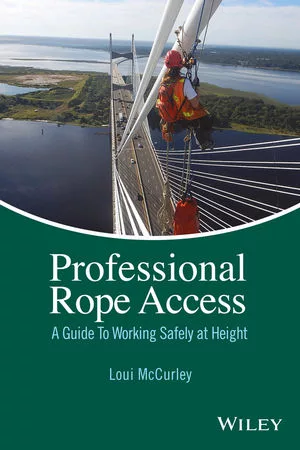
    Professional Rope Access: A Guide To Working Safely at Height

See More Products

Related Directories

  • RescueStat

    RescueStat delivers AED remote monitoring, program management, and virtual CPR/AED training to keep your organization prepared and protected. Our mission is to save lives and empower teams to respond effectively to Sudden Cardiac Arrest emergencies.
  • Grace Industries

    How Do You Protect Your Lone Workers? Working at Heights? Check out our new WorkForce product line - Fall Detection with Immediate Notification – Prevent Suspension Trauma. Fixed Facility – No Monthly Fees. Working in the field? Check out Grace Connected Safety – Cellular and Satellite Cloud Connect
×

Become a Leader in Safety Culture

Build your knowledge with ISHN, covering key safety, health and industrial hygiene news, products, and trends.

JOIN TODAY
  • RESOURCES
    • Advertise
    • Contact Us
    • Directories
    • Manufacturing Division
    • Store
    • Want More
  • SIGN UP TODAY
    • Create Account
    • eMagazine
    • Newsletters
    • Customer Service
    • Manage Preferences
  • SERVICES
    • Marketing Services
    • Reprints
    • Market Research
    • List Rental
    • Survey/Respondent Access
  • STAY CONNECTED
    • LinkedIn
    • Facebook
    • YouTube
    • X (Twitter)
  • PRIVACY
    • PRIVACY POLICY
    • TERMS & CONDITIONS
    • DO NOT SELL MY PERSONAL INFORMATION
    • PRIVACY REQUEST
    • ACCESSIBILITY

Copyright ©2026. All Rights Reserved BNP Media, Inc. and BNP Media II, LLC.

Design, CMS, Hosting & Web Development :: ePublishing