ISHN logo
search
cart
facebook twitter linkedin youtube
  • Sign In
  • Create Account
  • Sign Out
  • My Account
ISHN logo
  • NEWS
    • Today's News
    • Global Safety News
    • Government Regulations
  • PRODUCTS
    • Product Innovations
    • Featured Products
  • TOPICS
    • Environmental Health and Safety
    • Facility Safety
    • Workplace Health
    • Occupational Safety
    • PPE
    • More Topics
  • CONSTRUCTION
  • TECHNOLOGY
  • COLUMNS
    • Best Practices
    • Dave Johnson: What’s going on
    • Editorial Comments
    • Leading Safety
  • MULTIMEDIA
    • ISHN Podcast
    • Videos
    • Cold Stress Education Quiz
    • Webinars
    • White Papers
  • MORE
    • Buyer's Guide
    • Newsletters
    • Convention Companion
    • Polls
    • Events
    • ISHN Store
    • Sponsor Insights
  • EMAGAZINE
    • eMagazine
    • Archived Issues
    • Contact
    • Advertise
  • JOIN TODAY!
Facility Safety

Capture or continuous cleaning: It’s best to prevent dust from accumulating

By Brad Carr P.E.
August 1, 2014

An engineered approach to combustible dust safety relies on technology to solve the problem of accumulated dust. There are two types of technology for this approach:combustible dust safety
1. Localized filtration – captures the combustible dust by either vacuuming or suctioning.

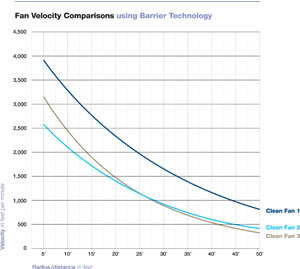
2. Barrier technology – prevents combustible dust from accumulating on overhead structures with a robotic clean fan.

An engineered approach contrasts a managed approach, where personnel or third-party business manually clean the accumulated dust on an ongoing basis

Actually, there is a third approach too. That is the decision to do nothing, as in “I don’t have to worry about combustible dust.” But I’ll get to that later.

Let me address how an engineered approach works by citing some case studies.

Case studies of an engineered approach

• Case Study #1:

Safety has always been a top priority for Cincinnati-based Cintas. (This year, Cintas merged its Document Shredding business with Shred-it’s to form a new company, which now operates under the name Shred-it.) Combustible dust had posed a potential hazard in Cintas’ document management shredding facilities across the country; therefore, when OSHA launched its National Emphasis Program on combustible dust, Cintas knew it needed a new strategy.

Cintas did its homework. First, the company assembled key employees from its engineering and safety departments to work together on the new strategy. At the Clean Show in New Orleans, members of the team had learned about clean fans that allowed for an engineered solution instead of a managed one. Cintas installed the fans throughout its plants because key company personnel thought the fan systems could deliver higher levels of cleanliness more consistently than a manual approach. As a result of the installations, Cintas has realized a significant abatement in dust accumulation on lights, beams and other horizontal surfaces. The company retained its daily housekeeping program to prevent dust accumulations on floors and equipment.

• Case Study #2:

Lehigh Technologies is a specialty materials company that produces highly engineered, versatile raw materials called Micronized Rubber Powders. As an integral part of their industrial hygiene strategy, they wanted to make sure that the risks of combustible dust were minimized to protect employees, ensure compliance, and to meet their housekeeping standards.

They spent several hundred thousand dollars on dust collection systems and explosion protection alone, and still were not satisfied. So they installed barrier technology clean fans in their overhead areas and, according to Process Development Engineer Matthew Van Der Sluys, “The results now are visibly measurable and the cost savings versus periodic cleaning are well defined.”

• Case Study #3:

Domtar is the largest integrated marketer and manufacturer of uncoated freesheet paper in North America, with 13 pulp and paper mills in North America annually producing approximately 3.4 million tons of uncoated freesheet paper, 3.5 million tonnes of market, fluff and specialty pulps. The corporation’s growing Personal Care Division has six facilities spread across the United States and Europe.

Domtar takes seriously the safety of its employees and wanted a solution to enhance their existing systems to deal with the cellulose dust generated. They chose an engineered approach with barrier technology clean fans, and found that the cleaning radius was observed at more than 60 feet in some areas. The robotic fans were combined with LED lighting, providing a strategic combination to provide fugitive dust control and mitigate a primary ignition source.

The only proactive solution

These are just three examples to prove the long-term efficacy of an engineered approach. But what is the underlying principle for its effectiveness?

It’s a simple principle: It’s better to prevent dust from accumulating than to clean it up afterwards. This can happen only with an engineered approach. Filtration systems can capture most (or some) of the dust and overhead clean fans create a barrier so the remaining dust can’t accumulate. When you have technology either capturing or cleaning the dust continuously, your dust levels are maintained below the 1/32-inch tolerance for most industries and 1/8-inch tolerance for wood and timber processors. Your facility is in compliance continuously to the stringent OSHA regulations.

You have to be careful in how the technology is used. First, the equipment has to be appropriated properly: the equipment has to be installed correctly, and the technology needs to be used continuously so process areas are clean. In addition, for the clean fans, you don’t want to robotically clean more than 90-100-foot diameters per fan because there are too many obstacles in the way, like bar joists, etc.

Now, look at the difference with a managed approach. You are cleaning up the dust after it has already accumulated. This means that at different points of the cleaning cycle, you have higher levels of accumulated dust — and risk. Your plants won’t be in compliance with OSHA. And manual cleaning, especially for overhead areas, can be burdensome and dangerous in and of itself.

What keeps us from choosing an engineered approach?

The safety issues are undeniable, but if an accident hasn’t happened in your facility, it is easy to postpone a decision to keep your employees safe because all solutions cost money at some point. We tend to stay comfortable with the status quo until something cataclysmic happens. That “external force” is the point at which decisions can easily be expedited because the consequences have forced us to act.

The status quo is not going to keep our employees safe from combustible dust all the time. And the cost of doing nothing is appealing only for the short term. But the consequences can be terrifying when an explosion or a fire occurs because the combustible dust has built up. Some people just don’t think it will happen in their plant. And then disaster strikes.

KEYWORDS: Combustible dust workplace safety

Share This Story

Looking for a reprint of this article?
From high-res PDFs to custom plaques, order your copy today!

W. Brad Carr, P.E., is president of IES (Integrated Environmental Solutions). IES has developed BarrierAire Technology™ to meet standards requirements. Its line of automatic SonicAire™ fan systems creates a continuous overhead barrier throughout facilities, preventing dust accumulation. A free copy of a white paper on controlling combustible dust is available by contacting Brad Carr at bcarr@iesclean.com or call 336-712-2437.

Recommended Content

JOIN TODAY
to unlock your recommendations.

Already have an account? Sign In

  • forklift safety

    Exploring the latest technologies in forklift safety

    With more staff and more stock in warehousing now more...
    Workplace Training Strategies
    By: Josh Cramer
  • welding

    All about welder’s flash or arc eye

    A flash burn is a painful inflammation of the cornea,...
    Environmental Health and Safety
  • dangerous jobs

    The 10 most dangerous jobs in the U.S.

    On-the-job deaths have been rising — hitting the highest...
    Construction Industry Safety and Health
    By: Benita Mehta
Manage My Account
  • eMagazine Subscriptions
  • ISHN Newsletter & Other Newsletter Alerts
  • Online Registration
  • Manage My Preferences
  • Subscription Customer Service

More Videos

Sponsored Content

Sponsored Content is a special paid section where industry companies provide high quality, objective, non-commercial content around topics of interest to the ISHN audience. All Sponsored Content is supplied by the advertising company and any opinions expressed in this article are those of the author and not necessarily reflect the views of ISHN or its parent company, BNP Media. Interested in participating in our Sponsored Content section? Contact your local rep!

close
  • man wearing the the Sundström SR200 Full Face Mask Respirator
    Sponsored byOHD

    5 Fit Testing Mistakes That Could Cost You

  • This image shows Magid AcuSpex polarized blue mirrored safety glasses.
    Sponsored byMagid Glove and Safety

    Construction PPE Guide: What Crews Need for Each Task

  • lone worker in confined space
    Sponsored byAlphasense Ltd.

    GET THE LEAD OUT of your Safety Oxygen Sensors!

Popular Stories

SpaceX 7 launch

OSHA Investigating Fatal Fall at SpaceX Starbase

Worker Impairment

How to Tell When a Co-Worker is Impaired? A Safety Pro’s Challenge

Automated loading dock equipment

After March 2026 Rivian Death, Safety Managers Reassess Loading Dock Systems Under OSHA's Warehouse Emphasis Program

top 10 most dangerous jobs

Poll

Seasonal Readiness

With the federal heat stress prevention rule on the horizon, which area of your safety program needs the most attention?
View Results Poll Archive

Products

Surviving an OSHA Audit A Management Guide, 2nd Edition

Surviving an OSHA Audit A Management Guide, 2nd Edition

See More Products

ISHN Podcasts

Related Articles

  • Calculating the cost: is housekeeping the best way to reduce combustible dust risks?

    See More
  • Lawmakers push bill to prevent dust explosions (3/4)

    See More
  • What works best to prevent stress among healthcare workers?

    See More

Related Products

See More Products
  • Top Ten Pitfalls in OSHA Recordkeeping and How to Avoid Them

  • Optimizing Social Media from a B2B Perspective

  • 1119010160.jpg

    Guidelines for Combustible Dust Hazard Analysis

See More Products

Related Directories

  • SonicAire

    SonicAire is the global leader in engineered solutions for combustible dust control. Our patented fan systems use BarrierAire™ technology to prevent dust from settling in overhead and hard-to-reach areas—helping facilities stay compliant with OSHA, NFPA, and insurance requirements. Thousands of manufacturers across wood products, food, grain, textiles, plastics, and more trust SonicAire to: Eliminate the risk of dust-related fires and explosions Automate housekeeping in overhead areas Protect worker health with improved air quality Reduce manual cleaning costs and production downtime Our systems are engineered for your facility, installed with precision, and backed by our Compliance Guarantee—because when it comes to safety, good enough is never enough. Create a cleaner, safer, and more compliant facility with SonicAire. ���� Visit www.SonicAire.com or call (336) 712-2437.
  • Scientific Dust Collectors

    Scientific Dust Collectors (SDC) began in 1981 when our first patent for improving filter cleaning was issued. Our patented UniFlow Supersonic Nozzle -based cleaning system is where it all starts. Combined with our High Side Inlets, Wide Filter Spacing, and Inlet Baffling, we are able to guarantee performance, efficiency, and filter life. ASHRAE 199 Test Lab on site.
×

Become a Leader in Safety Culture

Build your knowledge with ISHN, covering key safety, health and industrial hygiene news, products, and trends.

JOIN TODAY
  • RESOURCES
    • Advertise
    • Contact Us
    • Directories
    • Manufacturing Division
    • Store
    • Want More
  • SIGN UP TODAY
    • Create Account
    • eMagazine
    • Newsletters
    • Customer Service
    • Manage Preferences
  • SERVICES
    • Marketing Services
    • Reprints
    • Market Research
    • List Rental
    • Survey/Respondent Access
  • STAY CONNECTED
    • LinkedIn
    • Facebook
    • YouTube
    • X (Twitter)
  • PRIVACY
    • PRIVACY POLICY
    • TERMS & CONDITIONS
    • DO NOT SELL MY PERSONAL INFORMATION
    • PRIVACY REQUEST
    • ACCESSIBILITY

Copyright ©2026. All Rights Reserved BNP Media, Inc. and BNP Media II, LLC.

Design, CMS, Hosting & Web Development :: ePublishing