ISHN logo
search
cart
facebook twitter linkedin youtube
  • Sign In
  • Create Account
  • Sign Out
  • My Account
ISHN logo
  • NEWS
    • Today's News
    • Global Safety News
    • Government Regulations
  • PRODUCTS
    • Product Innovations
    • Featured Products
  • TOPICS
    • Environmental Health and Safety
    • Facility Safety
    • Workplace Health
    • Occupational Safety
    • PPE
    • More Topics
  • CONSTRUCTION
  • TECHNOLOGY
  • COLUMNS
    • Best Practices
    • Dave Johnson: What’s going on
    • Editorial Comments
    • Leading Safety
  • MULTIMEDIA
    • ISHN Podcast
    • Videos
    • Cold Stress Education Quiz
    • Webinars
    • White Papers
  • MORE
    • Buyer's Guide
    • Newsletters
    • Convention Companion
    • Polls
    • Events
    • ISHN Store
    • Sponsor Insights
  • EMAGAZINE
    • eMagazine
    • Archived Issues
    • Contact
    • Advertise
  • JOIN TODAY!
Today's Safety NewsOccupational Safety

Report: Worker protection is key component of homeland security
September 22, 2014

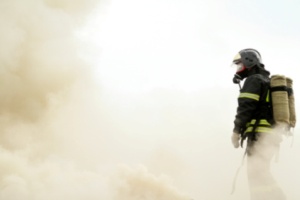
first respondersThe federal government must help train emergency personnel and provide updated safety guidelines so the workers are better protected against hazards such as they faced at the World Trade Center and the Pentagon, according to a public health workshop report by the National Institute of Environmental Health Sciences, a component of the federal National Institutes of Health.

The report, "Learning from Disasters: Weapons of Mass Destruction Preparedness Through Worker Training," summarizes the findings of an NIEHS Worker Education and Training Program technical workshop that brought together national experts involved in the recent terrorist attacks with those providing the emergency response and cleanup around weapons of mass destruction.

The report says there were many deficiencies in the protection of rescue and other workers that resulted in needless injuries, particularly to eyes and lungs, as they faced the catastrophic structural failures at Oklahoma City and later, on September 11 of last year, at the Pentagon and the World Trade Center. The last "was so massive, extensive in duration and complex that nearly all aspects of our well developed and relatively mature destructive incident response and cleanup operations plans were challenged and, in many cases, found defective in some measure."

Improvements recommended in the report include:

  • First-on-the-scene emergency response personnel, such as police and firefighters, need to be trained in and provided with appropriate protective gear, particularly respiratory protection. Major urban centers should identify sources of additional, back-up equipment in the face of a major attack or disaster.
  • OSHA should develop safety regulations tailored to the challenges of large terrorist events, and these revised guidelines need to be included in Federal Emergency Management Agency and other response plans. Older, more general guidelines, according to the report, are "essentially useless" in the face of such a mass destruction as that at the Trade Center.
  • Firm guidelines for ending the search and rescue phase after 12-15 days are needed. The report says that there is virtually no likelihood of recovery of living victims after that time and that rescue workers cannot function safely after two weeks of 12-hour days. Continued protracted efforts then "begin to take a toll in both physical and mental terms," which leads to increased risk taking, injuries and illness.
  • Worker protection standards must be enforced.
  • With personnel at the scene of the World Trade Center numbering more than 5,000, command, control, communication and coordination were extremely difficult. These should be improved under a unified command.

The report also recommends a training preparedness initiative by the NIEHS Worker Education and Training Program. For more information on the kinds of follow-up studies being conducted on rescue and other workers and on residents and workers nearby, see press release "HHS Awards" at  http://www.niehs.nih.gov/news/newsroom/releases/news-archive/2002/may08/index.cfm.

About the NIEHS WETP

The NIEHS WETP was created in 1987 by Congress as part of the Superfund Program to support the development of a network of non-profit organizations that are committed to protecting workers and their communities by creating and delivering high-quality, peer-reviewed safety and health curricula to target populations of hazardous waste workers and emergency responders. Through NIH extramural grants, WETP supports the development of curricula and training programs throughout the country to help employers meet OSHA requirements under 29 CFR 1910.120, Hazardous Waste Operations and Emergency Response.


The NIEHS report is one of several initiatives underway in the Department of Health and Human Services to better protect emergency response workers from injury and death in the line of duty. It complements recent activities by the National Institute for Occupational Safety and Health, including issuance of new criteria for certifying respirators used by emergency responders against chemical, biological, and radiological exposures. The agency also issued a report last March on personal protective equipment needs.


KEYWORDS: emergency first responders niehs terrorist attacks

Share This Story

Looking for a reprint of this article?
From high-res PDFs to custom plaques, order your copy today!

Recommended Content

JOIN TODAY
to unlock your recommendations.

Already have an account? Sign In

  • forklift safety

    Exploring the latest technologies in forklift safety

    With more staff and more stock in warehousing now more...
    Facility Safety
    By: Josh Cramer
  • welding

    All about welder’s flash or arc eye

    A flash burn is a painful inflammation of the cornea,...
    Environmental Health and Safety
  • dangerous jobs

    The 10 most dangerous jobs in the U.S.

    On-the-job deaths have been rising — hitting the highest...
    Occupational Safety
    By: Benita Mehta
Manage My Account
  • eMagazine Subscriptions
  • ISHN Newsletter & Other Newsletter Alerts
  • Online Registration
  • Manage My Preferences
  • Subscription Customer Service

More Videos

Sponsored Content

Sponsored Content is a special paid section where industry companies provide high quality, objective, non-commercial content around topics of interest to the ISHN audience. All Sponsored Content is supplied by the advertising company and any opinions expressed in this article are those of the author and not necessarily reflect the views of ISHN or its parent company, BNP Media. Interested in participating in our Sponsored Content section? Contact your local rep!

close
  • man wearing the the Sundström SR200 Full Face Mask Respirator
    Sponsored byOHD

    5 Fit Testing Mistakes That Could Cost You

  • This image shows Magid AcuSpex polarized blue mirrored safety glasses.
    Sponsored byMagid Glove and Safety

    Construction PPE Guide: What Crews Need for Each Task

  • lone worker in confined space
    Sponsored byAlphasense Ltd.

    GET THE LEAD OUT of your Safety Oxygen Sensors!

Popular Stories

SpaceX 7 launch

OSHA Investigating Fatal Fall at SpaceX Starbase

Worker Impairment

How to Tell When a Co-Worker is Impaired? A Safety Pro’s Challenge

Automated loading dock equipment

After March 2026 Rivian Death, Safety Managers Reassess Loading Dock Systems Under OSHA's Warehouse Emphasis Program

top 10 most dangerous jobs

Poll

Seasonal Readiness

With the federal heat stress prevention rule on the horizon, which area of your safety program needs the most attention?
View Results Poll Archive

Products

Surviving an OSHA Audit A Management Guide, 2nd Edition

Surviving an OSHA Audit A Management Guide, 2nd Edition

See More Products

ISHN Podcasts

Related Articles

  • Industrial Scientific’s Ventis™ LS multi-gas detector is key component of the Accenture Life Safety Solution

    See More
  • Homeland security resources

    See More
  • Homeland security: How's OSHA fit in?

    See More

Related Products

See More Products
  • 0470387408.jpg

    Preparing for OSHA s Voluntary Protection Programs: A Guide to Success

See More Products

Related Directories

  • SafetyLine Lone Worker

    SafetyLine Lone Worker helps companies monitor the status of workers who are remote, alone, or working in hazardous situations. We are an automated check-in monitoring and emergency notification service. SafetyLine uses its communications infrastructure to ensure that workers have comprehensive monitoring, 24/7, without the need for costly monitoring centers.
×

Become a Leader in Safety Culture

Build your knowledge with ISHN, covering key safety, health and industrial hygiene news, products, and trends.

JOIN TODAY
  • RESOURCES
    • Advertise
    • Contact Us
    • Directories
    • Manufacturing Division
    • Store
    • Want More
  • SIGN UP TODAY
    • Create Account
    • eMagazine
    • Newsletters
    • Customer Service
    • Manage Preferences
  • SERVICES
    • Marketing Services
    • Reprints
    • Market Research
    • List Rental
    • Survey/Respondent Access
  • STAY CONNECTED
    • LinkedIn
    • Facebook
    • YouTube
    • X (Twitter)
  • PRIVACY
    • PRIVACY POLICY
    • TERMS & CONDITIONS
    • DO NOT SELL MY PERSONAL INFORMATION
    • PRIVACY REQUEST
    • ACCESSIBILITY

Copyright ©2026. All Rights Reserved BNP Media, Inc. and BNP Media II, LLC.

Design, CMS, Hosting & Web Development :: ePublishing